
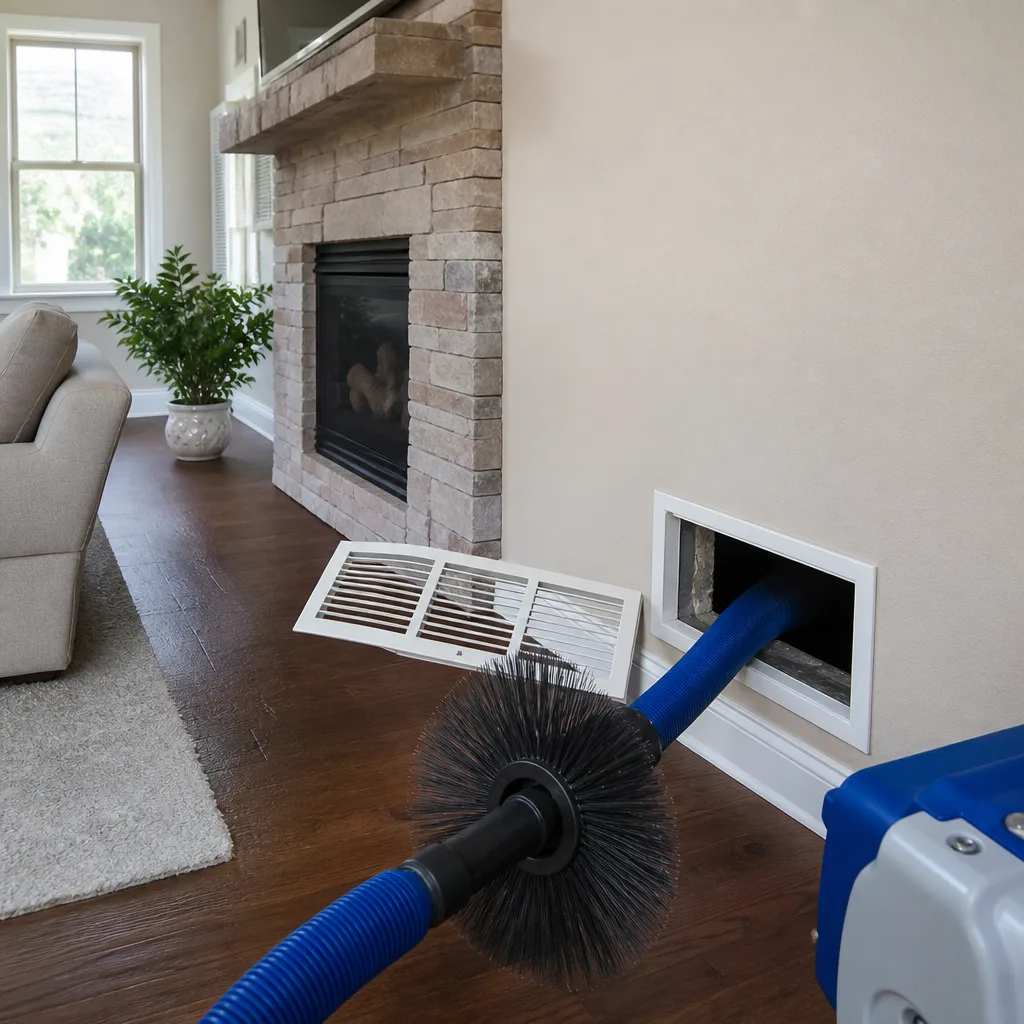
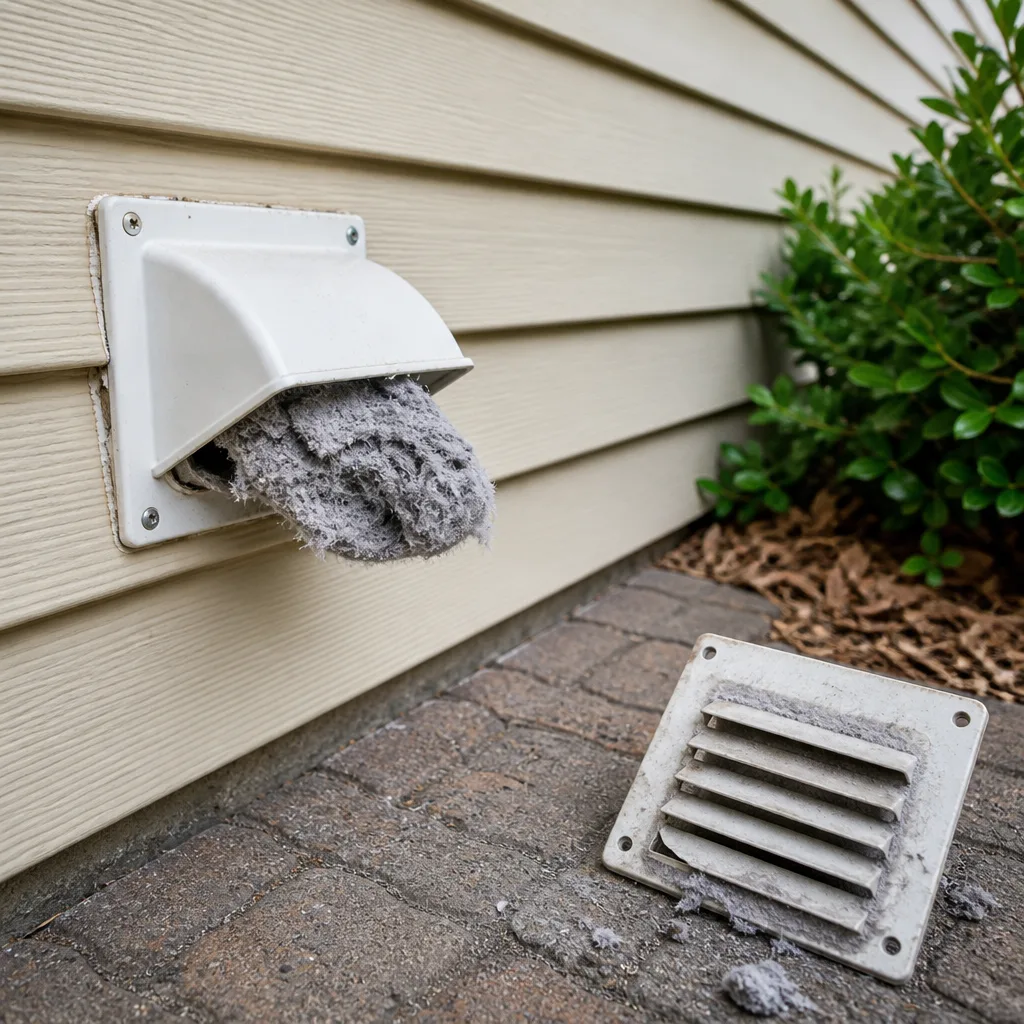
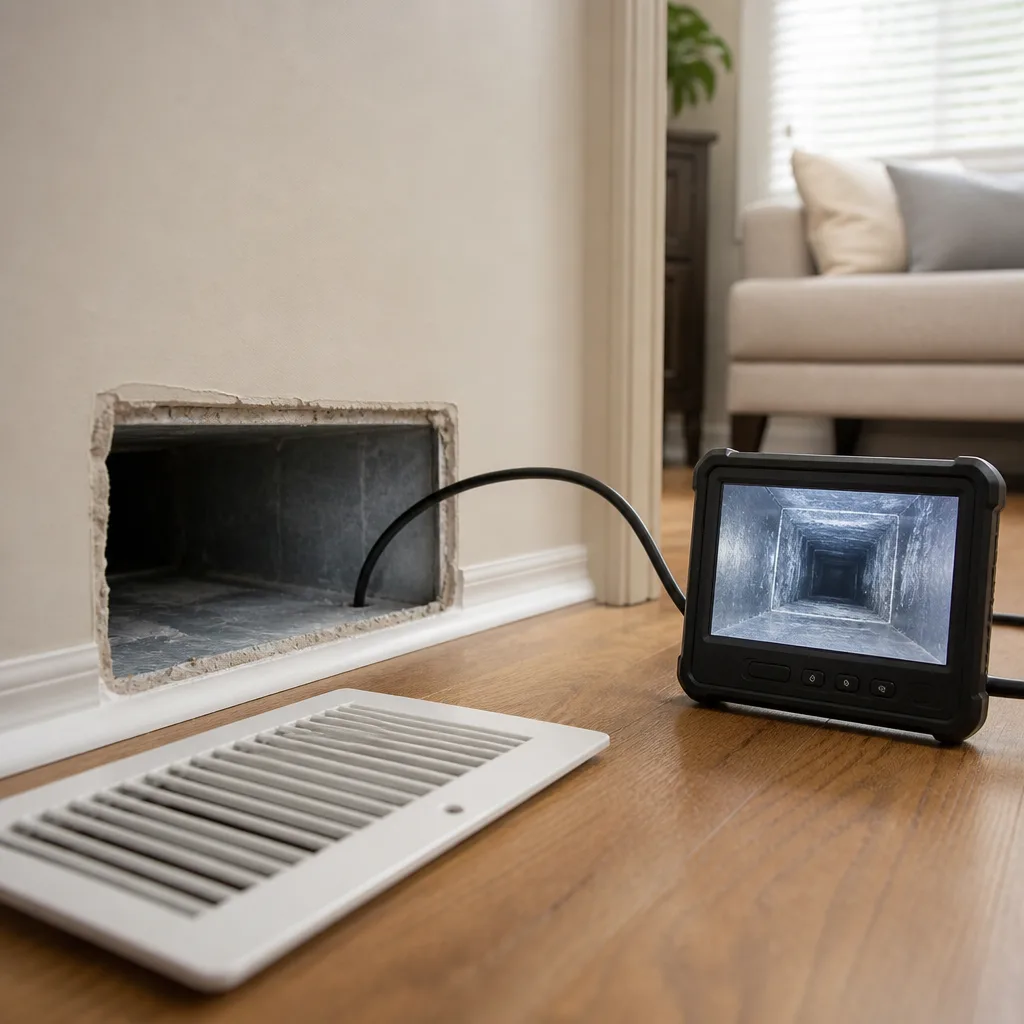
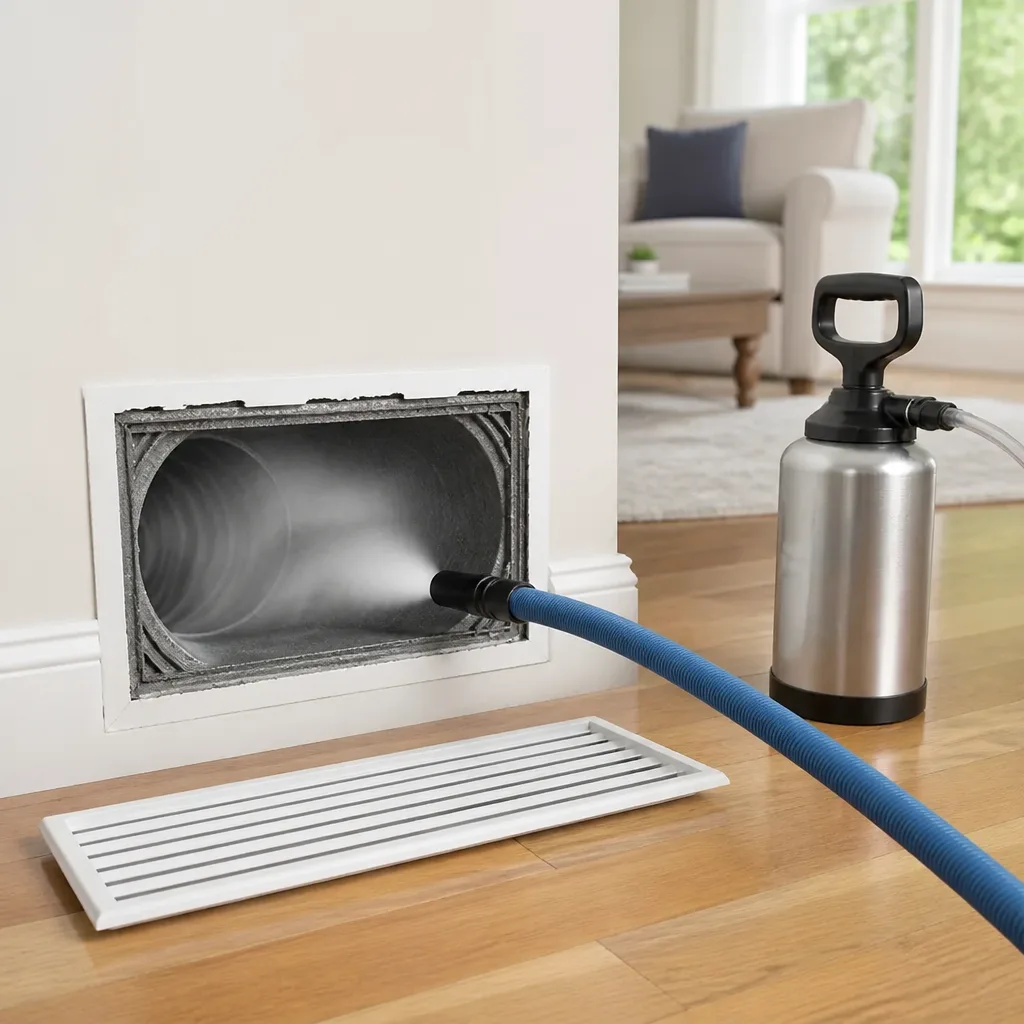
Whole-system duct and dryer vent check with before-and-after photos - you see exactly what came out of your vents
That "$99 whole-house special" is a bait ad - the real number appears once they are in your hallway, or the "clean" is a shop-vac at the register. We photograph the inside of your ducts before and after instead.
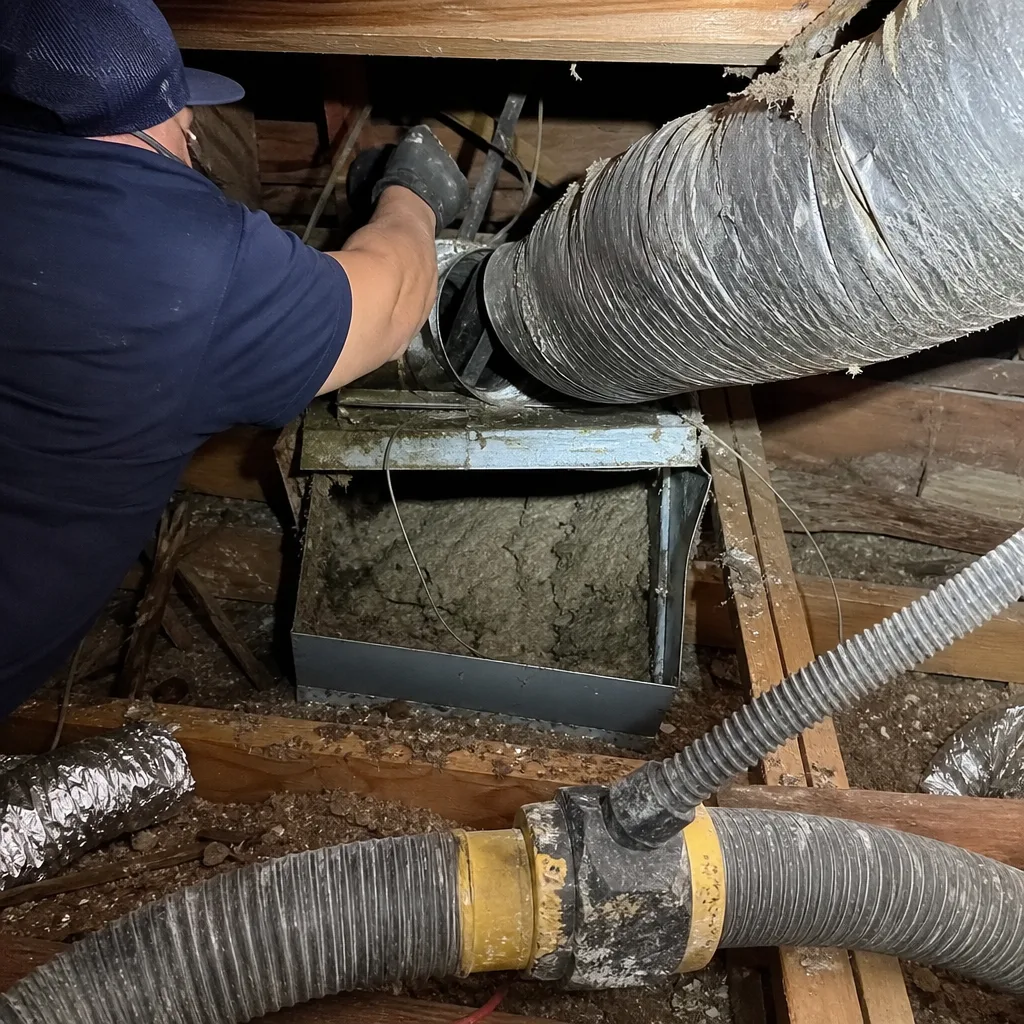 Before
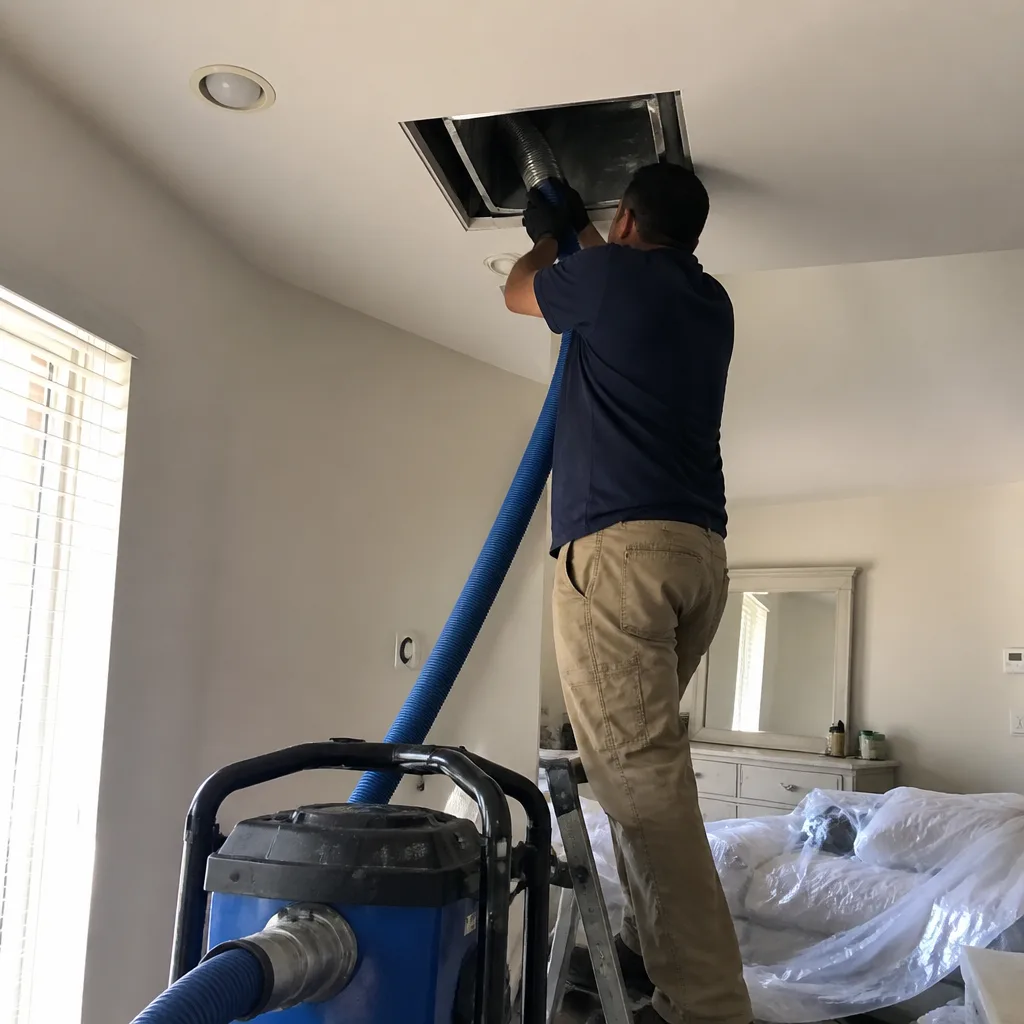 After
After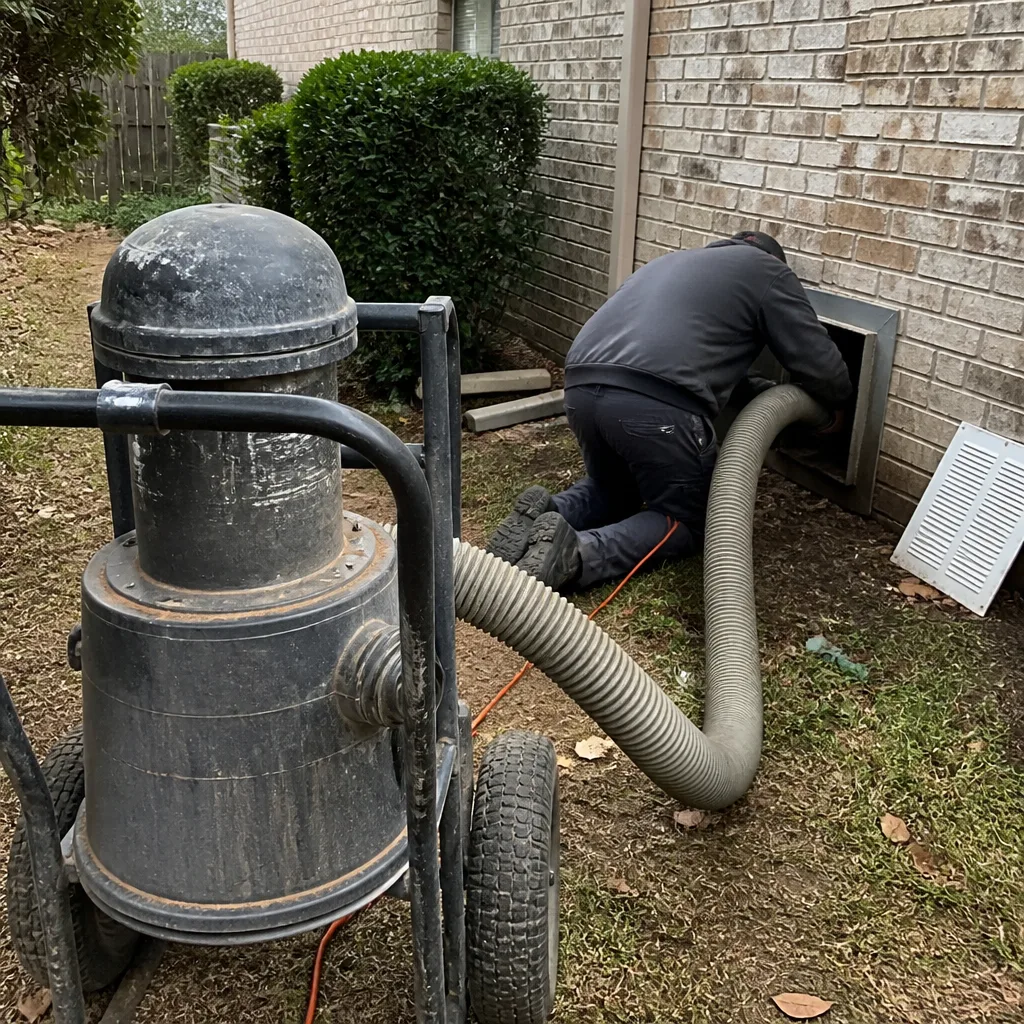 Before
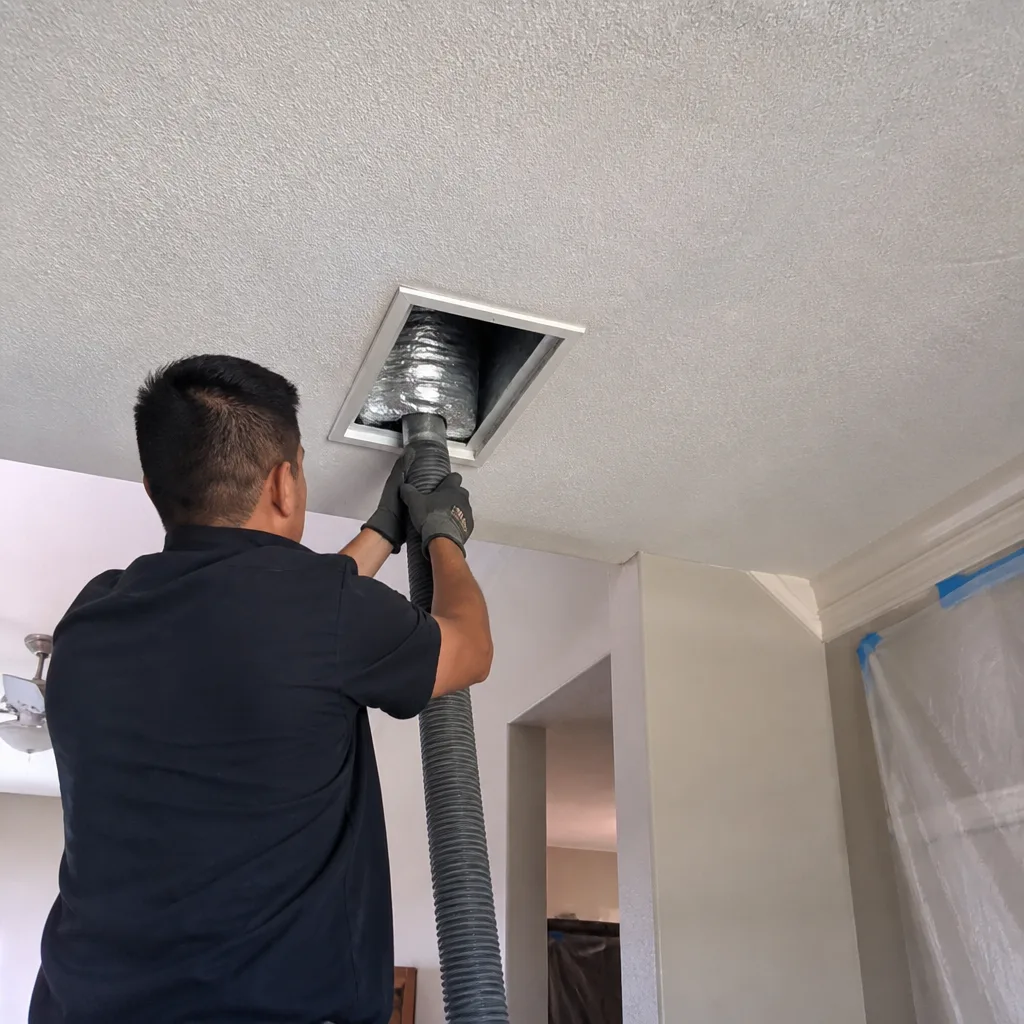 After
After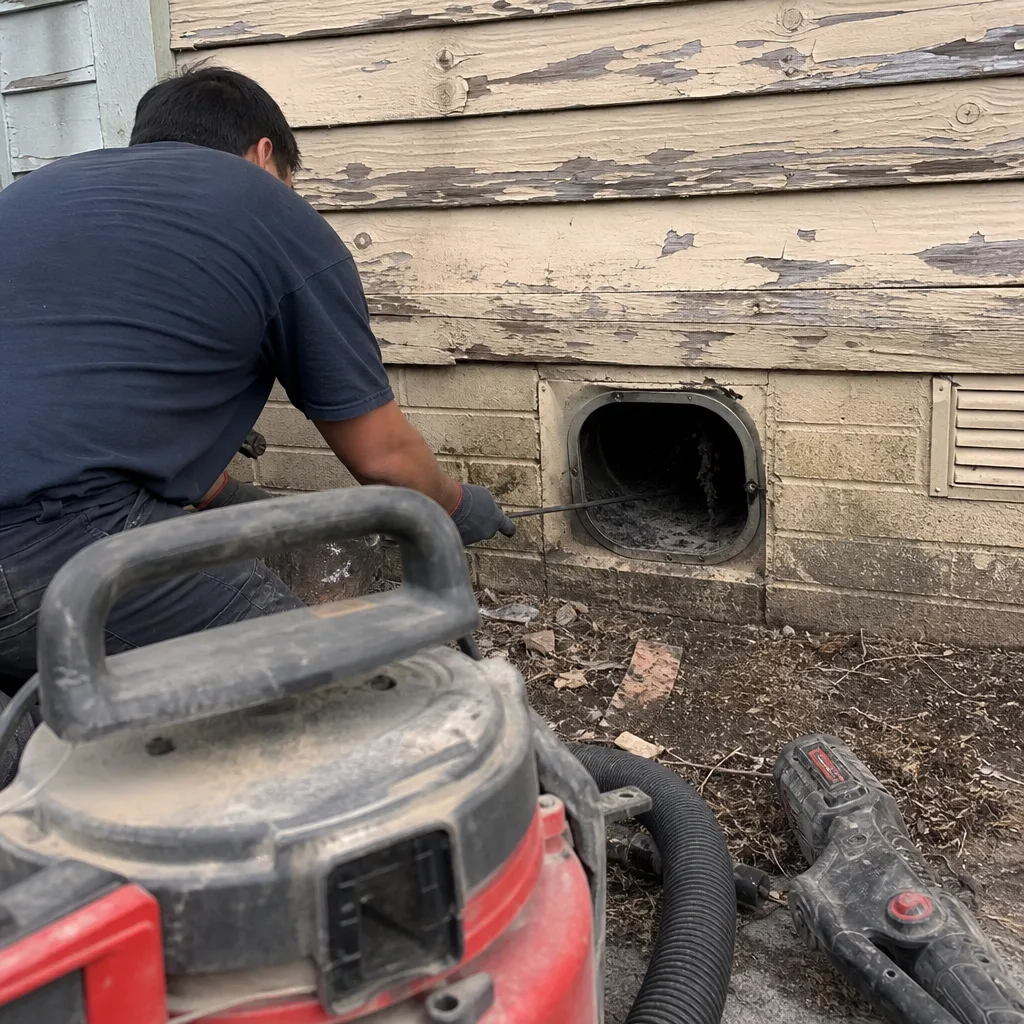 Before
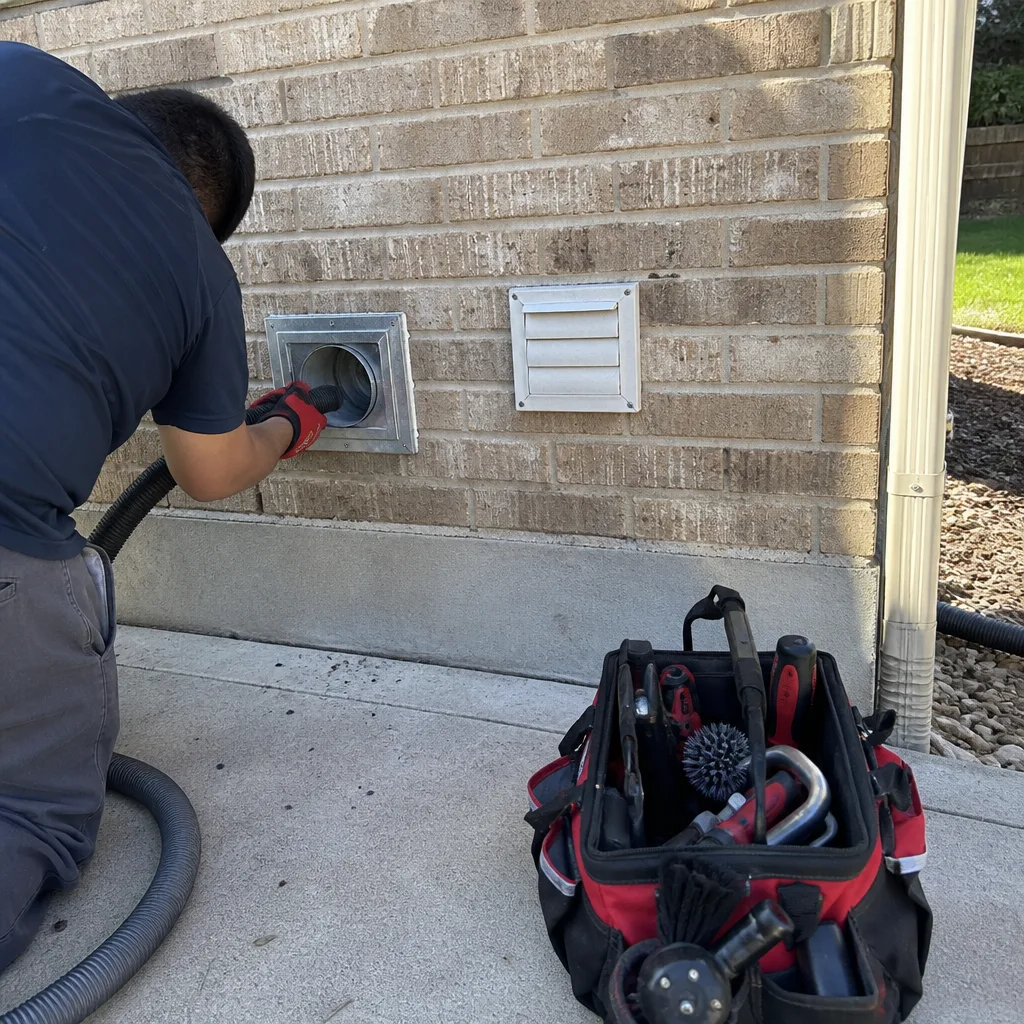 After
AfterRotobrush Duct Sealing & Repair: The Irving Owner’s Guide
Rotobrush-compatible duct sealing and repair in Irving typically runs $340-$780 for a full system, depending on how many duct runs need attention and whether we’re sealing accessible joints or replacing collapsed flex sections. We stock Rotobrush-compatible sealing compounds, flex-duct repair sleeves, and register boots on our Irving-area trucks, and most jobs are completed in a single visit. The photo doesn’t lie - let’s look at it together before we talk about next steps.
Most Irving homeowners figure out something’s wrong when one room stays stubbornly hot while the rest of the house cools, or when their energy bill climbs without explanation. In the Las Colinas corridor especially, we’ve found that original flex duct from the 2000s building boom has started sagging at elbows and pulling apart at taped seams - the Rotobrush system keeps the airflow moving, but it can’t compensate for ductwork that’s literally leaking conditioned air into the attic.
Which Rotobrush Models This Applies To
Rotobrush builds two main equipment lines that handle duct sealing and repair work: the portable negative-air units (Beast series, AiR+ series) and the full-size truck-mounted systems. The Beast and AiR+ units are what most Irving residential techs carry - they’re designed to work with standard 6-inch to 14-inch duct diameters, which covers nearly every home built from 1985 forward in neighborhoods like Valley Ranch and Hackberry Creek.
To identify what you’ve got, check the data plate on the motor housing. The Beast series will show a model prefix of “RB-” followed by the motor size - the RB-20 is the 20-amp residential workhorse, while the RB-30 steps up for larger homes. The AiR+ line uses “AIR-” prefixes. For sealing and repair work, what matters isn’t the vacuum motor itself but the diameter of the hose whip and the sealing head attachment - these need to match your duct size or the sealant won’t distribute evenly.
We carry OEM Rotobrush sealing compound (the gray, fiber-reinforced mastic) and quality aftermarket equivalents from Nikro that meet the same UL 181 specifications. The aftermarket mastic costs less and performs identically in Irving’s heat, but some homeowners with newer equipment under manufacturer warranty prefer OEM for documentation purposes. We stock both on our trucks and will note which we used on your written invoice.
Signs Your Rotobrush Duct Sealing & Repair Is Failing
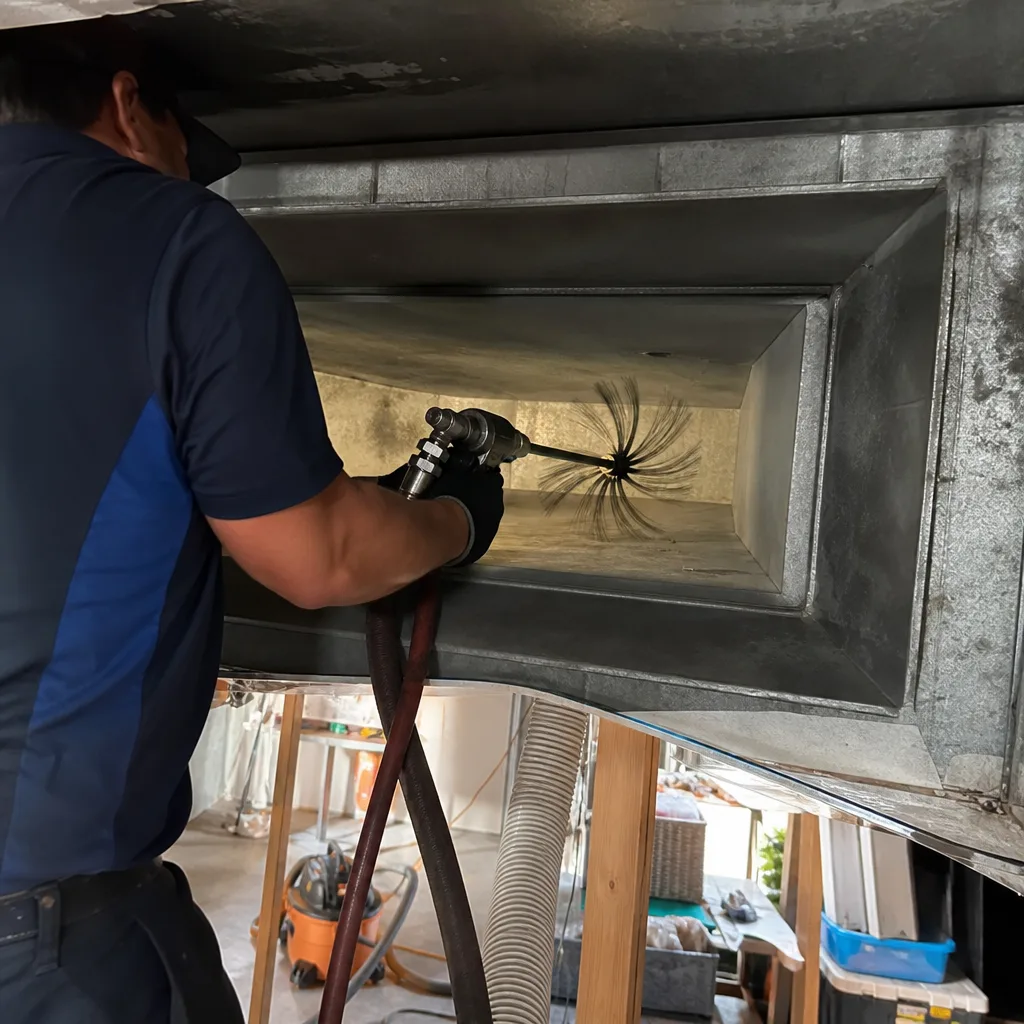
- Uneven temperatures room to room. When a duct run has separated at a joint or the flex has torn at a bend, conditioned air dumps into the attic or wall cavity instead of reaching the register. The Rotobrush system may still show normal static pressure at the plenum while that room starves for airflow.
- Dust streaking around ceiling registers. This means air is being pulled backward through the gap between the register boot and the drywall - a classic sign the duct-to-boot seal has failed. In Irving’s windy spring months, attic dust gets drawn in and deposited on your ceiling.
- Energy bills climbing 15% or more with no rate change. The Department of Energy estimates typical duct leakage wastes 20-30% of conditioned air. We’ve measured 40% leakage in Irving homes where original duct tape has dried and peeled - tape was never meant to be permanent, despite the name.
- Musty or chemical odors when the system cycles on. Leaky return ducts in the attic pull in fiberglass insulation particles, rodent droppings, and hot attic air. The Rotobrush cleaning head can scrub the duct interior, but if the leak isn’t sealed, the contamination returns within weeks.
- Visible sagging or kinking in exposed flex duct. Flex duct has a design lifespan of about 15-20 years in Texas heat. The wire helix corrodes, the insulation compresses, and the duct collapses under its own weight. We see this constantly in Irving’s 1990s-era subdivisions where original flex is now past its service life.
BeforeAfterReplacement Cost & What’s Included
| Service | Typical Range in Irving |
|---|---|
| Single register boot reseal | $180-$260 |
| Flex duct section replacement (per run, up to 25 ft) | $280-$420 |
| Full system seal (mastic, all accessible joints) | $480-$680 |
| Collapsed flex duct replacement + full seal | $620-$780 |
What drives the range: attic accessibility (blown insulation adds labor), number of duct runs, and whether we’re working with rigid metal or flex duct. Metal duct takes longer to seal properly - each joint needs mastic and a mechanical fastener, not just tape.
Every job includes the Documented Photo Record: before photos of each problem area, after photos of the sealed or replaced section, delivered with your invoice. The work is backed by our 365-Day Done Right Promise, written on every contract under Haven Standard Clause 1. No per-vent pricing, no add-ons once we’re in the attic - the price you approve in writing is the price you pay.
DIY or Call Us?
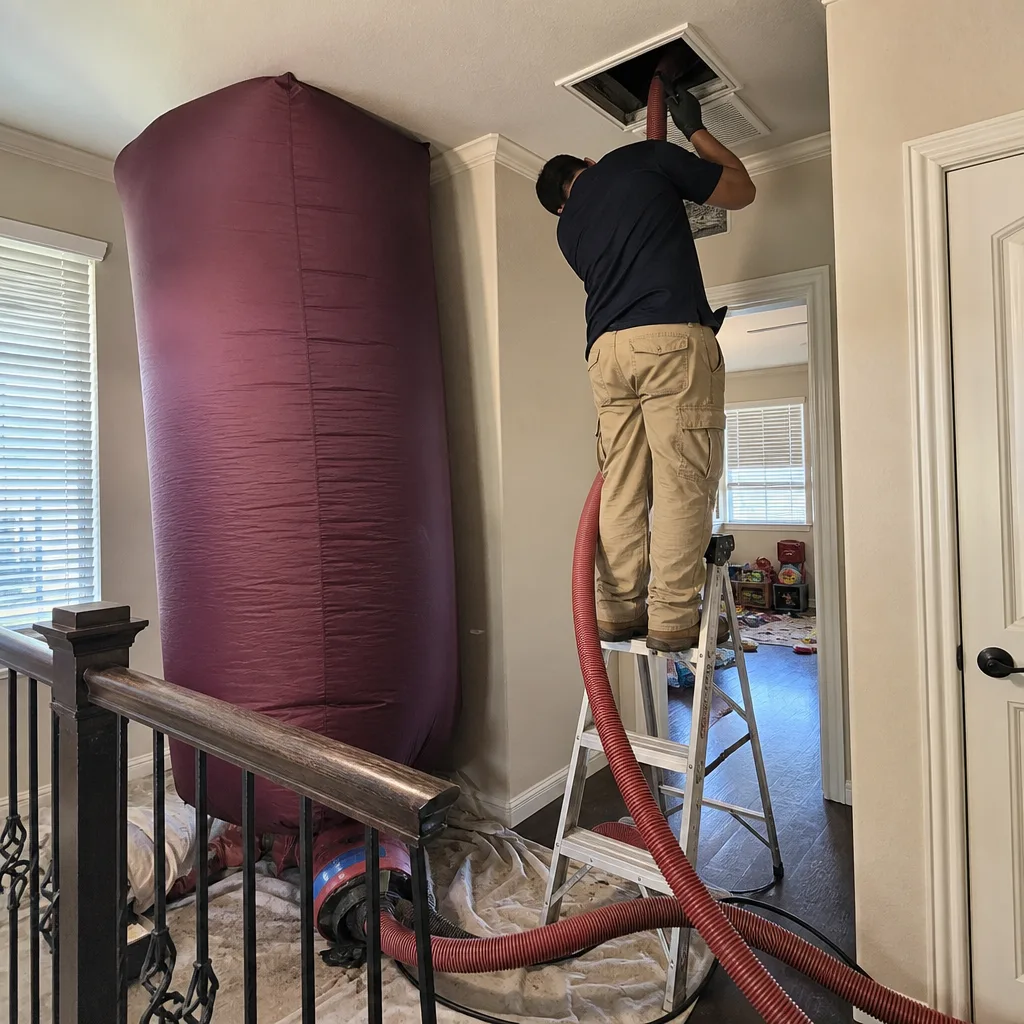
There’s a safe middle ground here. A homeowner can check the obvious: remove a few registers and look for separated boots with a flashlight, or shine one into the duct and look for daylight (which means a hole) or sagging. You can also feel for airflow at the register - weak flow on a single register points to a duct problem, not a system problem.
Where DIY goes wrong: attic flex duct work involves tight spaces, fiberglass insulation contact, and the real risk of collapsing ceiling drywall if you step off a joist. More importantly, sealing a duct properly requires negative-pressure verification - you need to pressurize the system and measure leakage before and after, or you’re guessing. We use Rotobrush and Nikro equipment to verify our seals with actual numbers, not visual inspection alone.
CleanRun Air Duct Cleaning Irving is an independent service provider - we’re not affiliated with Rotobrush, though we use their equipment daily. If you’ve got a Rotobrush system and suspect duct sealing or repair needs, call (682) 297-4068. We’ll bring the camera, show you what’s actually in your ducts, and put a written price in front of you before any work starts.
FAQs
Properly applied mastic sealant lasts 15-20 years in our conditions, though the original flex duct itself often fails first. In Irving’s attic heat, which regularly exceeds 140°F in July and August, the flex duct insulation breaks down faster than the seal - we typically see flex needing replacement at year 12-18, while our mastic seals hold. Call (682) 297-4068 and we’ll inspect what you’ve got - estimates are free.
Separated joints and small holes up to 3 inches can be sealed in place. Collapsed, torn, or rodent-damaged flex needs replacement - patching it creates turbulence that collects debris and restricts airflow. We’ll show you the camera footage and tell you which category you’re in before quoting. Call (682) 297-4068 for an exact assessment.
Most residential jobs in Irving run 3-5 hours for a full system seal, or 1.5-2 hours for a single flex run replacement. We don’t schedule multiple jobs on the same crew the same day - your appointment gets the full window it needs. The written scope we provide before starting includes the time estimate, so you know what to expect.
Yes - mastic compound, flex duct in 6-inch through 14-inch diameters, register boots, and mechanical fasteners. For unusual sizes or rigid duct modifications, we source overnight from Dallas-area suppliers and return to complete the job. We don’t charge a return trip for parts we don’t stock; Haven Standard Clause 1 covers that. Call (682) 297-4068 to confirm availability for your specific setup.
Written by Tomas Reyes, Owner, CleanRun Air Duct Cleaning Irving at CleanRun Air Duct Cleaning Irving, serving Irving and nearby areas.