

Whole-system duct and dryer vent check with before-and-after photos - you see exactly what came out of your vents
That "$99 whole-house special" is a bait ad - the real number appears once they are in your hallway, or the "clean" is a shop-vac at the register. We photograph the inside of your ducts before and after instead.
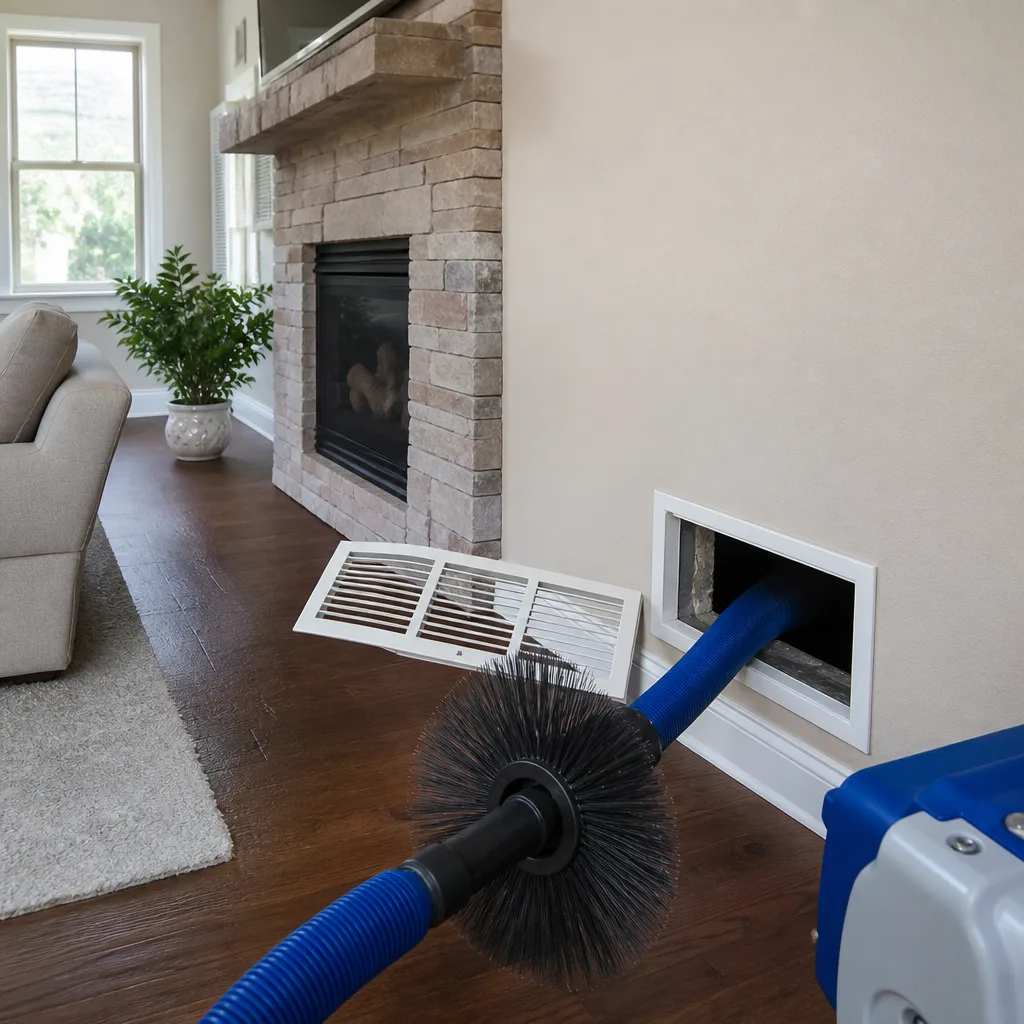
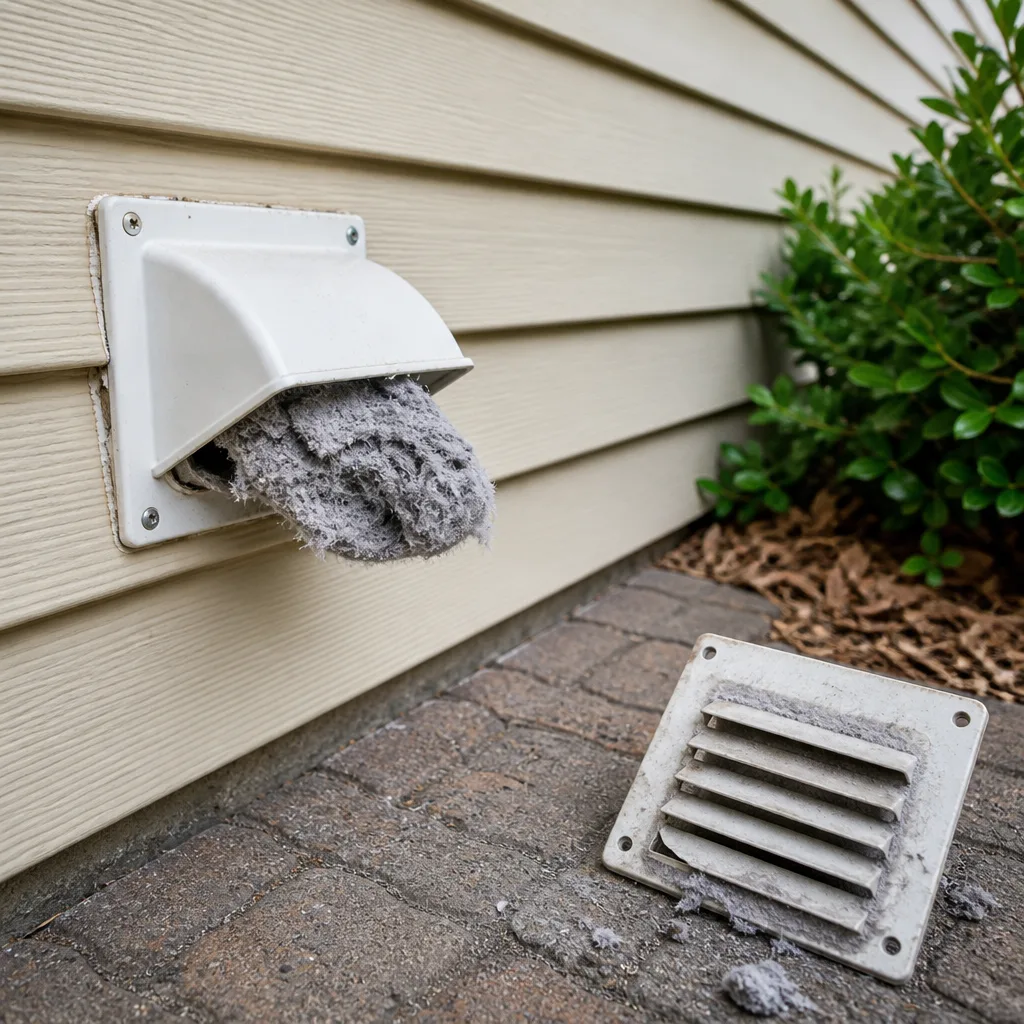
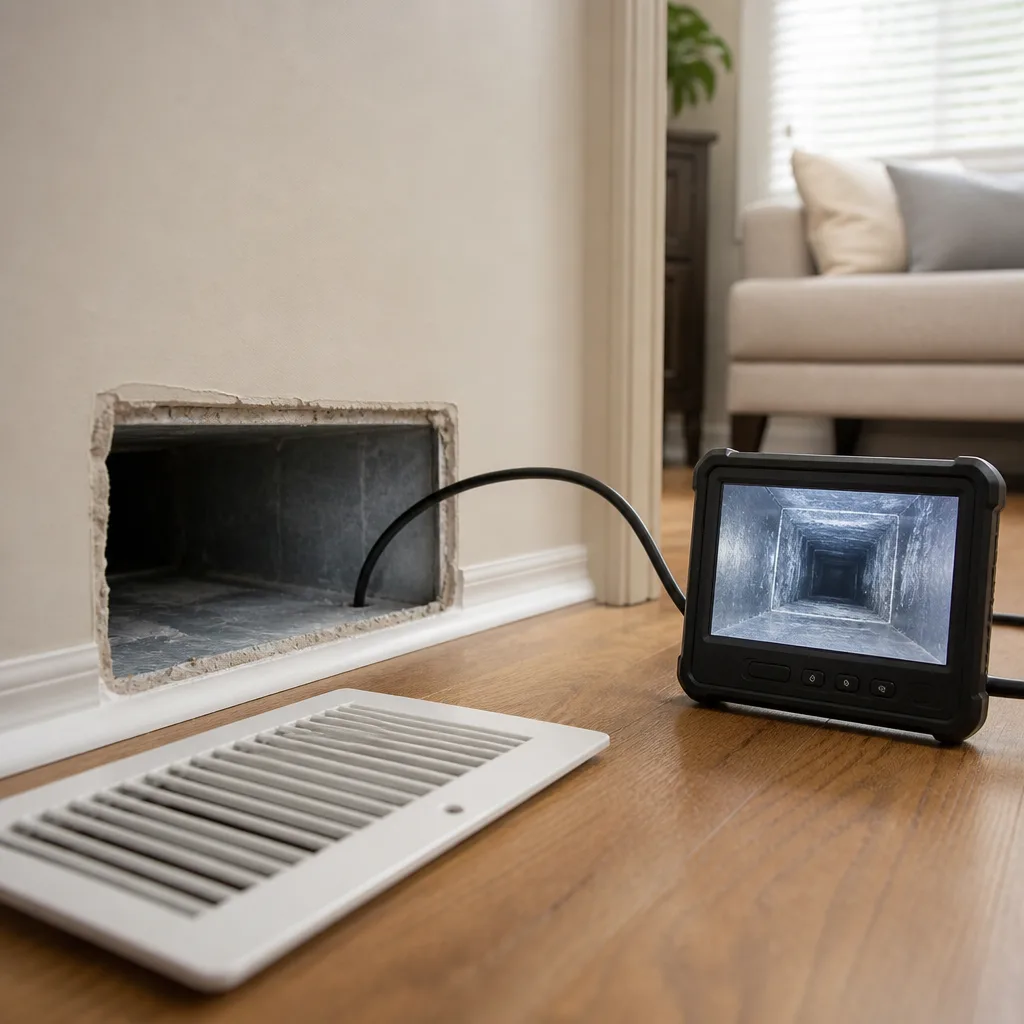
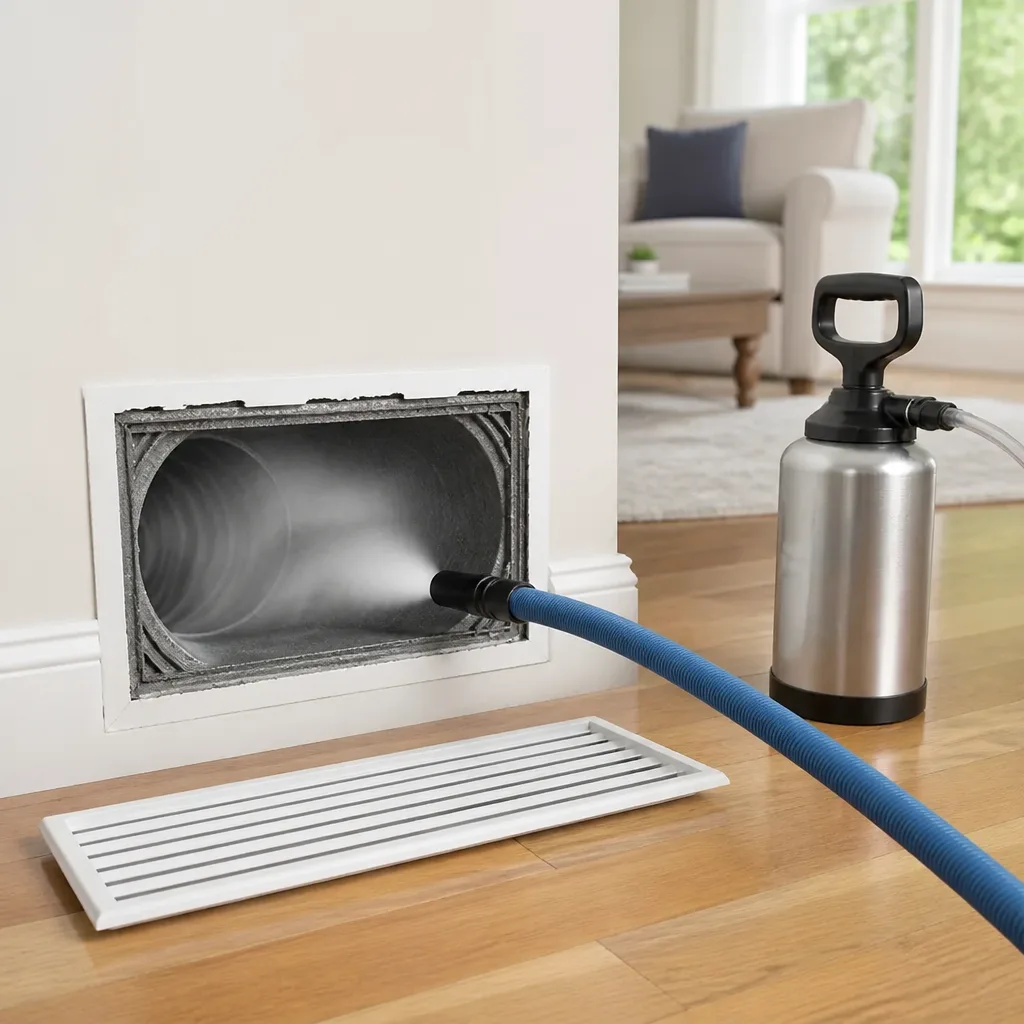
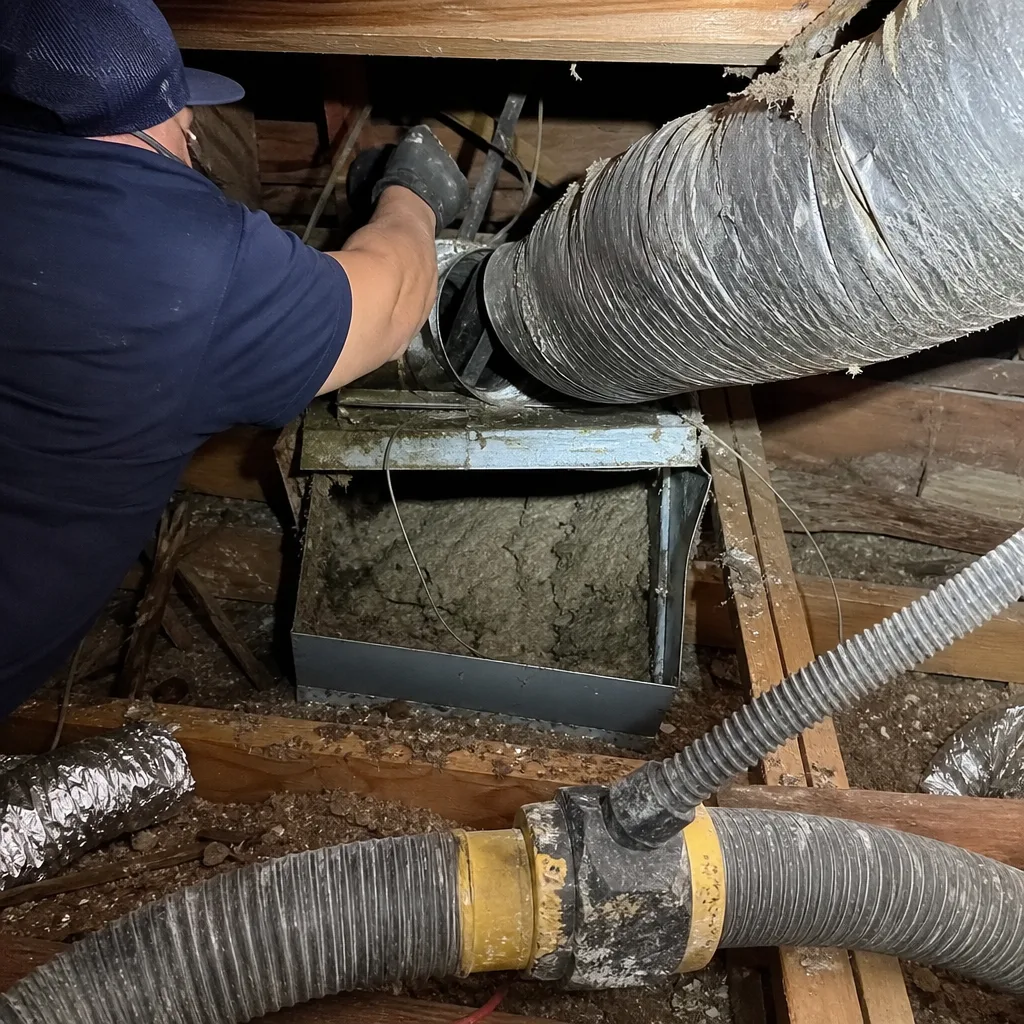 Before
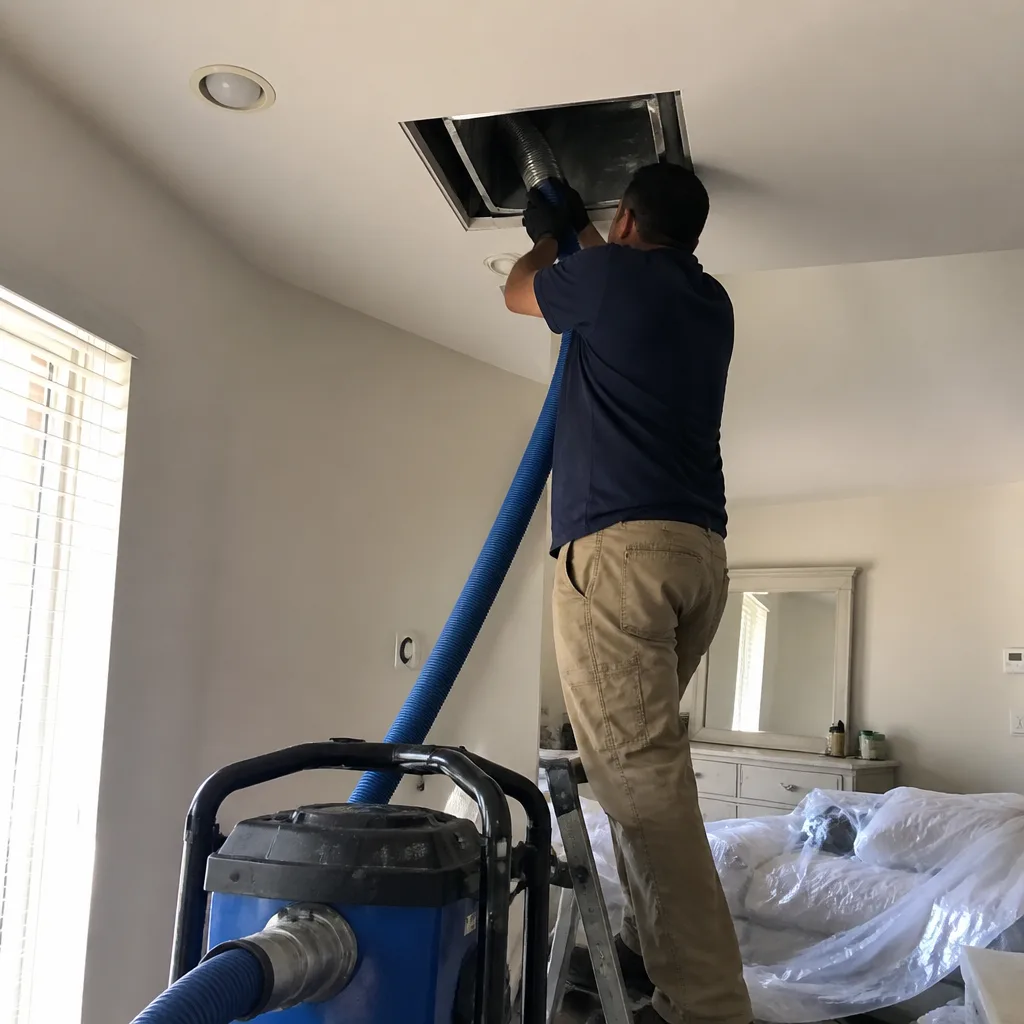 After
After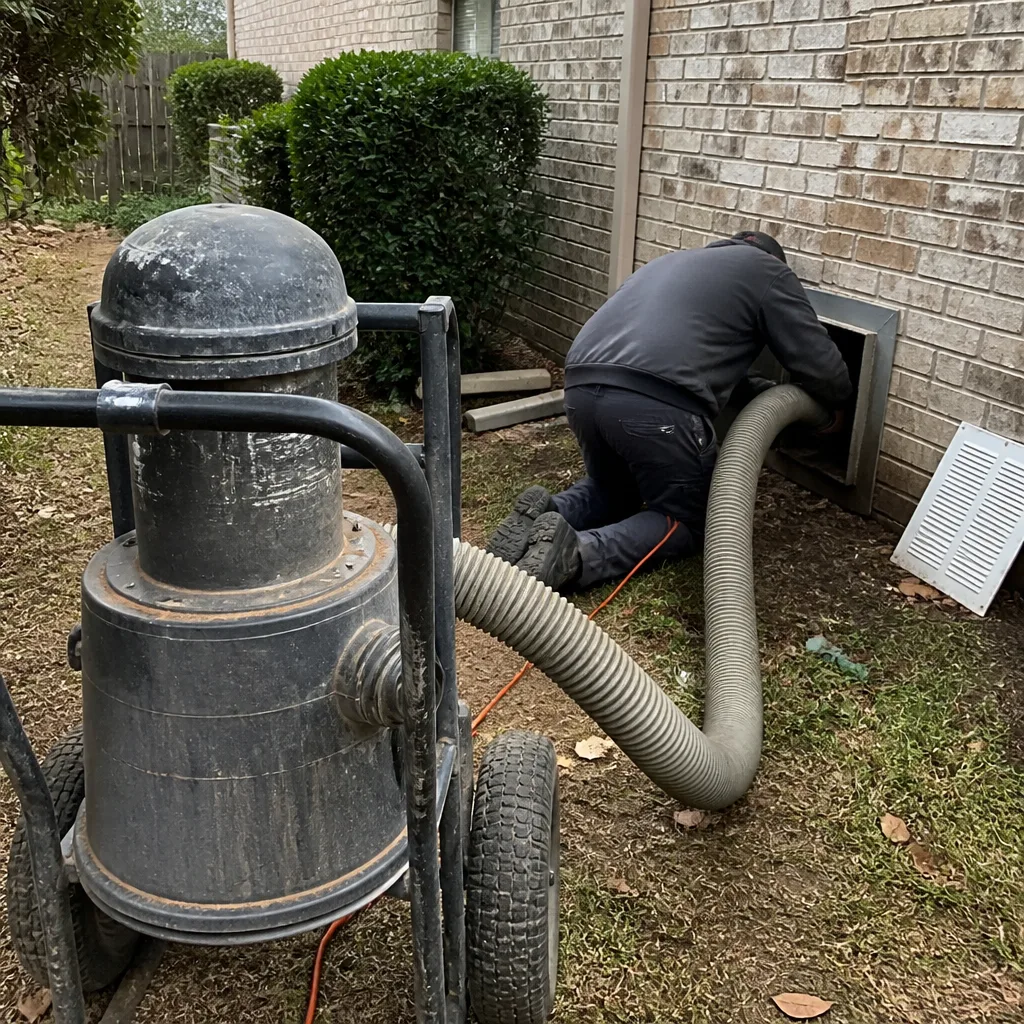 Before
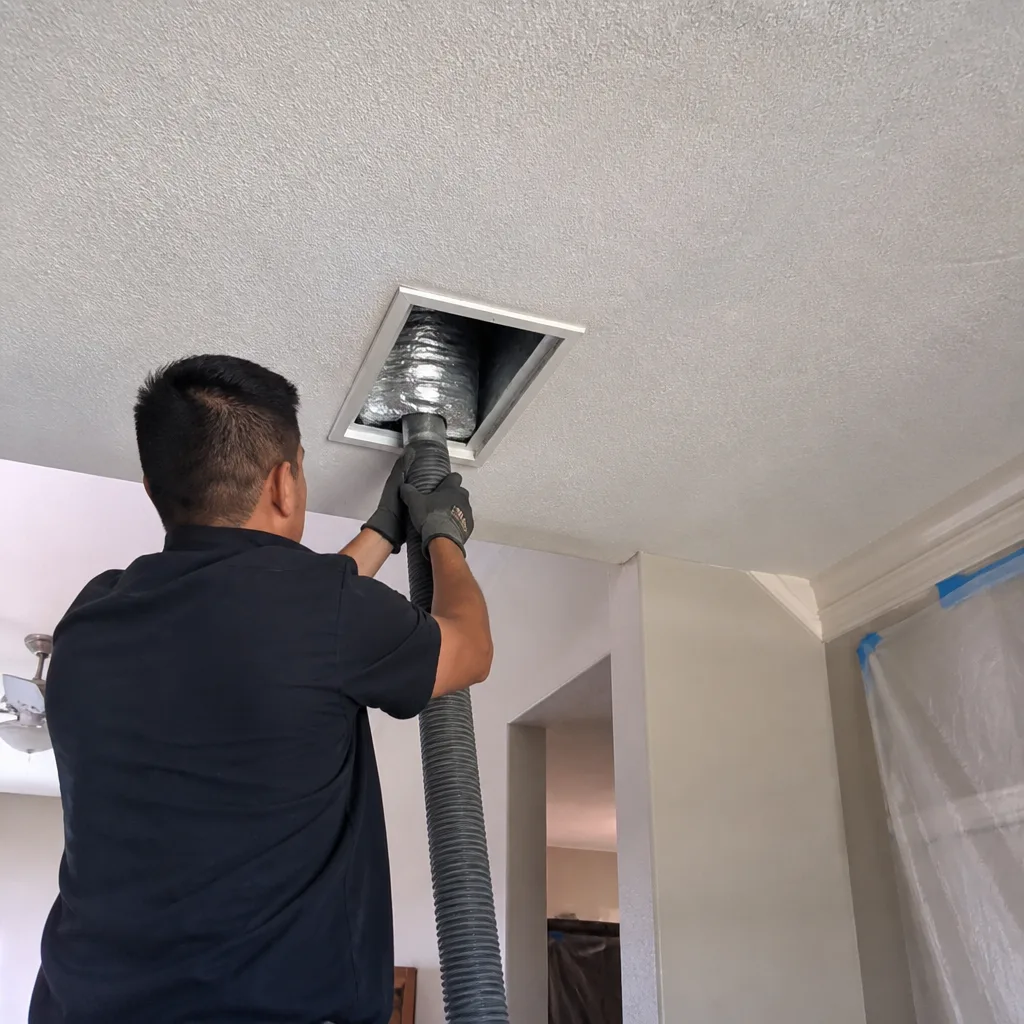 After
After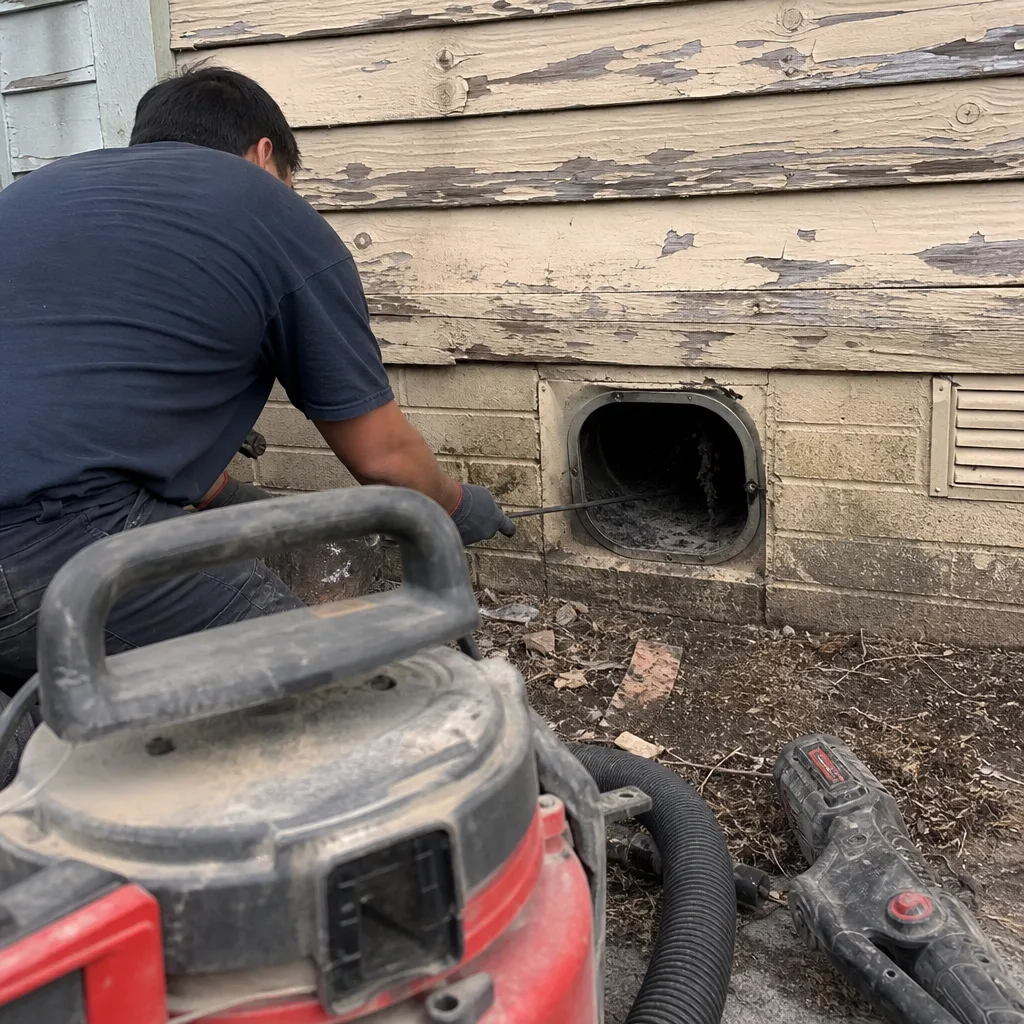 Before
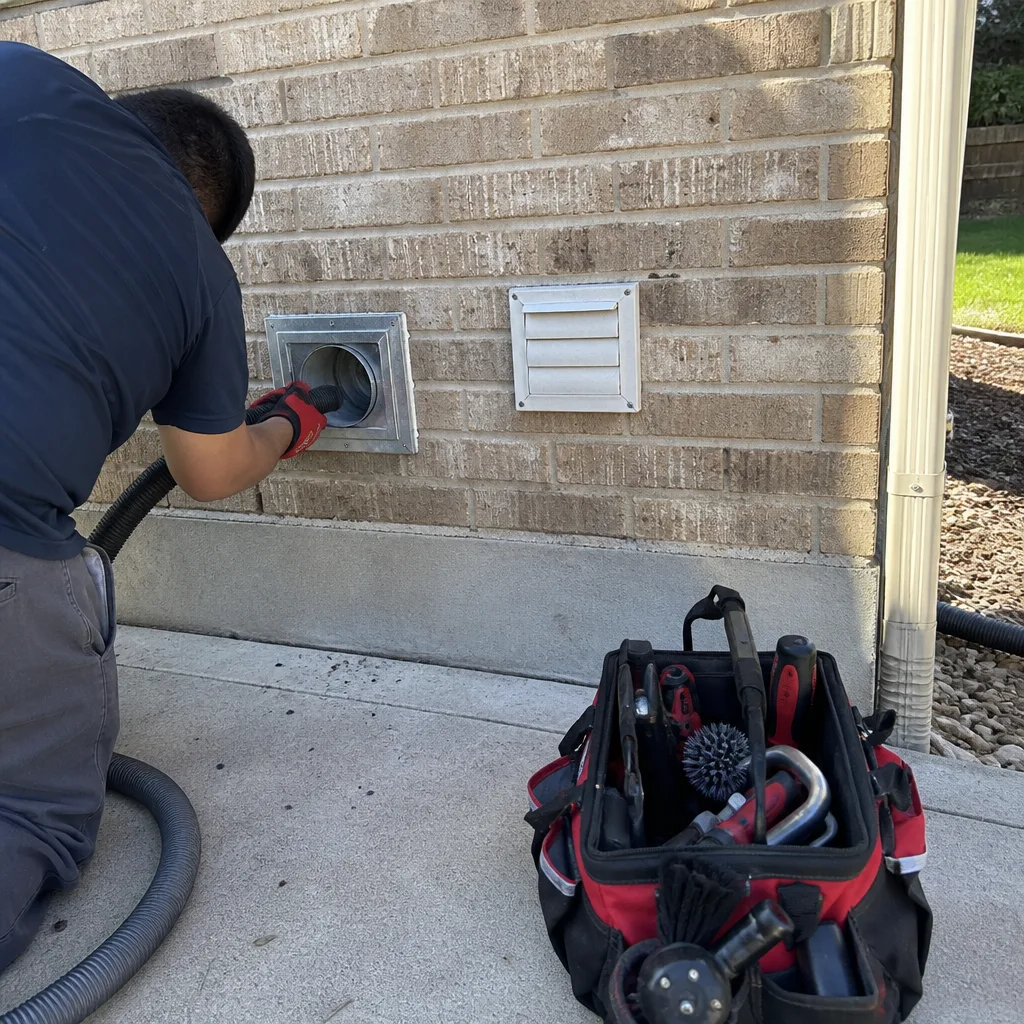 After
AfterFast, Reliable Dryer Vent Cleaning Across Dallas
Dryer vent cleaning in Dallas typically runs $175-$295 for a standard single-family home, with longer attic runs and reroutes pushing toward the upper end. Most jobs take 90 minutes to two hours, and we photograph the full run before and after so you can see what was actually in there.
We serve Dallas from our Dallas-Fort Worth office, and our crews know the local housing stock: the slab-on-grade ranches of Lake Highlands, the 1970s builds along Garland Road, the newer infill near White Rock Lake. Because basements are rare here on expansive Blackland clay, virtually every dryer vent takes a long, hot route through the attic or an unconditioned garage wall rather than a short straight drop. That hidden run is where lint fires start, and it’s why we bring inspection cameras on every Dryer Vent Cleaning call.
Call (682) 297-4068 for a written estimate before any work starts. Estimates are free, and we answer live 24/7.
Why CleanRun Air Duct Cleaning Irving Is Dallas’s Preferred Dryer Vent Cleaning Company
We’ve been in Dallas homes since 2013, and the pattern is consistent: homeowners find us after a $79 coupon job left their vent still clogged. Our approach is different. Every job starts with a written price under Haven Standard Clause 1, and every vent run is photographed before and after. The photo record is yours, included as standard.
Our technicians are background-checked and uniformed, identified by name before arrival under Haven Standard Clause 3: Verified Crews. They carry professional-grade equipment from Rotobrush, Nikro, and Honeywell, and they know Dallas’s specific failure modes: the baked-lint mats in 150°F attics, the crushed flex runs stepped on during HVAC service, the bird guards missing on rural-edge properties.
The 365-Day Done Right Promise backs every job in writing. If it’s not right, we make it right. No manager approval needed.
Our Dryer Vent Cleaning Services in Dallas
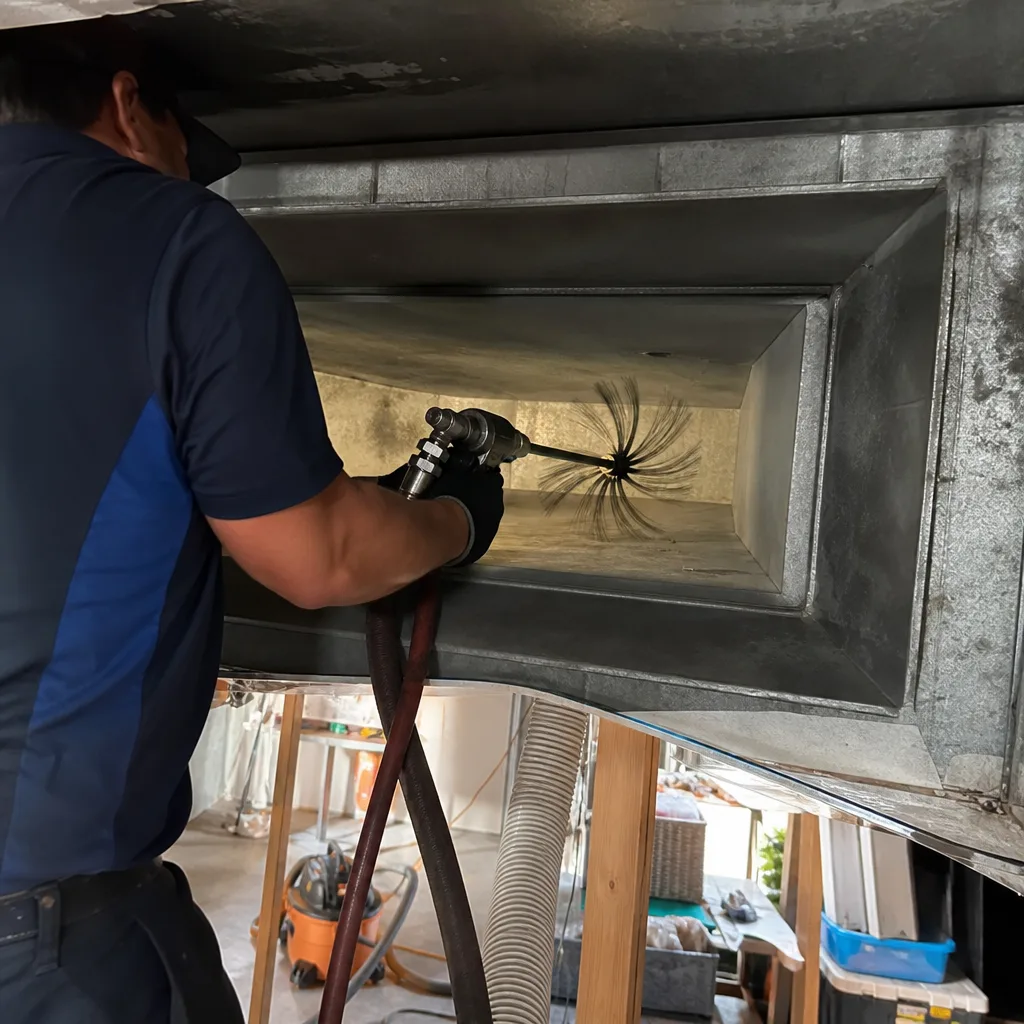
Dryer Vent Inspection
We start with a camera run. On a 1970s ranch in Lake Highlands, our tech pulled a camera through a dryer run that left the laundry room, climbed six feet of vertical flex, and then ran 22 feet through an attic that had been sitting over 150°F all August. The lint had baked into a felt-like mat glued to the duct wall, and the exterior vent cap was packed solid. Without the camera, the homeowner would have kept running loads, the dryer would have kept overheating, and the thermal fuse would have been the first warning. We did full source removal with agitation tools under negative pressure, rerouted the crushed flex to a smooth metal run, and installed a new Guardsman vent cap so the homeowner finally had real airflow again.
Inspections in Dallas homes typically find what the homeowner cannot see: sagging flex mid-run, disconnected boots at the exterior wall, or caps packed with lint and clay dust from Blackland Prairie windstorms. The inspection fee is credited toward cleaning if you proceed.
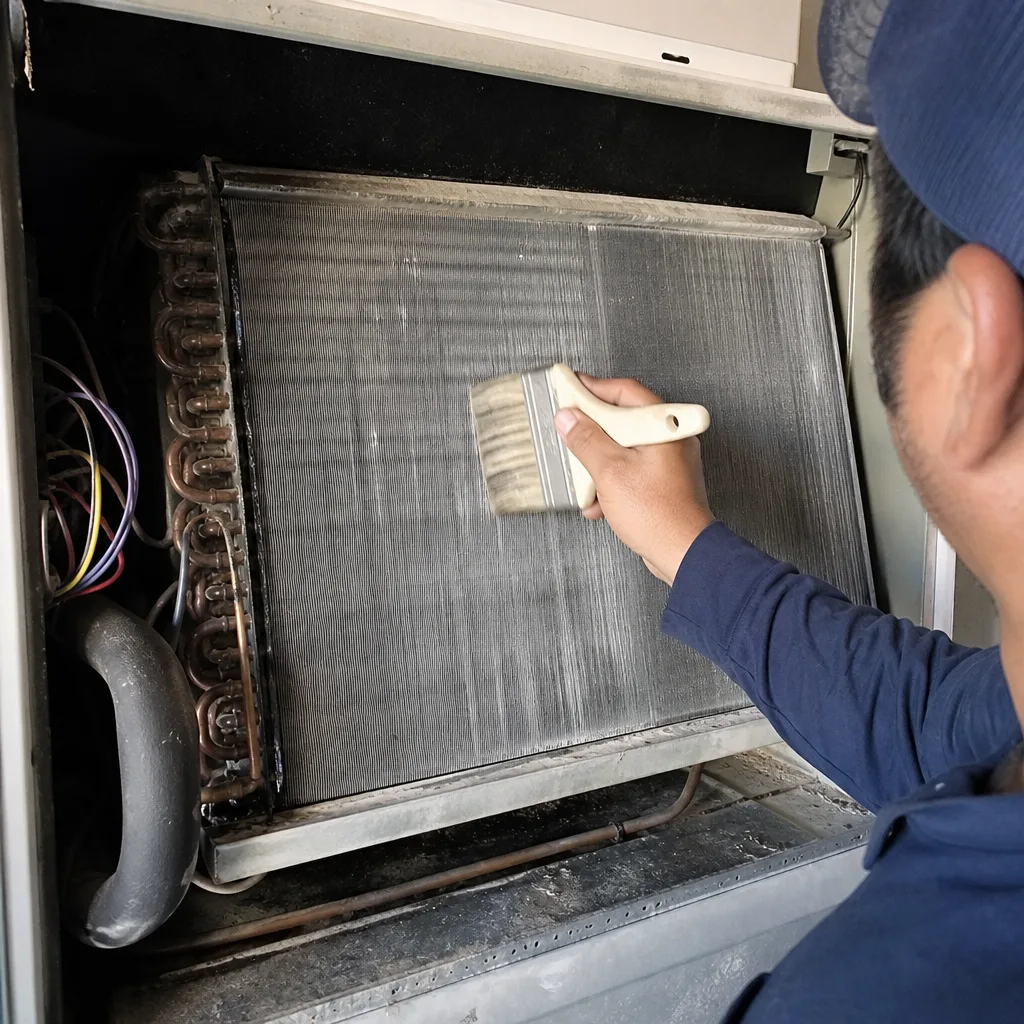
Vent Cleaning
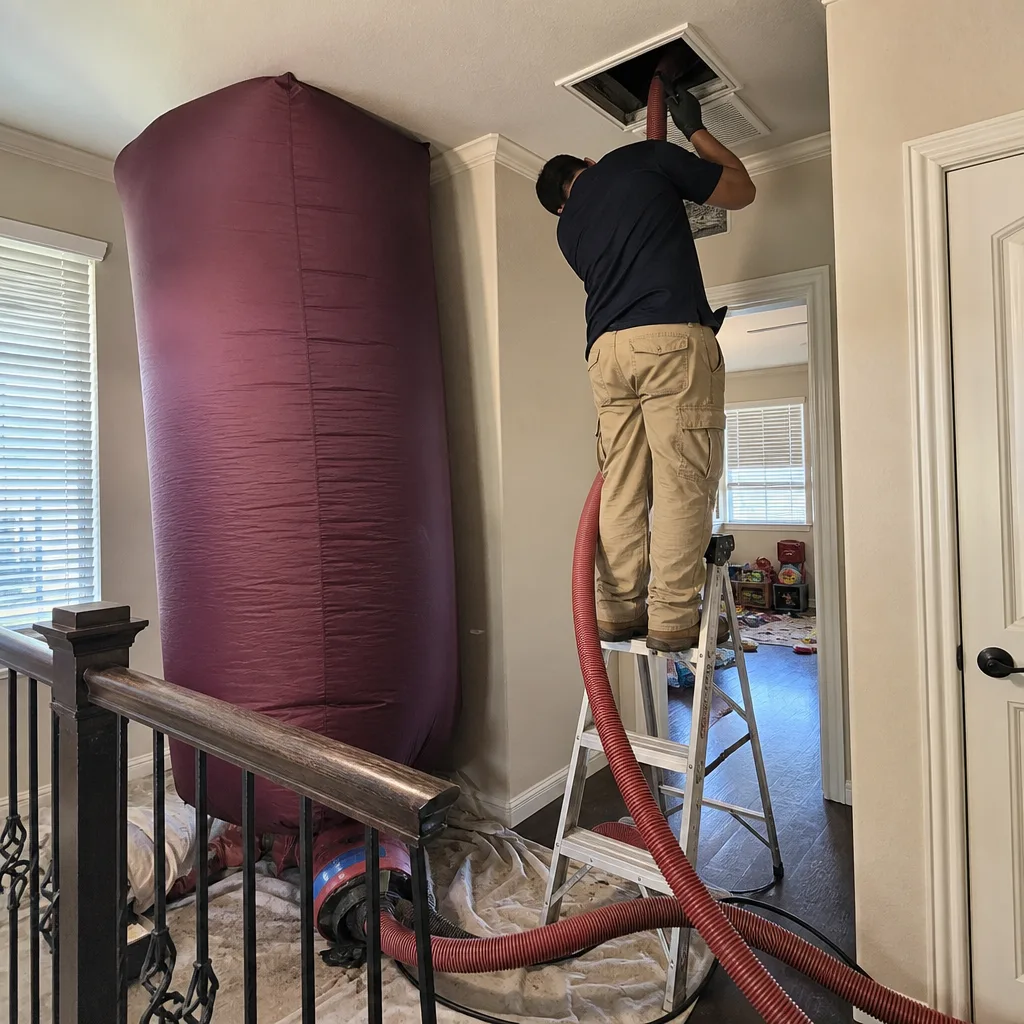
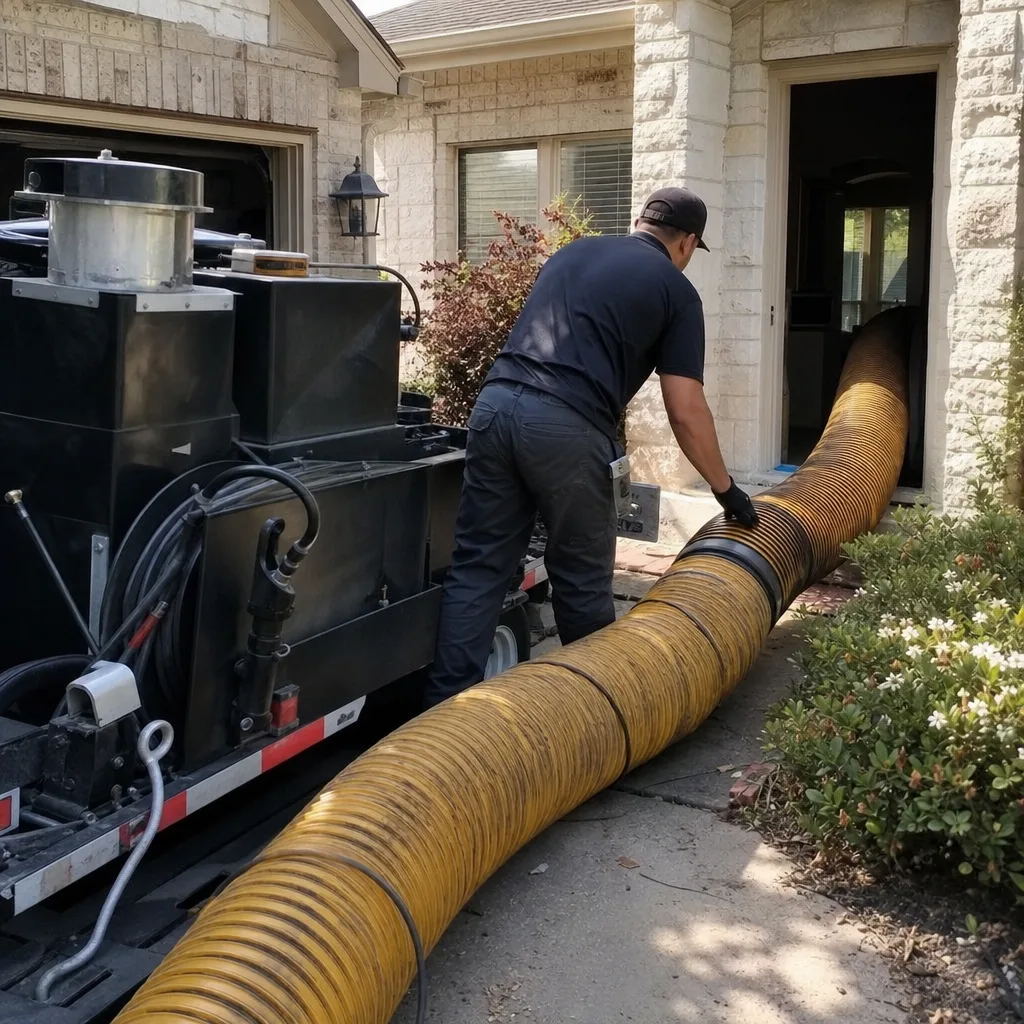
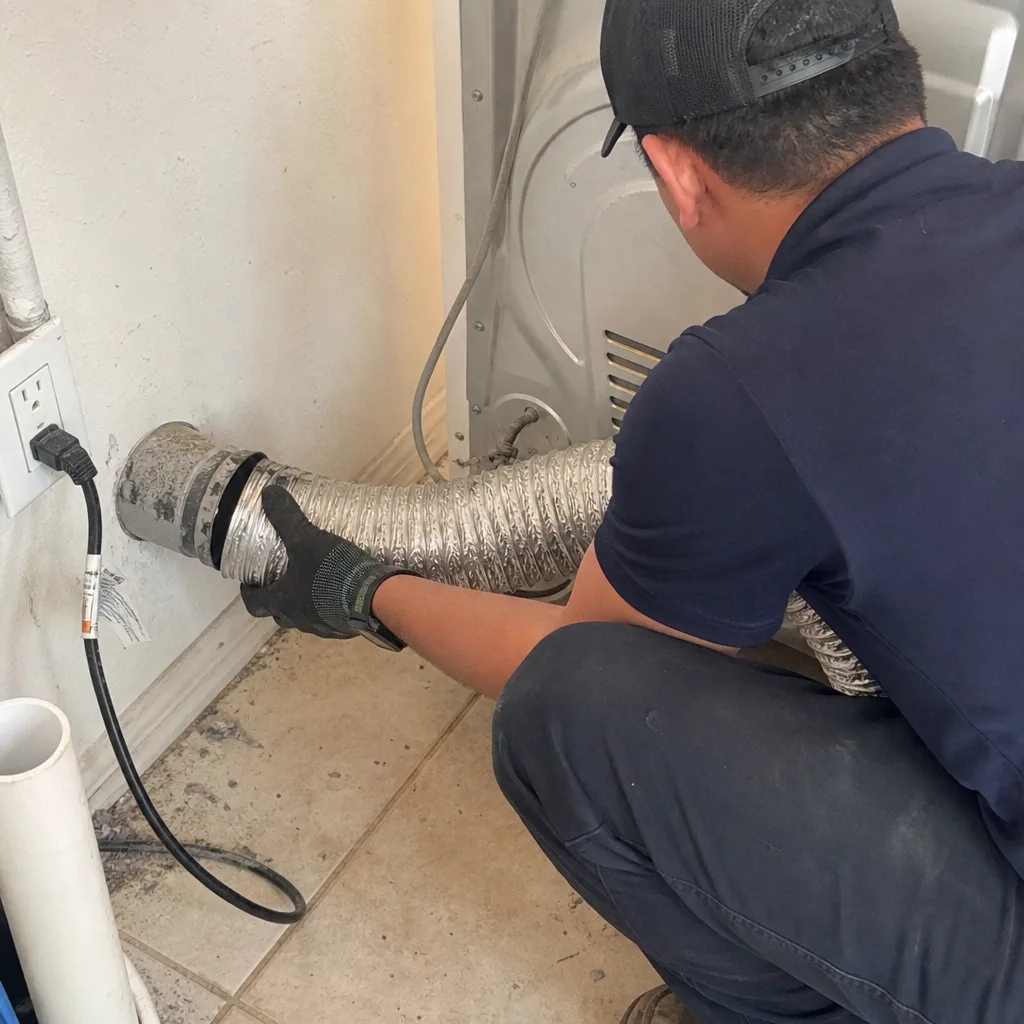
Our cleaning protocol uses negative-pressure extraction with rotary agitation tools, not a shop vac at the laundry room end. For Dallas’s long attic runs, this matters. The negative-pressure system pulls dislodged lint backward through the duct rather than blowing it forward, which prevents packing debris deeper into a run that may already have low spots or partial separations.
We clean the full run: from the dryer transition hose through the wall or ceiling penetration, up the vertical rise, through the horizontal attic span, and out the cap. In Dallas’s rural-edge properties near Seagoville or Combine, where unpaved roads and wood heat add clay dust and fine ash to the lint load, we often find vents need cleaning every 8-10 months rather than the generic annual schedule. The photo record shows you exactly what accumulated and how much.
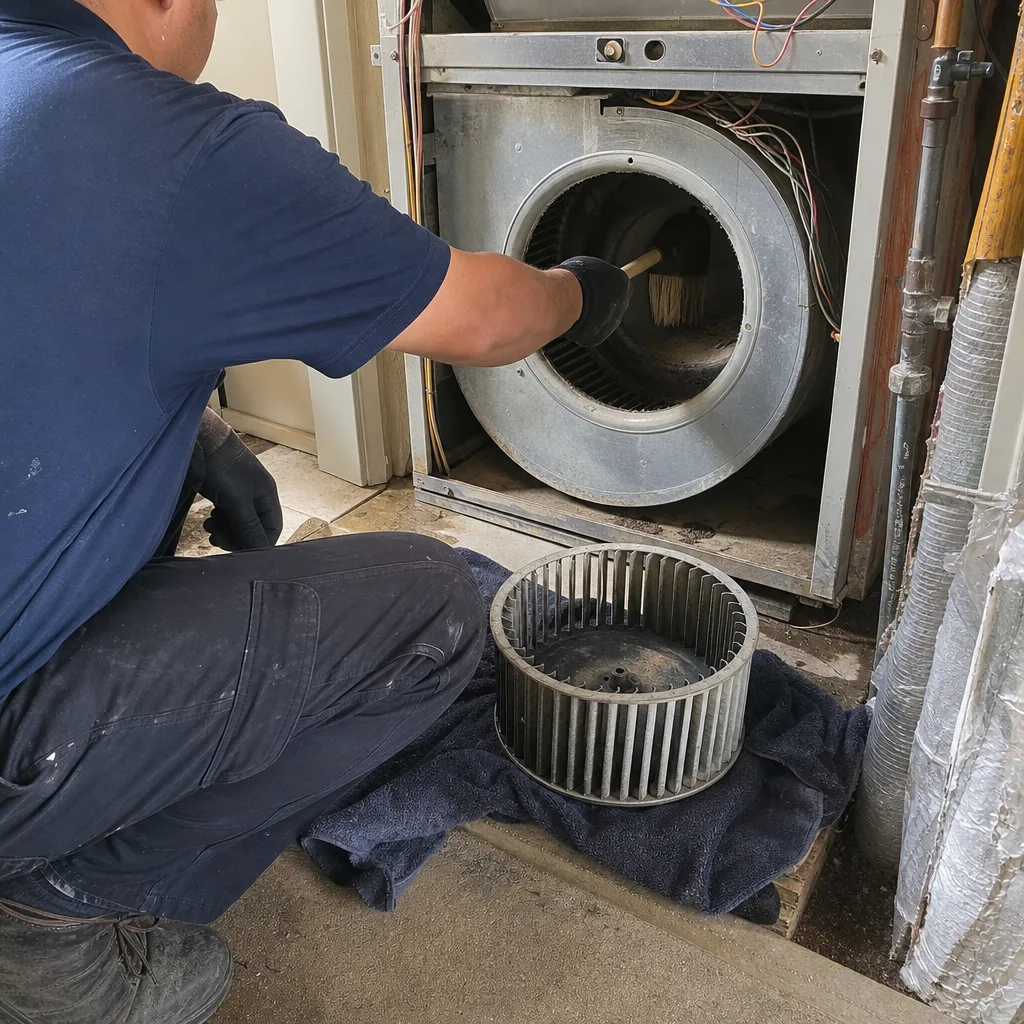
Lint Removal
Lint in Dallas vents is rarely loose and fluffy. In those 150°F attics, it bakes onto the duct wall, especially in flex duct with ribbed interiors that trap fibers. We use mechanical agitation to break the bond, then extract under continuous negative pressure. The result is source removal, not surface disturbance.
For homes near White Rock Lake or along the Trinity River corridor, higher ambient humidity can compound the problem: lint absorbs moisture, compacts, and partially dries in hard layers that restrict airflow without fully blocking it. The dryer runs longer, the electric bill climbs, and the homeowner notices only the symptom, not the cause.
Vent Rerouting
Many Dallas homes need more than cleaning. The original flex run, installed when the house was built in 1975 or 1985, was never meant to survive decades of attic heat. The inner liner separates from the wire helix. The sag creates a lint trap. The cap end cracks and leaks conditioned air into the attic while drawing attic air back in.
We reroute to smooth metal where possible, reducing friction and eliminating the ribbed flex that traps lint. For slab-on-grade ranches in Garland, Mesquite, or Irving, this often means shortening the horizontal attic span or converting to a wall penetration with a straight rise. Every reroute gets a written scope and price before we cut anything.
Bird Guard Installation
Open vent caps on rural-edge Dallas properties invite nesting. The standard wire mesh guard, if installed at all, clogs with lint in a single season and becomes part of the blockage. We install Guardsman vent caps with proper lint-clearance design, sized to the duct diameter and the local wildlife pressure. On properties with outbuilding dryers, barn workshops, or guest-house laundry, we size and install guards for each separate system.
Vent Cap Replacement
Cracked, missing, or improperly screened caps are the norm on older Dallas homes. We stock replacement caps and verify proper backdraft damper function as part of the standard job. A cap that doesn’t close allows hot, humid attic air to enter the duct when the dryer is off, accelerating corrosion and mold growth on the lint residue.
What happens when you call
- 1
A real person answersNo phone trees - you reach a local pro.
- 2
You get an upfront price rangeHonest numbers before anyone is dispatched.
- 3
A background-checked tech heads outLicensed & insured, dispatched right away.
- 4
You approve before work beginsNothing starts until you say go.
BeforeAfterTrusted Brands We Service in Dallas
Our equipment roster includes Rotobrush rotary systems for duct agitation, Nikro negative-pressure extractors, and Honeywell airflow verification tools. We stock Guardsman vent caps and bird guards locally, so replacement parts don’t delay the job. For Aprilaire filtration upgrades on homes where the dryer vent cleaning reveals systemic airflow problems, we can quote those in the same written scope. Every brand we name is one you can look up independently, verify specifications, and compare against what other companies bring to your door.
Common Dryer Vent Cleaning Problems We See in Dallas Homes
- Attic-baked flex duct: Dallas’s 150-160°F summer attics cook the inner liner of dryer vent flex until it sags and traps lint in a hidden pocket mid-run, instead of letting it blow clear to the cap. The homeowner sees longer dry times; the camera shows a lint mat baked to the duct wall.
- Crushed or kinked runs: Long horizontal attic runs on slab-on-grade ranch homes get stepped on or pinched during HVAC service, so lint accumulates in the low spots and most homeowners never notice until the blower motor starts tripping on thermal overload.
- Missing or undersized bird guards: Open vent caps on rural-edge Dallas properties invite nesting, and the screen clogs with lint and nesting material in one season, turning the lint pathway into a plugged pipe that pushes heat and moisture back into the dryer.
- Clay-dust loading from unpaved roads: Properties on gravel or dirt roads near the Blackland Prairie see fine clay particles drawn into the vent intake, mixing with lint to form a dense, concrete-like blockage that standard vacuuming won’t remove.
Pricing for Dryer Vent Cleaning in Dallas, TX
A standard dryer vent cleaning in Dallas runs $175-$225 for a single-family home with a straight run under 15 feet. Long attic runs, vertical rises over six feet, or vents requiring rooftop access typically fall in the $225-$295 range. Vent rerouting with new smooth metal duct and a Guardsman cap replacement adds $150-$400 depending on linear feet and access difficulty. Bird guard installation on a standard cap is $45-$85.
| Service | Typical Range in Dallas |
|---|---|
| Standard vent cleaning (straight run, under 15 ft) | $175 - $225 |
| Long-run cleaning (attic span, vertical rise, rooftop access) | $225 - $295 |
| Vent rerouting with smooth metal duct | $150 - $400 |
| Bird guard installation | $45 - $85 |
| Vent cap replacement | $65 - $125 |
What affects your price: total linear feet, number of turns, access type (crawl space, attic, rooftop), condition of existing duct, and whether rerouting or cap replacement is needed. We deliver the written price before any work starts, every time, under Haven Standard Clause 1. No exceptions. Bring a competitor’s written estimate and we’ll provide a Free Second Opinion, our number next to theirs.
Call (682) 297-4068 for your written estimate. Estimates are free.
We Also Serve Cities Near Dallas
Our crews work across the Dallas-Fort Worth metro daily, including Dallas, Irving, Grand Prairie, Richardson, and Carrollton. Scheduling is coordinated from our Dallas-Fort Worth office, and we route crews by neighborhood to keep response times predictable.
Serving Dallas, TX - Our Local Coverage Area
We’re based in the Dallas area and know this community well. Use the map below to see our service coverage - if you’re nearby, we can almost certainly help.
FAQs - Dryer Vent Cleaning in Dallas
Every 8-10 months, not annually. The combination of Blackland Prairie clay dust from unpaved roads, fine ash from wood heat, and long attic runs on slab-on-grade homes creates a denser, faster-accumulating blockage than the generic advice accounts for. We document the accumulation rate with before-and-after photos so you can adjust the interval based on your actual conditions, not a calendar. Call (682) 297-4068 to schedule and we’ll show you what your vent looked like at the last cleaning.
Yes. Interior laundry rooms on slab foundations mean the vent runs vertically through a wall or ceiling, then horizontally across the attic, often 20+ feet. We use longer hose assemblies and inspect the full span with a camera because lint traps form at the low points and elbows where flex sags. The cleaning takes longer and costs more than a straight-through wall penetration, but the fire risk is also higher because the blockage is hidden from view. We quote the full scope in writing before starting.
Significant and specific to this market. The U.S. Fire Administration reports 2,900 dryer fires annually nationwide, and Dallas’s combination of long attic runs, 150°F+ summer heat, and baked-on lint creates ideal ignition conditions. The lint doesn’t just block airflow; in those temperatures it becomes pyrophytic, meaning it can ignite at lower temperatures than fresh lint. A dryer with restricted airflow runs its heating element hotter and longer per cycle. The thermal fuse is a last-ditch safety, not a maintenance plan. Call (682) 297-4068 for an inspection if your dry times have increased.
Often, yes. The original flex duct in 1960s-1980s ranches was not rated for decades of 150°F attic exposure. We find separated inner liners, collapsed sections, and rusted wire helixes regularly. Rerouting to smooth metal reduces friction, eliminates lint-trapping ribs, and typically pays for itself in reduced dry times and extended dryer life. We photograph the existing condition, explain the options, and quote both cleaning-only and reroute scopes in writing before you decide.
Signs of a bird nest: visible nesting material at the exterior cap, sudden complete blockage after a period of normal function, or chirping from the wall during dryer operation. Signs of a crushed run: gradually increasing dry times, hot exterior duct surface in one spot but cool elsewhere, or lint blowing back into the laundry room from a separation mid-run. The only definitive diagnosis is a camera inspection, which we include in our standard evaluation. Call (682) 297-4068 and we’ll show you what’s in there.
Written by Tomas Reyes, Owner at CleanRun Duct Repair & Cleaning, serving Dallas since 2013.