
Whole-system duct and dryer vent check with before-and-after photos - you see exactly what came out of your vents
That "$99 whole-house special" is a bait ad - the real number appears once they are in your hallway, or the "clean" is a shop-vac at the register. We photograph the inside of your ducts before and after instead.
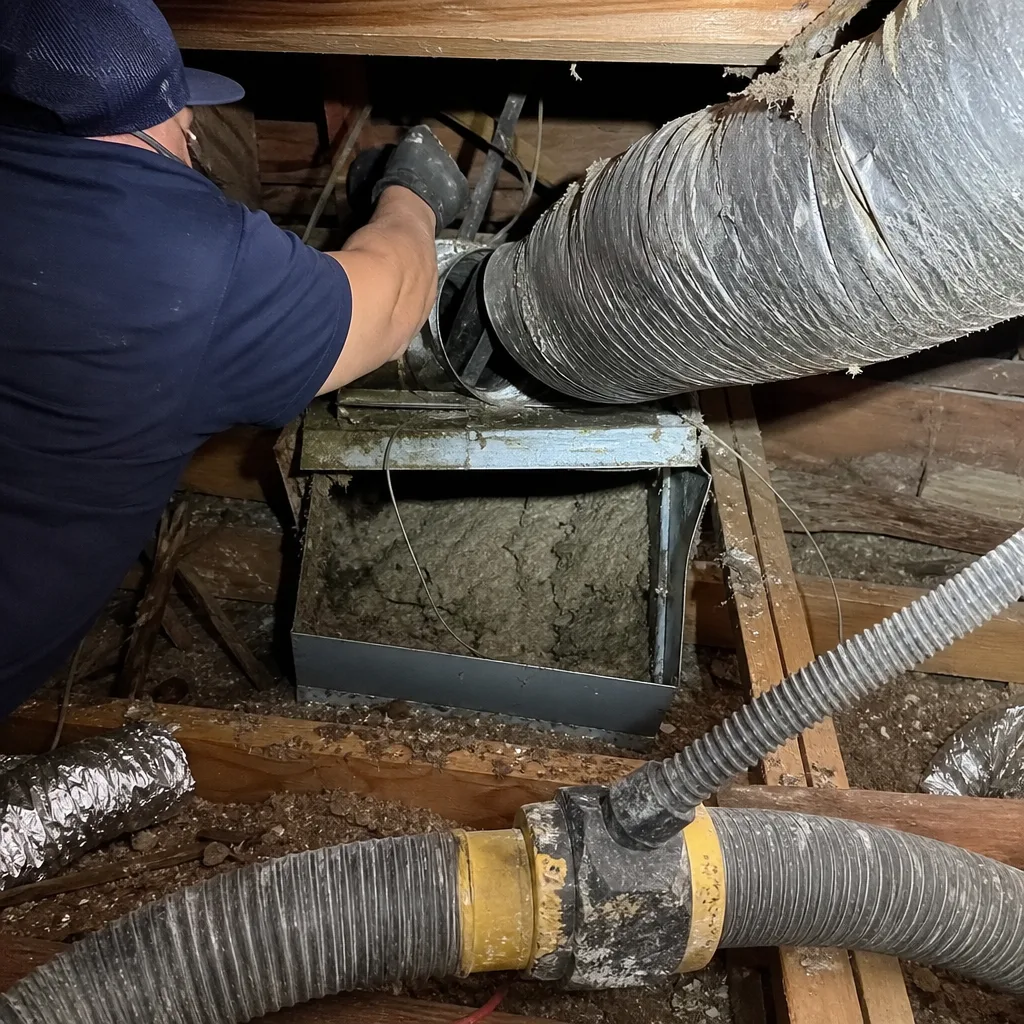 Before
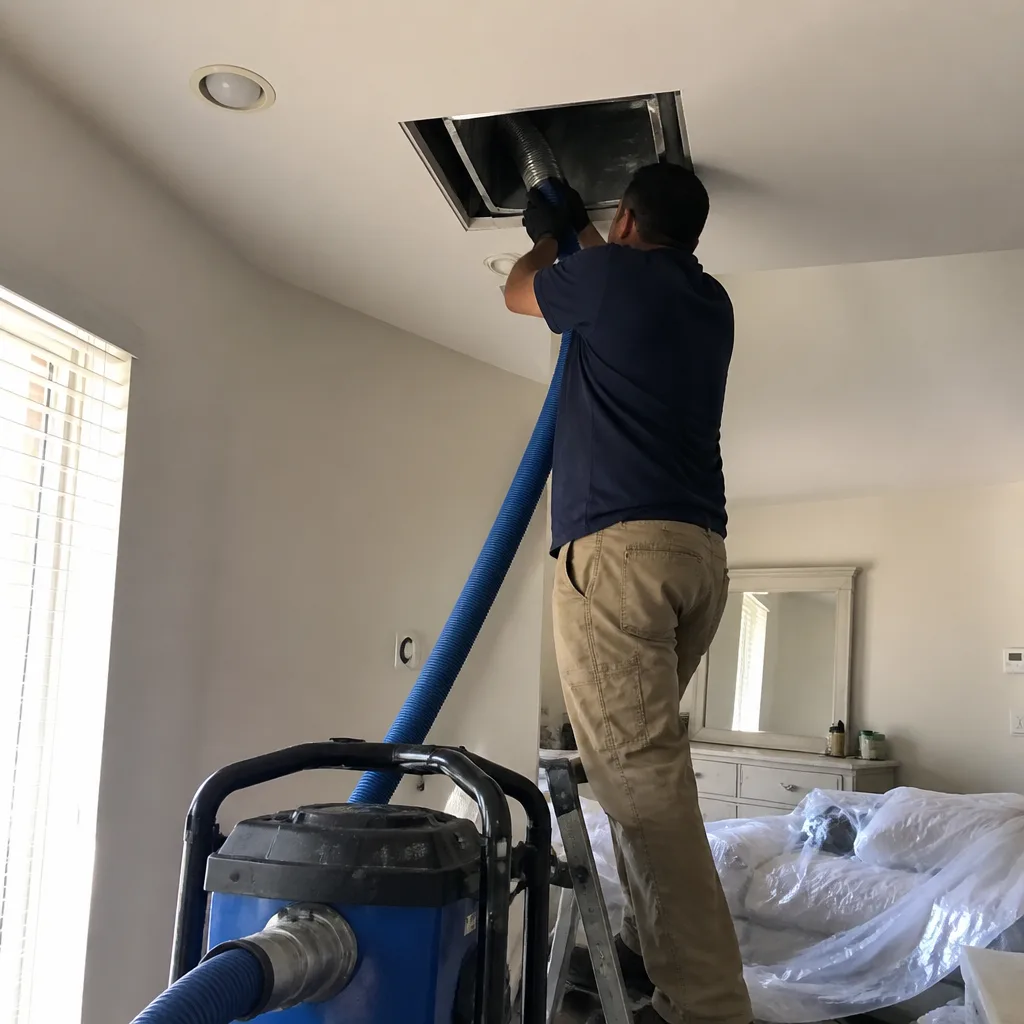 After
After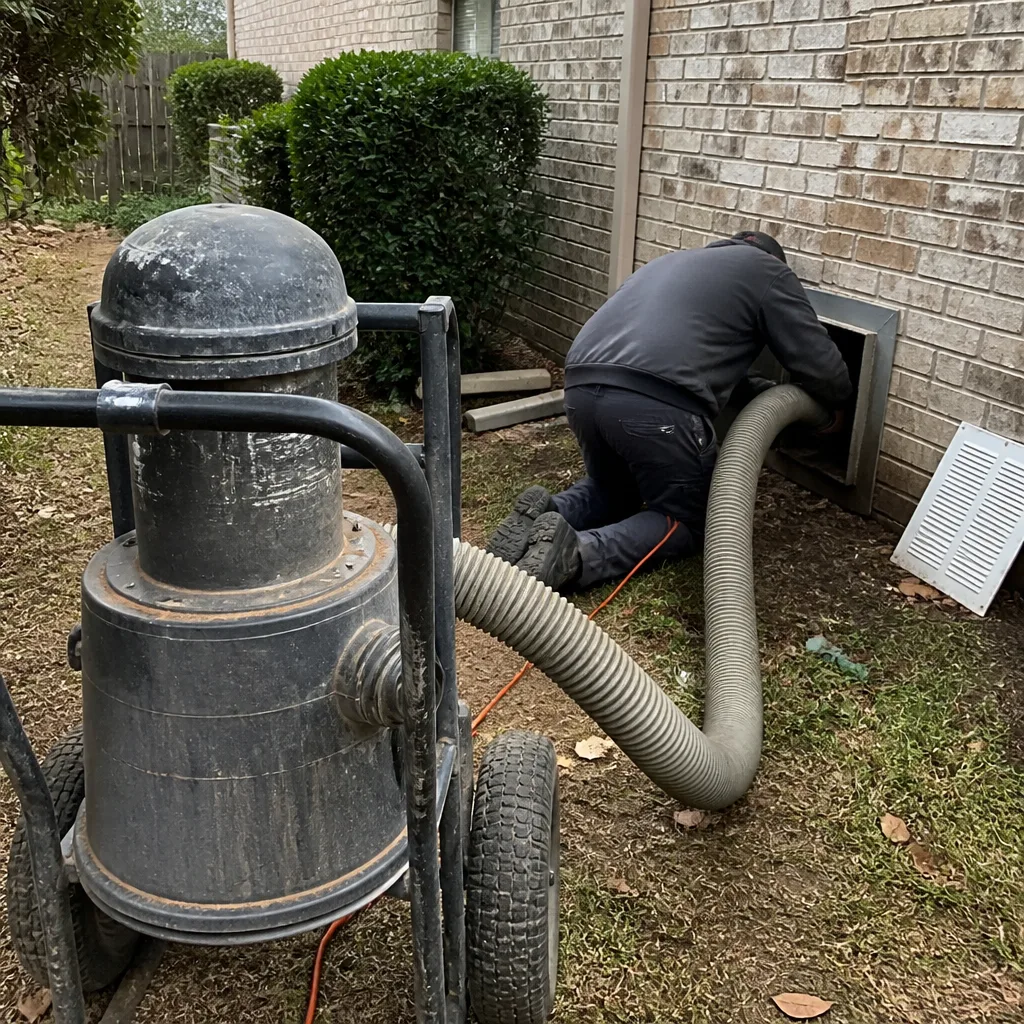 Before
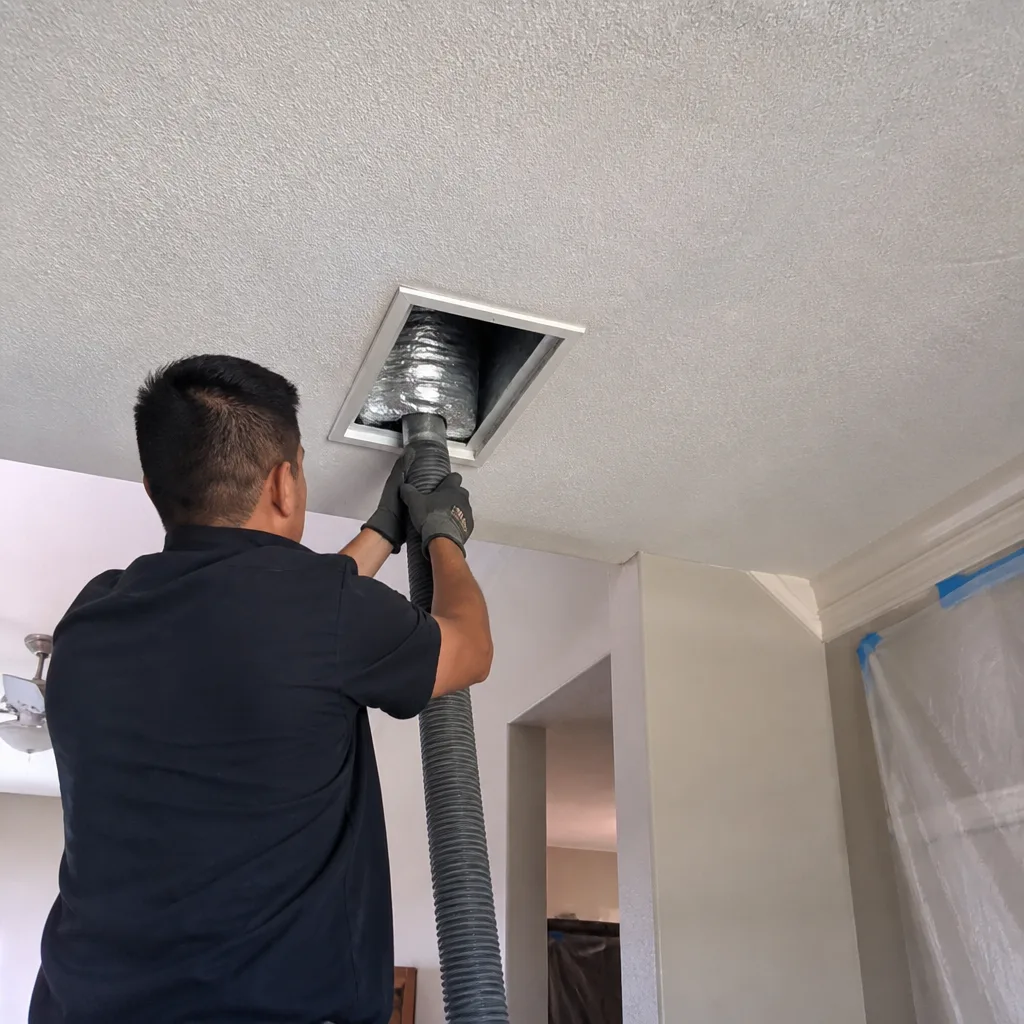 After
After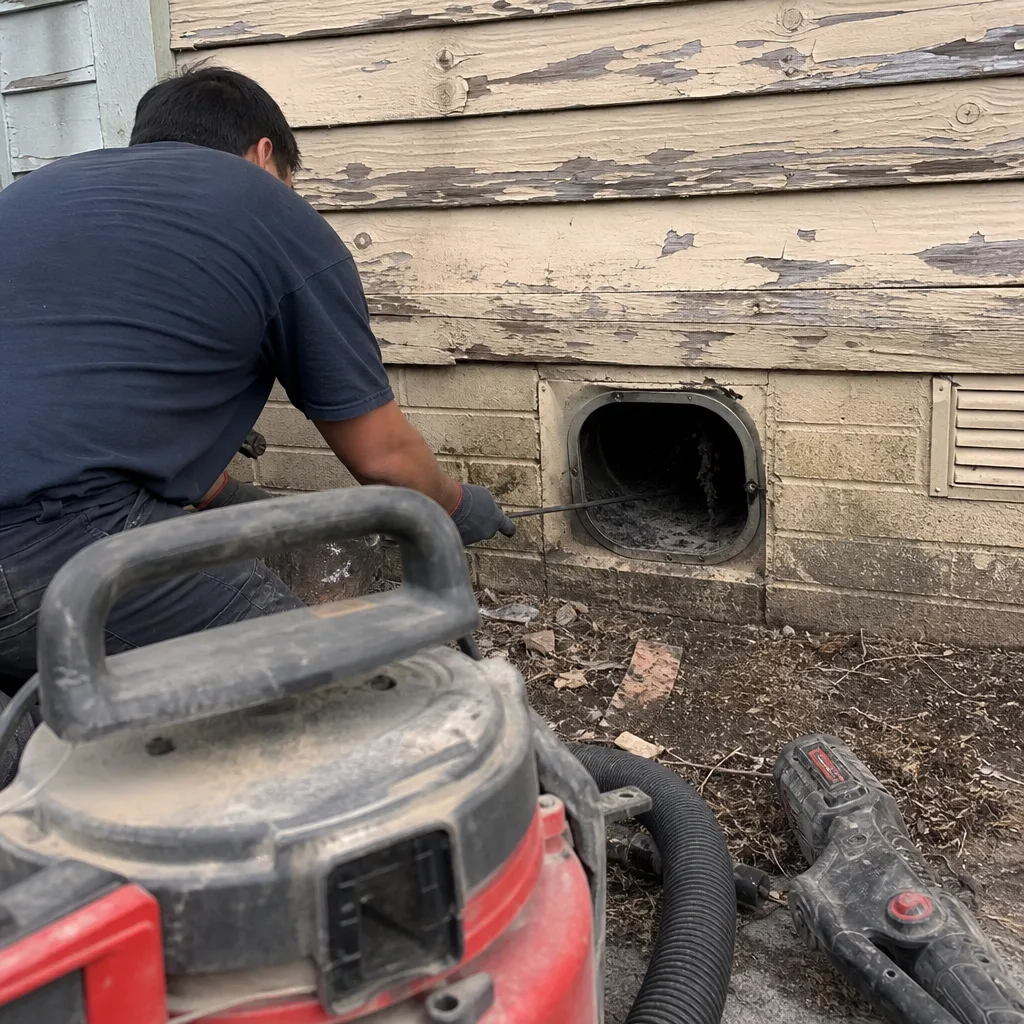 Before
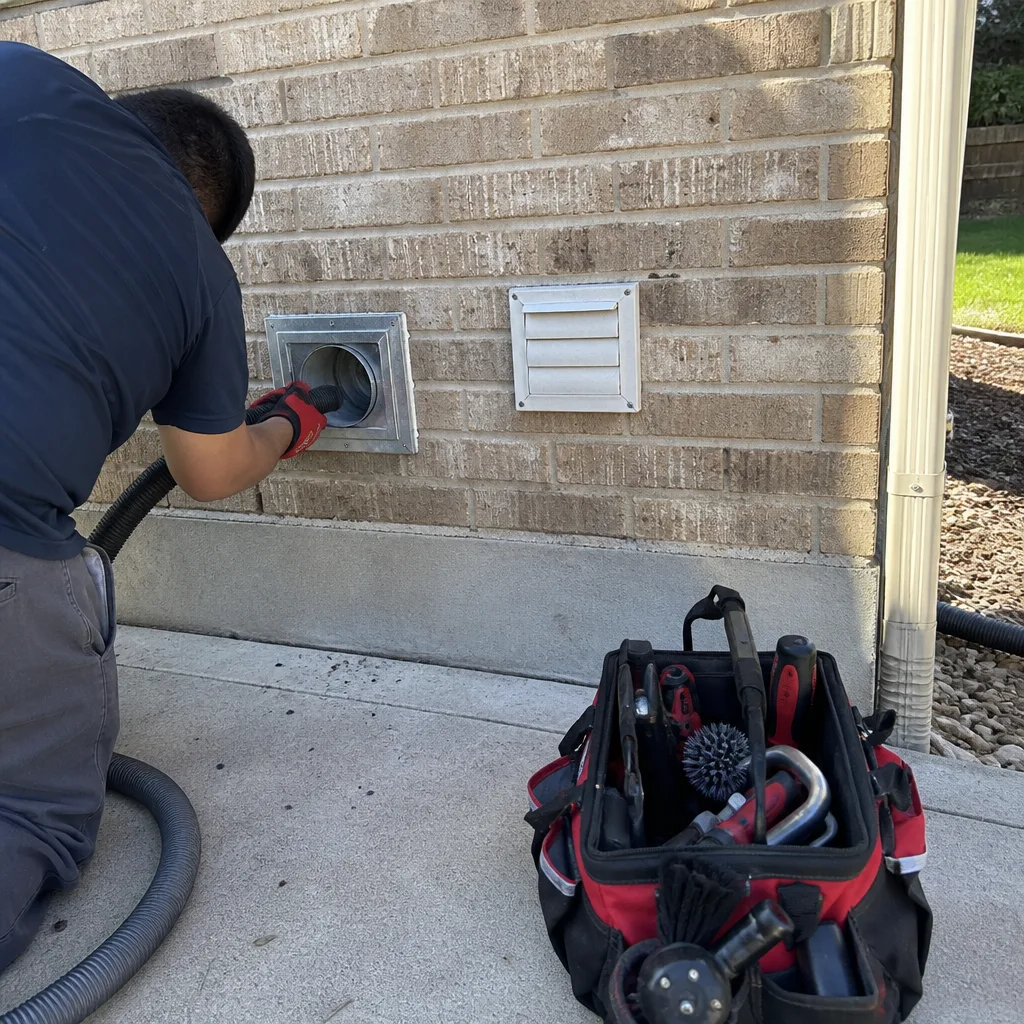 After
AfterReturn Duct Cleaning in Irving, TX
Return duct cleaning focuses on the intake side of your HVAC system – the ducts that pull air back to the air handler for reconditioning, not the ones that push conditioned air into your rooms. In Irving homes, these return runs accumulate debris faster than supply ducts because they operate under constant negative pressure, drawing in dust, pet dander, and fine particulate with every hour the system runs. A thorough return duct cleaning from CleanRun takes 90 to 150 minutes depending on your home’s layout, includes a Video Inspection with a documented photo record of every run before and after, and starts with a written price you approve before we touch a single panel.
If you’ve already read through our Air Duct Cleaning in Irving page, you know the full scope of what a complete duct cleaning covers. This page goes deeper on the return side specifically – because return ducts are the part most Irving homeowners don’t realize have their own cleaning requirements, and they’re often the reason a system that was “just cleaned” still moves sluggish air.
Questions before you read further? Call us at (682) 297-4068. A live person answers every call, 24/7.
Why Return Ducts Are Different From Supply Ducts
Your HVAC system moves air in a loop. Supply Duct Cleaning targets the ducts that carry conditioned air outward from the air handler to registers in your rooms. Return ducts pull that same air back. The distinction matters for cleaning because the physics are opposite: supply ducts push, return ducts pull.
That constant suction is why return runs get dirty in a specific pattern. Dust doesn’t just settle; it gets dragged in. Larger return grilles – often located in hallways, living areas, or near the main living level in Irving’s two-story homes – draw in whatever is floating near floor level. Pet hair, carpet fiber, construction particulate from the post-2015 building boom in areas like Las Colinas and Valley Ranch, and the fine clay-silt that North Texas wind carries indoors all concentrate in return runs before the filter even gets a chance to catch them.
The filter is supposed to stop most of this. In practice, a filter that isn’t changed on schedule, or a return grille where the seal between the grille frame and the drywall has opened up – common in older Irving homes built in the 1980s along MacArthur Boulevard – bypasses filtration entirely. Air leaking around the grille never touches the filter. It goes straight into the duct and stays there.
When You Need Return Duct Cleaning
- Airflow feels weaker than it used to. Return ducts that are partially blocked by debris accumulation restrict the volume of air the air handler can pull through the system. If your system is running normally but rooms feel less conditioned than a year ago, the return side is the first place to inspect. This is especially common in Irving homes with a single central return in the hallway – one clogged run affects the whole system.
- You’re finding dust on registers or furniture shortly after cleaning. If fine dust reappears within days of vacuuming, it’s often being recirculated through return ducts that haven’t been cleaned. The supply side may be clean, but dirty return air is reintroducing particulate to conditioned air before it ever reaches a room register.
- There’s a persistent musty or stale smell when the system runs. Irving’s humidity – particularly in August and September when dew points stay above 70F for weeks – creates conditions where any organic debris inside a return duct can develop odor-producing mold or mildew. The smell is most noticeable in the first few minutes after the system starts.
- You’ve recently had renovation or remodeling work done. Drywall dust and wood particulate from renovation work gets drawn directly into open or inadequately sealed return grilles during construction. In Irving’s active renovation corridors – particularly in older ranch homes near Irving Heights and Hackberry Creek that are being updated – this is one of the most common reasons we find dense debris packs in return runs.
- Your household includes pets or allergy sufferers. Pet dander and fine allergens concentrate in return ductwork. If a household member’s allergy symptoms worsen specifically when the HVAC is running, that’s a signal that the return side needs attention even if the supply ducts were recently serviced.
- It’s been more than 3-5 years since a full duct cleaning. NADCA (National Air Duct Cleaners Association) guidance suggests a 3-5 year cleaning interval for average households. In Irving, where the system runs 10-11 months per year, that interval shortens. Return ducts cleaned in 2020 are likely overdue in 2026.
BeforeAfterOur Return Duct Cleaning Process
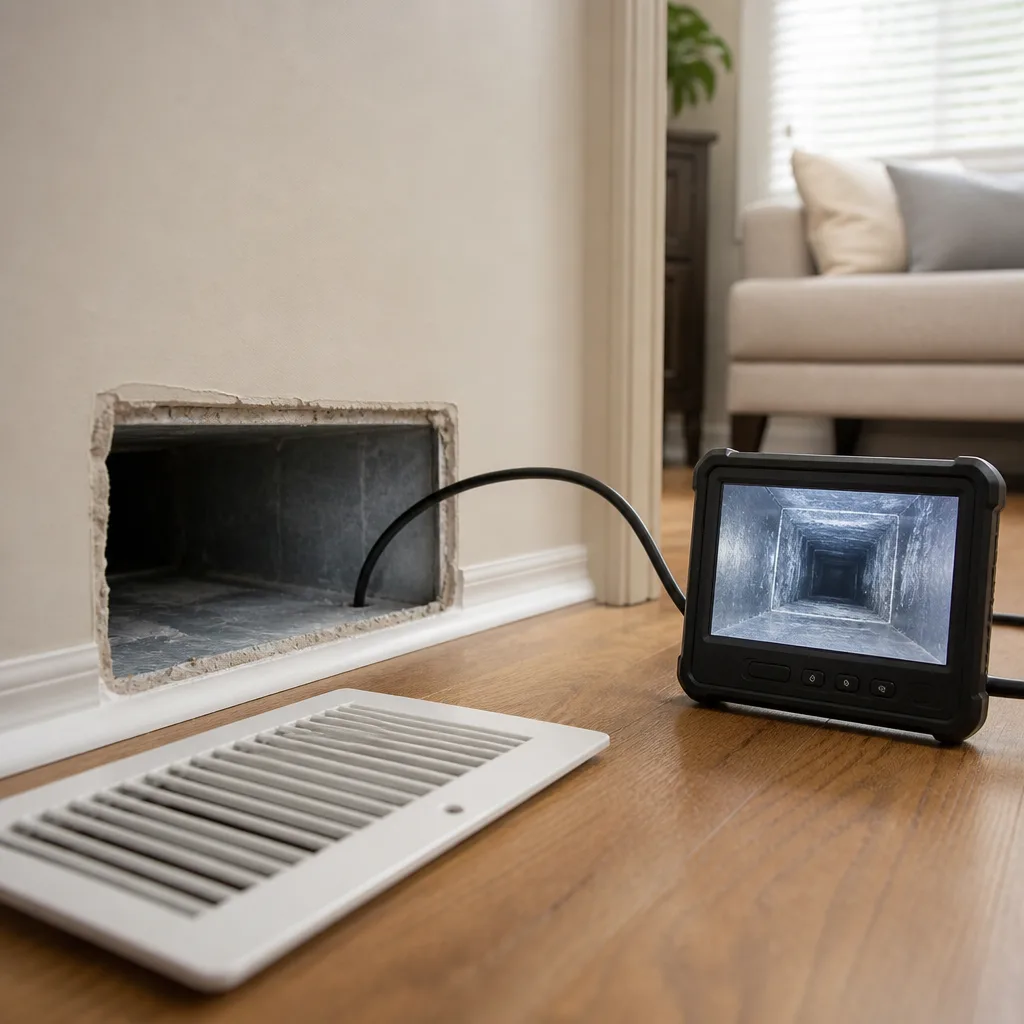
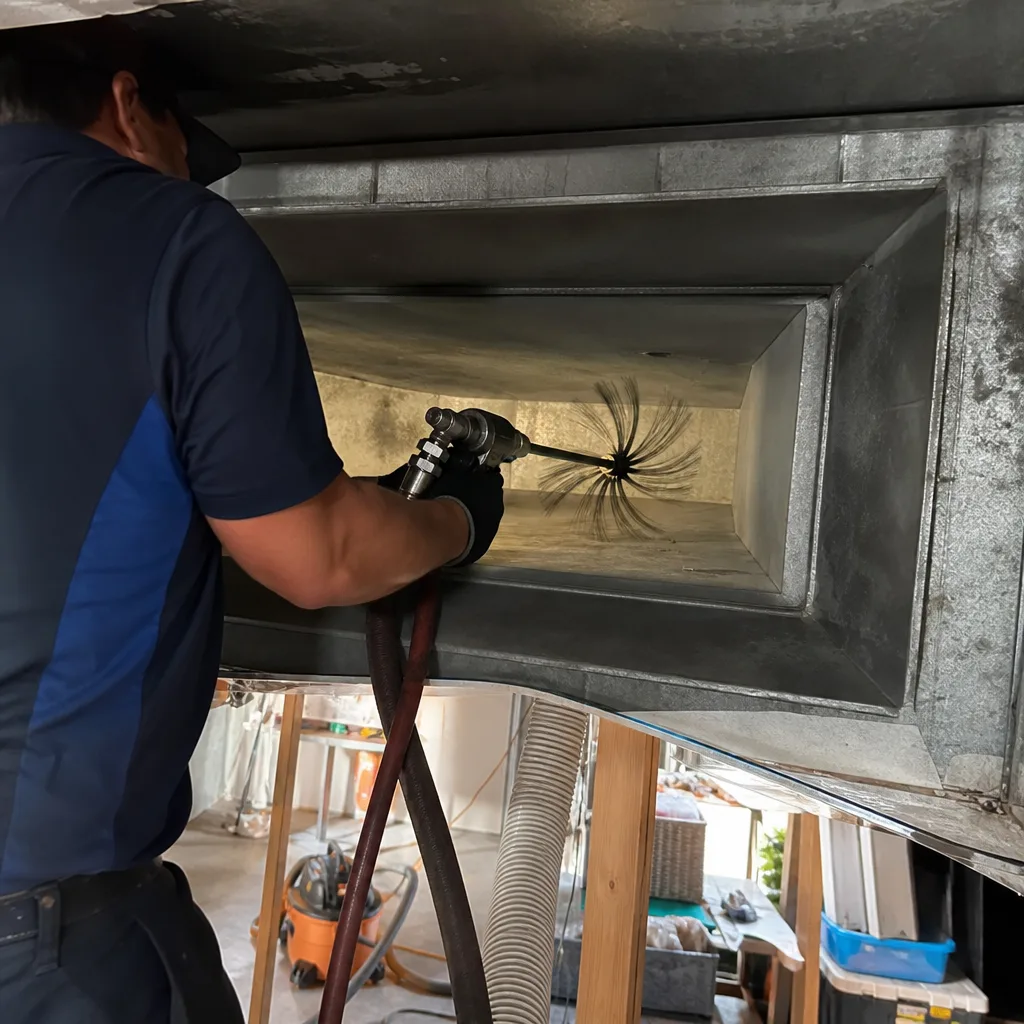
- Camera inspection before any work starts. We run a video inspection camera into the return plenum – the central collection chamber where individual return runs converge before reaching the air handler – and down each return run. You see what the camera sees. We document the debris type, approximate depth, and any visible damage to duct lining or flex connections. This isn’t a sales tool; it’s the before photo that makes the after photo mean something. Every image is time-stamped and included in your job record.
- Written price before any work starts. After the inspection, we write up the scope and the price. You review it. You approve it or you don’t. Haven Standard Clause 1 is non-negotiable on every job: no work begins without a signed written price. There is no “call for a quote” at CleanRun because a quote delivered over the phone before we’ve seen your ductwork isn’t a quote – it’s a guess that typically goes up when the tech is already in your attic.
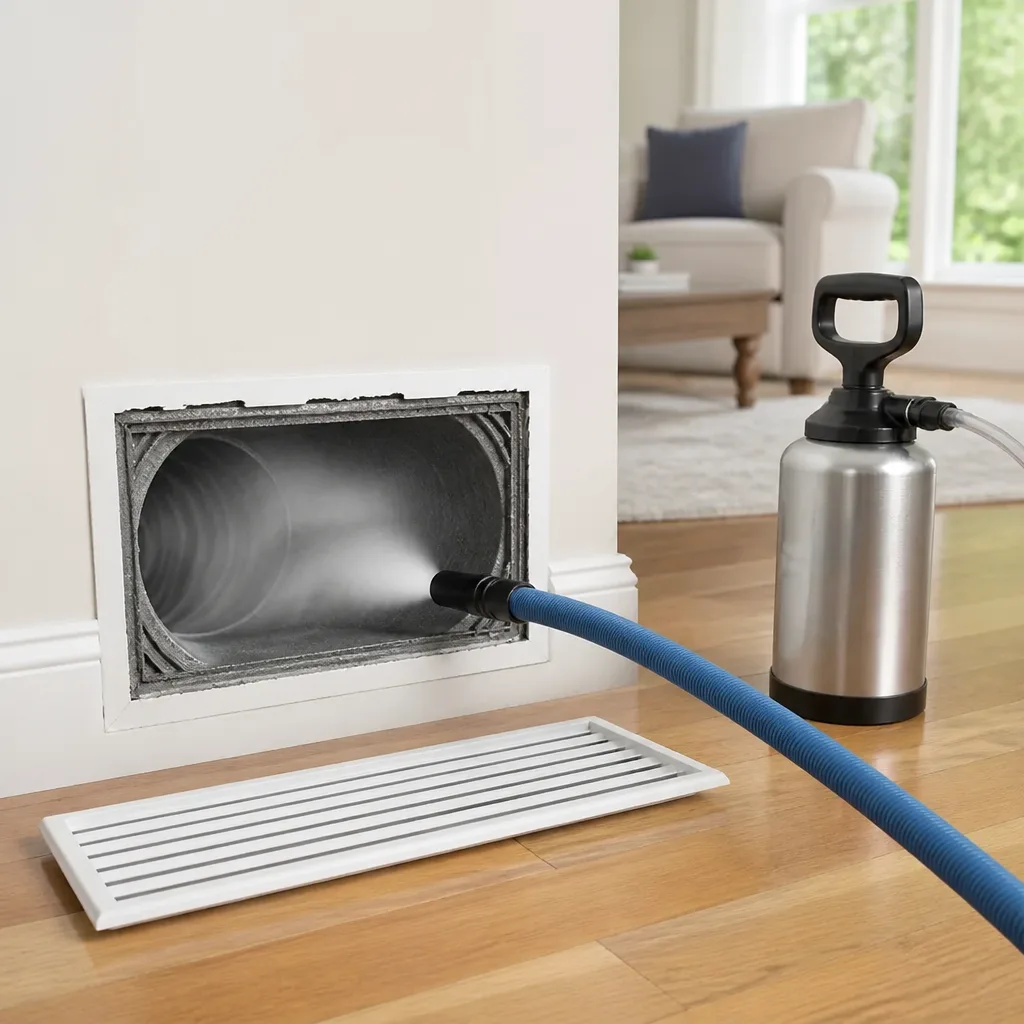
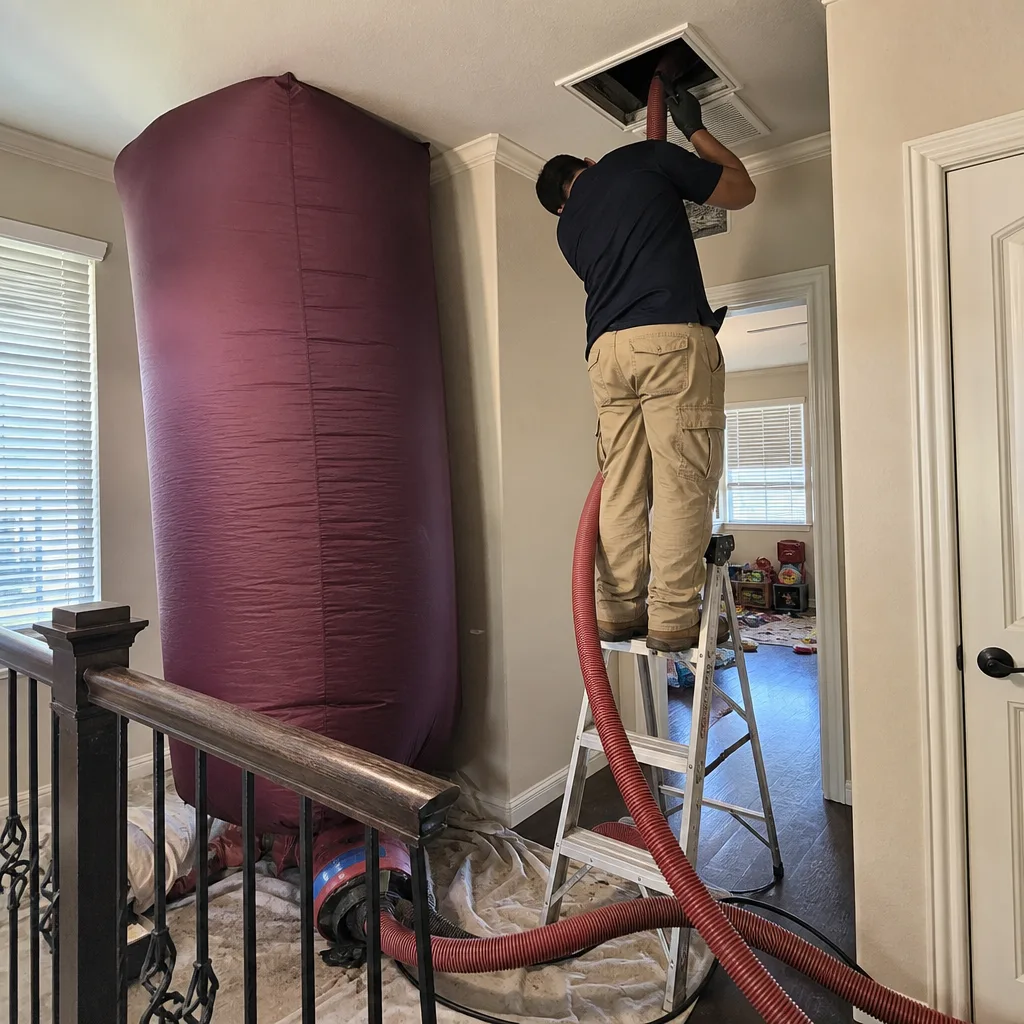
- Negative-pressure extraction with Nikro or Abatement Technologies equipment. We establish negative pressure in the return duct system by connecting a commercial-grade collection unit to the return plenum. Negative pressure means the interior of the duct is at lower pressure than the surrounding space, so when we disturb debris, it moves toward the collection unit rather than into your living area. We use Nikro and Abatement Technologies equipment on return duct jobs – both are trade-recognized brands with genuine HEPA filtration ratings, not shop-vac units with marketing language on the side.
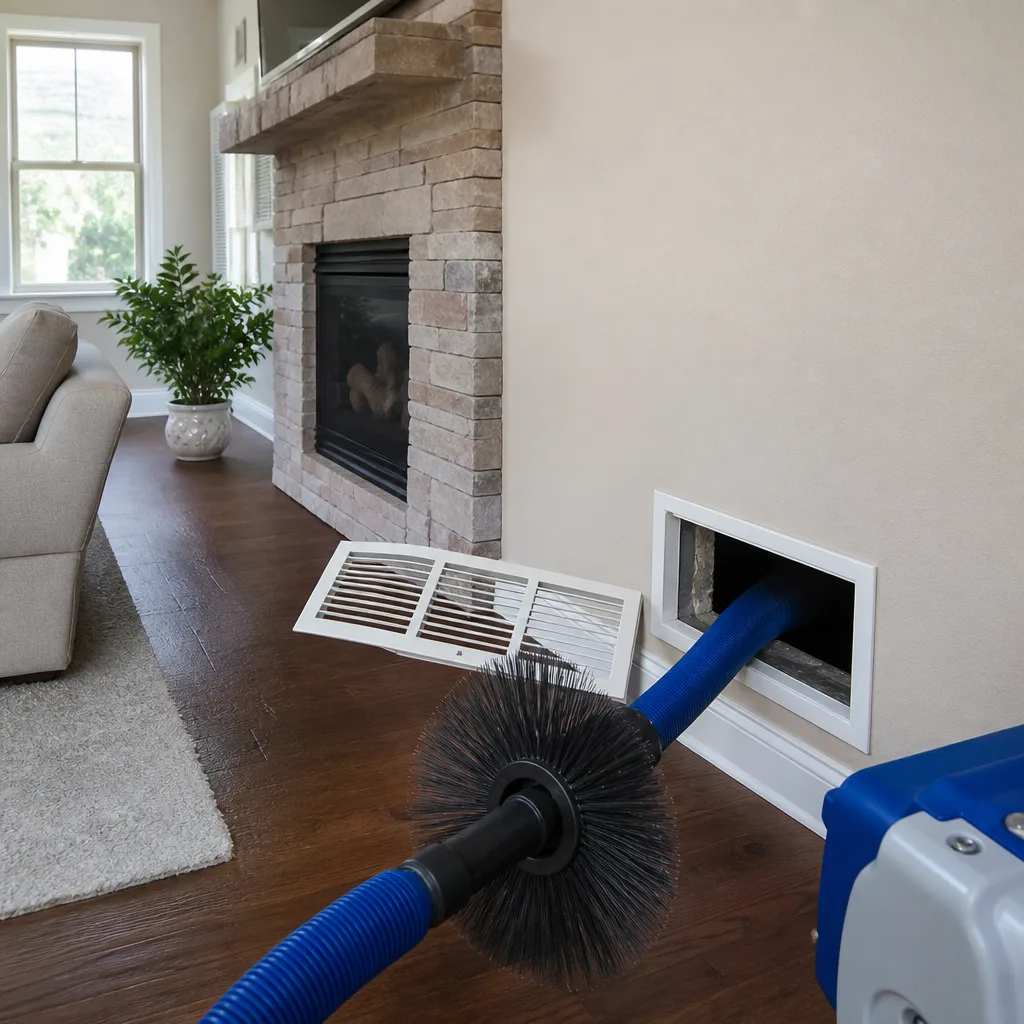
- Mechanical agitation through each return run. Negative pressure alone doesn’t dislodge compacted debris. We work a mechanical agitation system – rotary brushes sized to the run diameter – through each return duct run from the grille opening back toward the plenum. Debris that’s been adhering to duct liner for years requires direct contact to release. In Irving homes with fiberglass-lined sheet metal return ducts (common in 1990s-era construction in the Valley Ranch area), we adjust brush selection to avoid abrading the liner while still achieving full debris removal.
- Return grille and boot cleaning. The boot is the short transition piece that connects the duct run to the grille opening in your wall or ceiling. Boots accumulate the heaviest debris concentration in the entire return system because they’re the first place air slows down after entering. We remove each grille, clean the boot with hand tools and vacuum, and inspect the seal between the boot and the surrounding drywall. Gaps get flagged in writing with repair recommendations – we don’t quietly seal them without your approval.
- Post-cleaning camera pass and photo documentation. Once every return run has been agitated and extracted, we run the camera through each run a second time. The after photos go into your documented job record alongside the before photos. If a run doesn’t look materially cleaner on camera, we don’t consider that run done. This is the standard we’ve held since our first job in 2013, and it’s why the 365-Day Done Right Promise isn’t a marketing phrase – it’s a written commitment we can show you in the duct photos if there’s ever a question about whether the work was completed.
Return Duct Cleaning Pricing in Irving
Return duct cleaning in Irving typically runs between $180 and $420 as a standalone service, depending on the number of return runs, duct material type, and degree of debris accumulation. For full pricing details, see How Much Does Air Duct Cleaning Cost? (2026 Price Guide) - Irving, TX. Most single-story Irving homes with two or three return grilles fall in the $180-$260 range. Larger two-story homes in neighborhoods like Las Colinas or Hackberry Creek with four or more return runs, or homes where the camera shows heavy compacted debris, land closer to $320-$420.
| Scenario | Typical Price Range |
|---|---|
| 1-story home, 2-3 return runs, moderate debris | $180 – $260 |
| 2-story home, 3-4 return runs, moderate debris | $260 – $340 |
| 2-story home, 4+ return runs or heavy debris accumulation | $340 – $420 |
| Return duct cleaning bundled with full supply-side cleaning | Quoted together – typically $320 – $680 for whole-home |
What affects your price on the return side specifically:
- Number of return runs. Some Irving homes have a single central return; others have dedicated return grilles in each bedroom. Each run is photographed and cleaned individually, so run count is the primary driver.
- Duct material. Rigid sheet metal return ducts (more common in pre-2000 Irving construction) clean faster than flex duct, which requires slower agitation to avoid liner damage. Flex return runs take slightly longer and may affect pricing.
- Debris type and density. Pet dander accumulation and fine particulate clean out efficiently. Construction debris – drywall dust compacted over several years – takes longer to release from duct liner and may require a second agitation pass.
- Accessibility. Return plenums located in attic spaces above two-story homes in Irving’s summer heat (attic temperatures above 140F in July are not unusual) affect technician time and safety protocol.
Every price is written before work starts. If the camera shows something that changes the scope – say, a return run that’s been partially crushed at a joist crossing – we tell you and write an updated price before proceeding. You never see a number higher than what you approved.
For a precise written estimate, call (682) 297-4068. We’ll schedule a camera inspection, show you what’s in your return runs, and hand you a written number before any work begins. Estimates are free.
What CleanRun Documents vs. What Most Companies Don’t
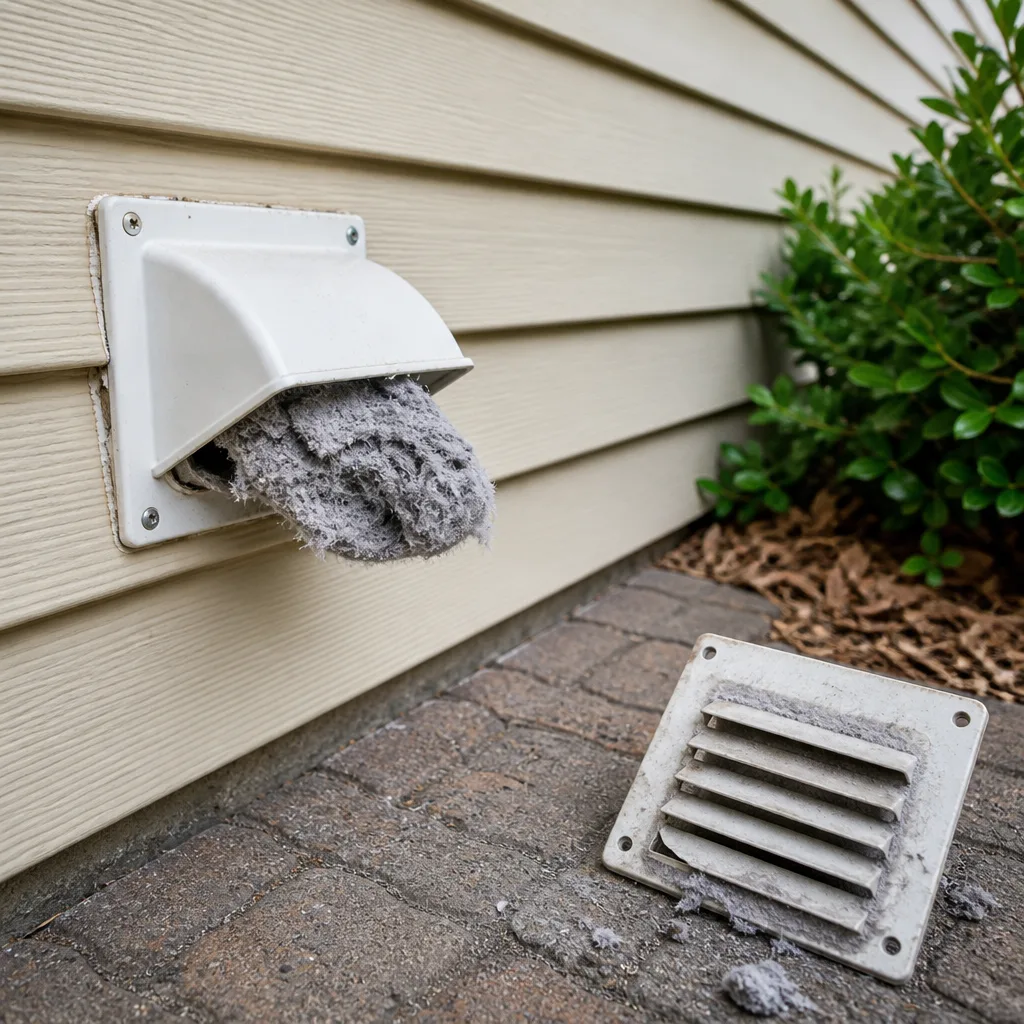
The standard in Irving’s duct cleaning market is a truck with a large vacuum, a technician who runs a hose near the register opening, and a before-and-after claim you have to take on faith. We’ve been doing this since 2013 and have cleaned return ductwork in more than 52,000 homes. The gap between what customers are told happened and what actually happened inside their ducts is the reason we built photo documentation into the job from the beginning.
Your job record includes:
- Time-stamped before photos of each return run interior, taken from the boot inward
- Time-stamped after photos of the same runs, from the same camera position
- Written scope matching what was approved before work started
- Written 365-Day Done Right Promise tied to the specific runs documented
- Any flagged conditions – gaps at boots, damaged flex sections, filter bypass points – noted in writing with photos
Haven Standard Clause 3 (Verified Crews) means every technician on your job is background-checked, uniformed, and identified by name before arrival. The equipment they’re using – Nikro extraction units and Abatement Technologies collection systems – is listed on the job record so you can look up manufacturer specs independently.
Return Duct Cleaning and Irving’s Climate
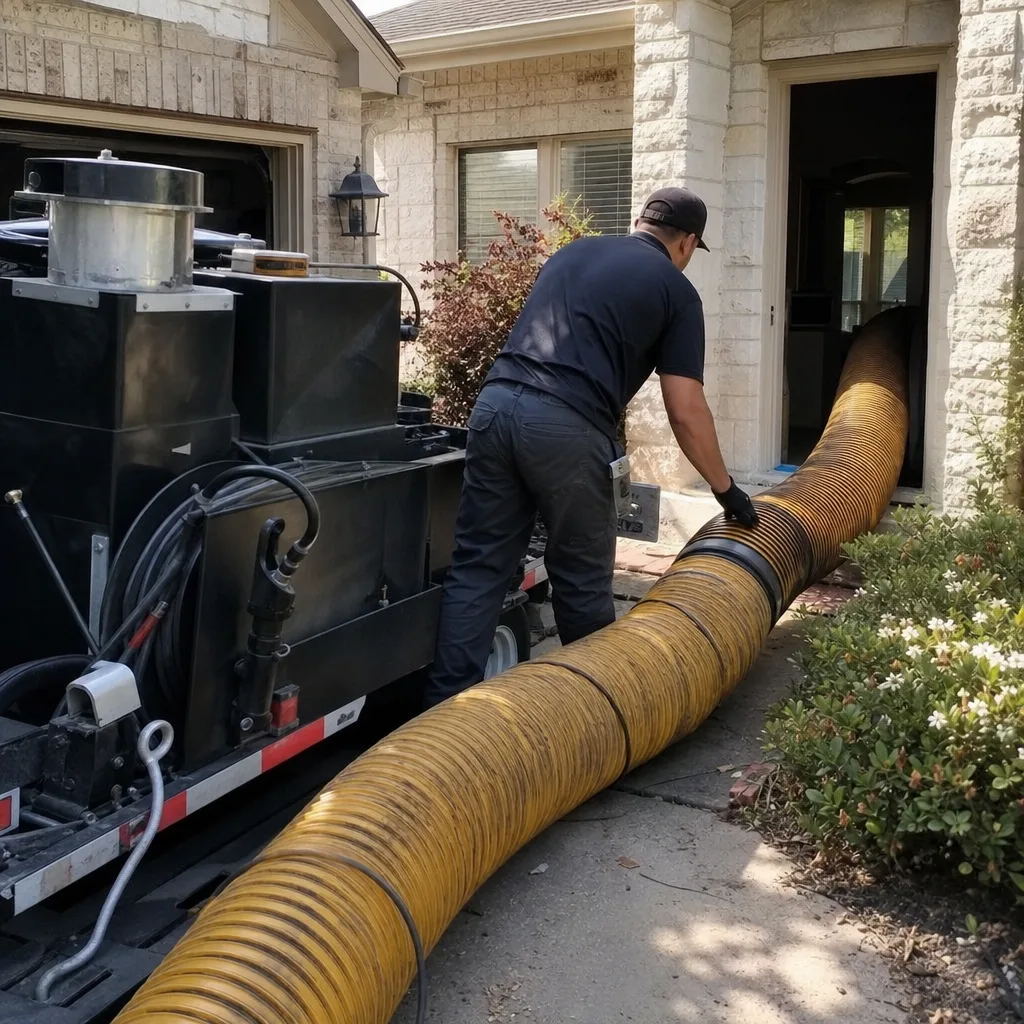
Irving’s position in the DFW Metroplex means return ductwork operates under conditions that accelerate debris accumulation compared to cooler or less humid climates. The HVAC system runs nearly year-round – typically 10 to 11 months of meaningful runtime, with only a short window in late November and early March where outdoor temperatures make mechanical conditioning unnecessary.
That continuous runtime means return ducts are under suction for thousands of hours per year. In the spring months, when Irving’s wind carries cedar and oak pollen in dense concentrations, return grilles pull significant allergen loads into the duct system. In summer, the humidity differential between indoor and outdoor air creates condensation risk inside return plenums, particularly in homes where the return plenum penetrates an unconditioned attic space. Any organic debris in that environment – dust, skin cells, pet dander – has the moisture conditions it needs to develop odor-producing growth.
We’ve cleaned return ducts in Irving homes where the debris layer at the first elbow – typically 18 to 24 inches in from the grille – was over two inches thick. That accumulation didn’t happen in a single year; it builds over multiple HVAC seasons. The practical effect is a measurable restriction in the air volume the system can move, which shows up as reduced airflow at supply registers and longer system run times – both of which you pay for in electricity.
FAQs – Return Duct Cleaning
How much does return duct cleaning cost in Irving?
Return duct cleaning in Irving costs between $180 and $420 for most residential homes, depending on the number of return runs, duct material, and debris level. A single-story home with two or three return runs typically falls in the $180-$260 range. Two-story homes or those with heavier debris accumulation run $280-$420. CleanRun provides every price in writing before work starts, so the number you approve is the number on the invoice. Call (682) 297-4068 to schedule a camera inspection and get your written estimate – it’s free.
Can you clean just the return ducts, or does the whole system need to be done at once?
Return ducts can be cleaned as a standalone service, and there are valid reasons to do it that way – particularly after a renovation that sent construction dust into the return system, or when airflow symptoms point specifically to the intake side. That said, if the camera shows debris in both the return and supply runs, cleaning only one side limits how much the air quality in your home actually improves. We’ll show you what the camera finds in both directions and quote each scope separately so you can decide with full information.
How long does return duct cleaning take?
Return duct cleaning on a typical Irving home takes 90 to 150 minutes from setup to final camera pass. Larger homes with four or more return runs, or homes with heavy compacted debris requiring a second agitation pass, can run closer to two to two-and-a-half hours. That time includes the pre-work camera inspection and the post-work photo documentation – both are part of the standard job, not add-ons.
What’s the difference between return duct cleaning and just replacing the filter?
Replacing the filter addresses what the filter catches going forward – it does nothing to the debris already sitting inside the return duct runs upstream of the filter housing. By the time debris has accumulated in a return duct, it’s past the point where filter replacement removes it. A clean filter on a dirty return system still pulls conditioned air through a debris-lined duct before that air reaches your rooms. Return duct cleaning removes the accumulated material that the filter was never able to intercept, particularly at duct bends and boot connections where debris tends to compact most heavily.
Key Takeaways
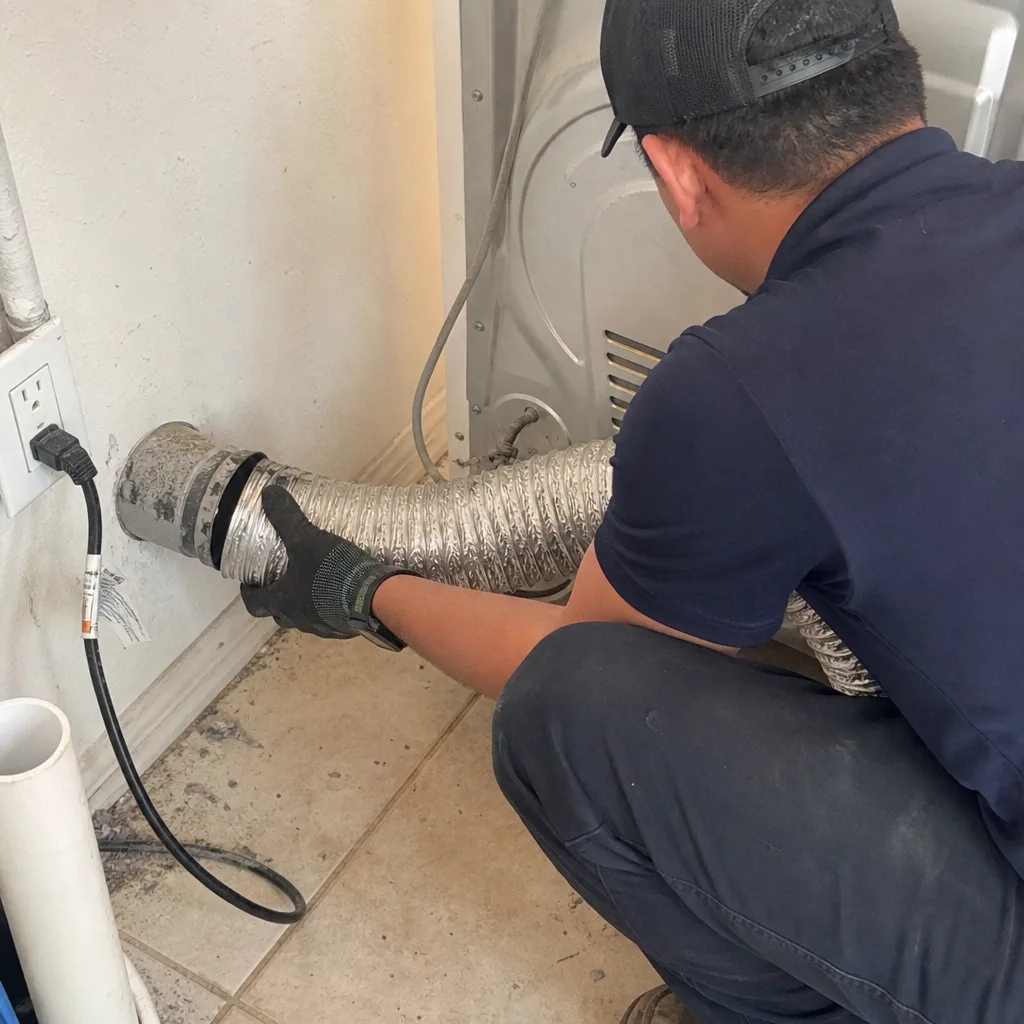
- Return ducts pull air back to your air handler under constant negative pressure, which is why they accumulate debris differently – and often faster – than supply ducts.
- Return duct cleaning in Irving runs $180-$420 for most homes; every price is written before any work starts, no exceptions.
- CleanRun uses Nikro and Abatement Technologies equipment for genuine negative-pressure extraction and HEPA-filtered collection.
- Every job includes time-stamped before-and-after photos of each return run, delivered as part of your standard job record.
- Irving’s near-year-round HVAC runtime and high humidity make return duct maintenance more time-sensitive than in cooler climates.
- Every job is backed by the 365-Day Done Right Promise – in writing, tied to the documented photo record from your specific job.
Schedule Your Return Duct Cleaning in Irving
If your system’s airflow has softened, your filters are loading faster than they used to, or you simply haven’t had the return side inspected since you moved in, the next step is a camera inspection. We’ll show you what’s inside your return runs before we quote you anything, and we’ll hand you a written price before we pick up a single tool. That’s how every CleanRun job works – in Irving and everywhere else we go.
Call (682) 297-4068 to schedule. A live person answers. We’ll get you a camera inspection date and a written estimate at no charge.
CleanRun our Air Duct Cleaning services in Irving is independently owned and operated under the Haven Standard, established in 2013, and has served homes across Irving including Las Colinas, Valley Ranch, Hackberry Creek, Irving Heights, and the MacArthur corridor. Every job comes with a written price, a documented photo record, and the 365-Day Done Right Promise.
Written by Tomas Reyes, Owner at CleanRun Air Duct Cleaning Irving, serving Irving.