
Last updated September 23, 2026
Whole-system duct and dryer vent check with before-and-after photos - you see exactly what came out of your vents
That "$99 whole-house special" is a bait ad - the real number appears once they are in your hallway, or the "clean" is a shop-vac at the register. We photograph the inside of your ducts before and after instead.
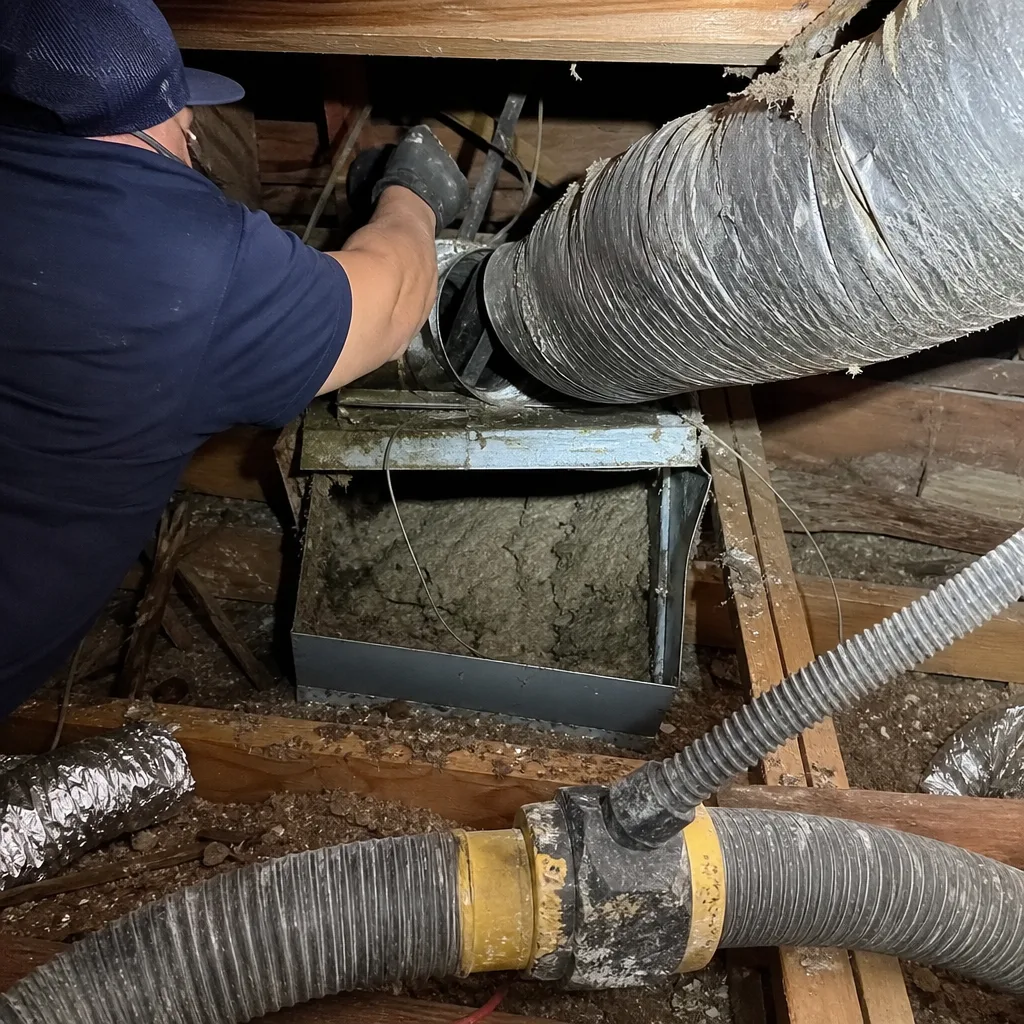 Before
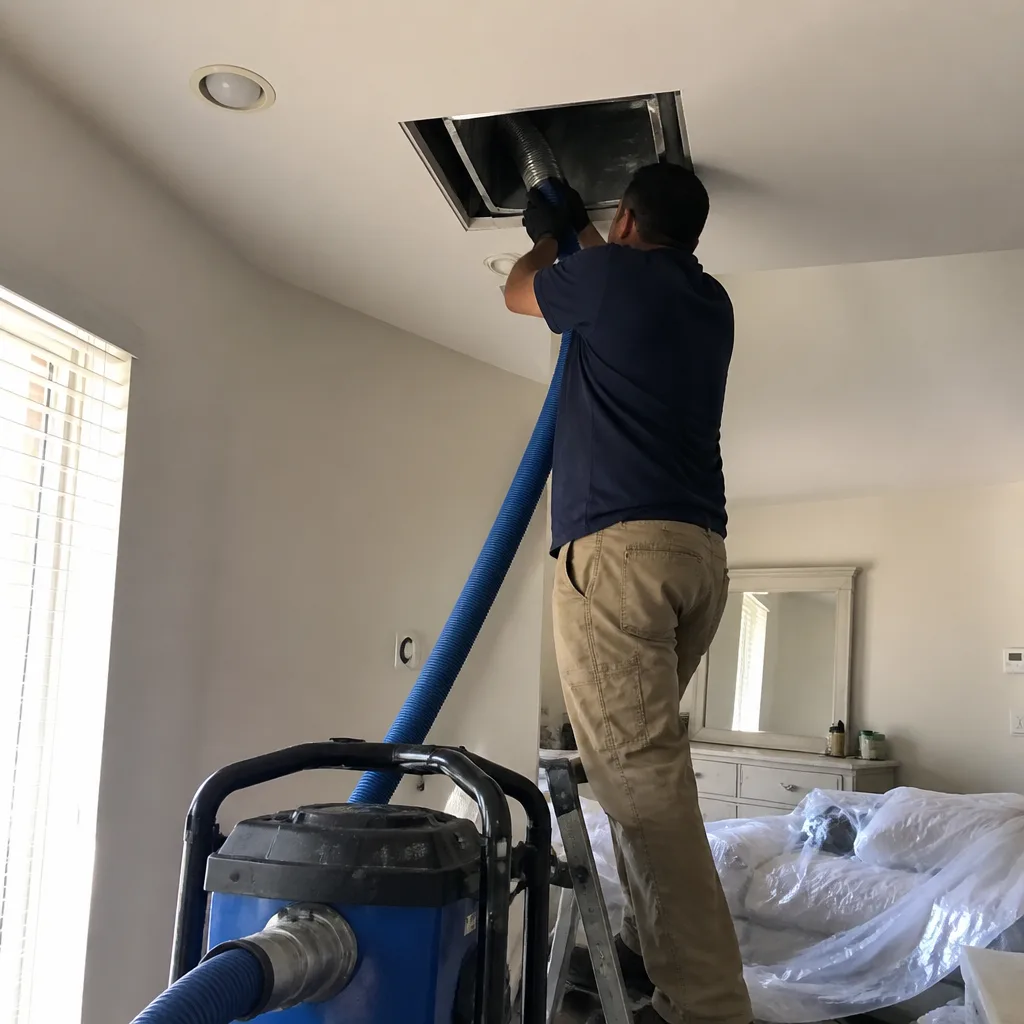 After
After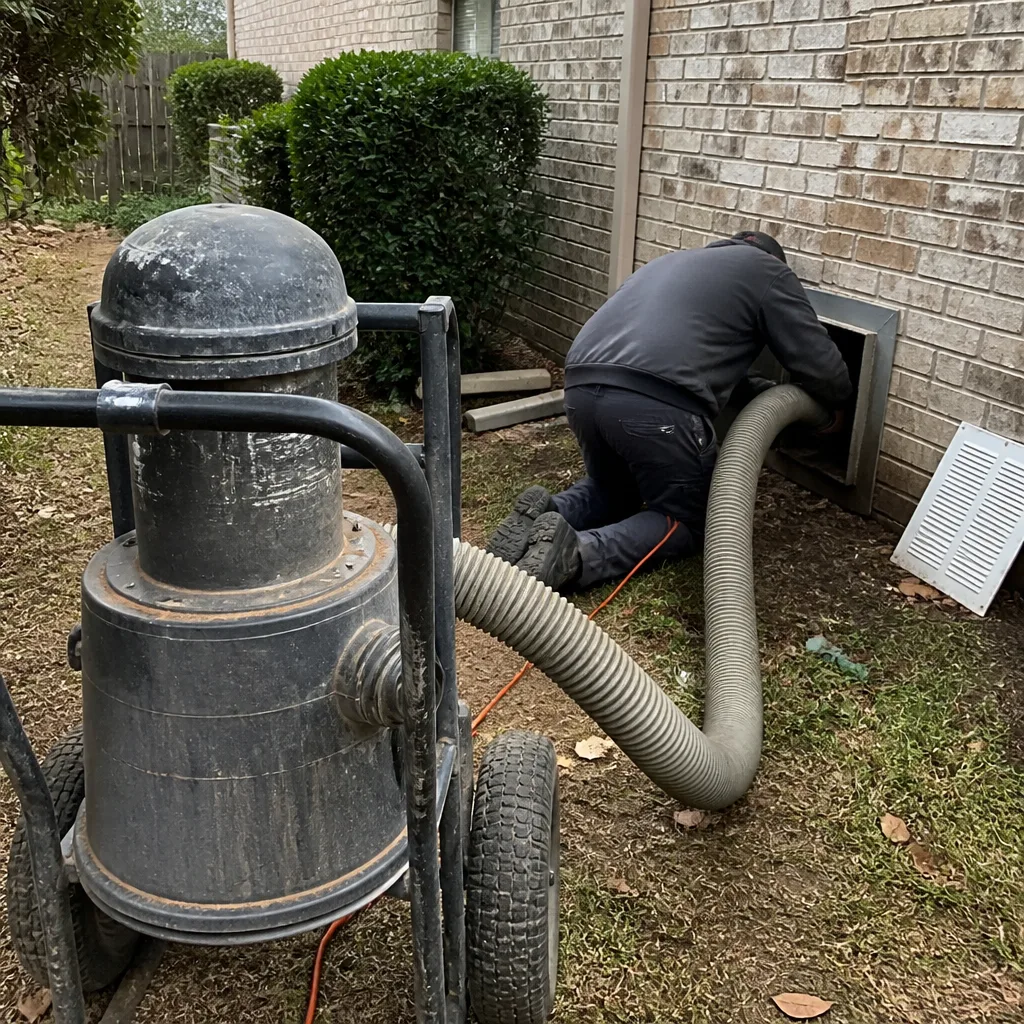 Before
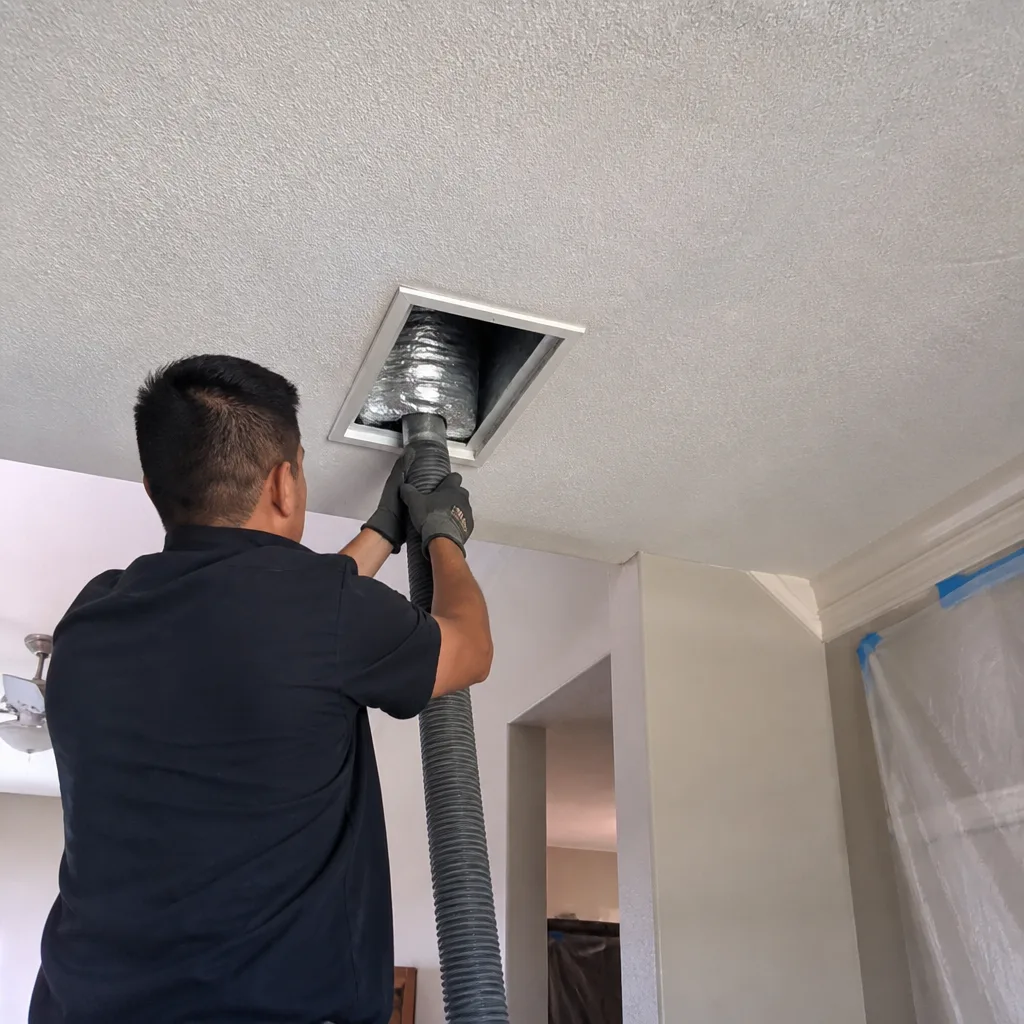 After
After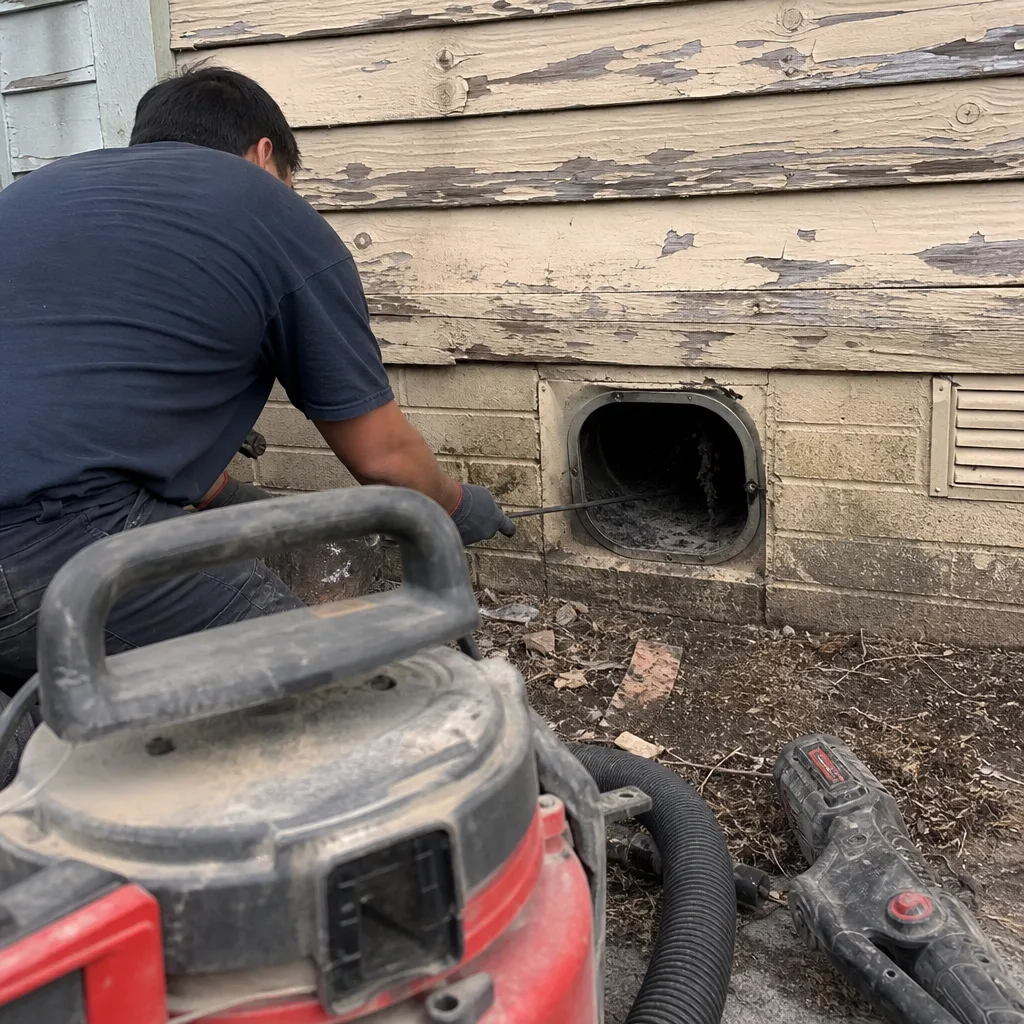 Before
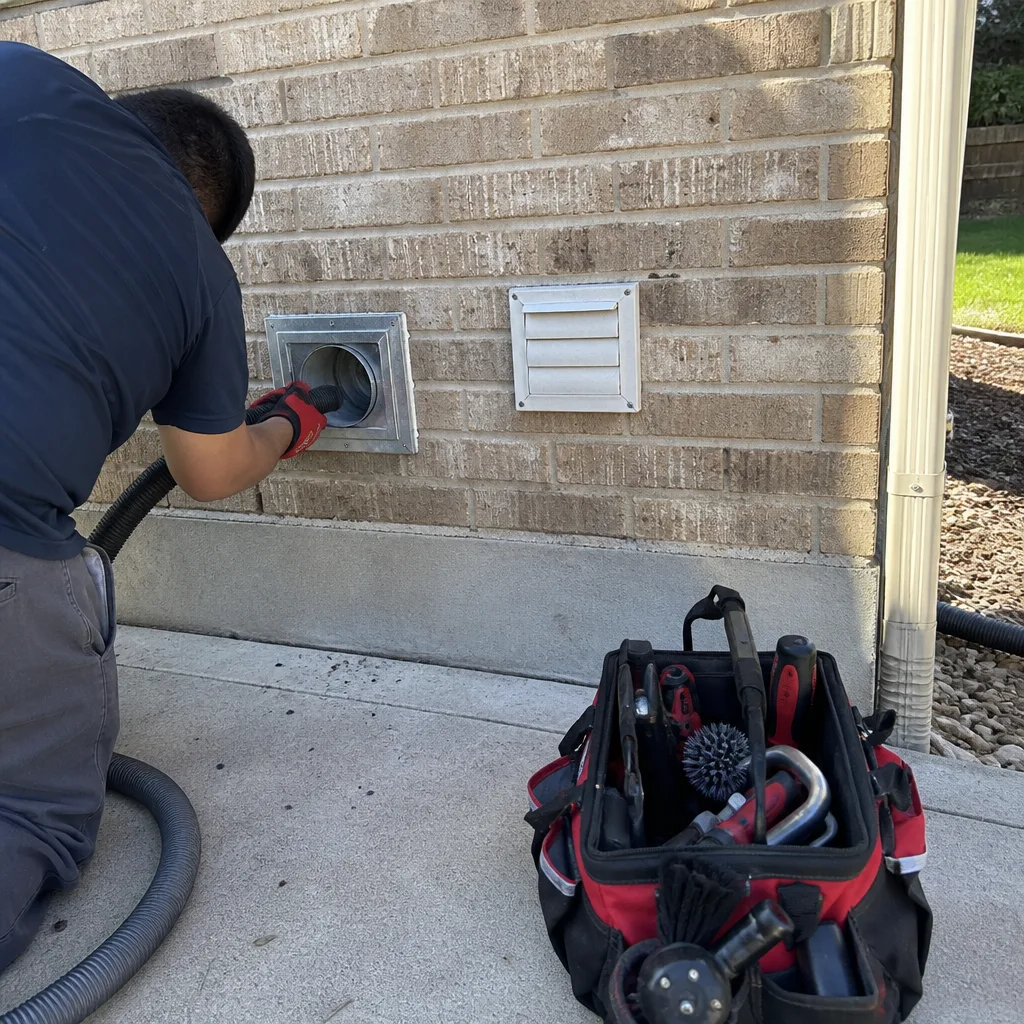 After
AfterThe Complete Guide to Air Duct Cleaning in Irving
A shop vac attached to one register moves roughly 100 CFM. A professional negative-pressure duct cleaning system moves 4,000 to 8,000 CFM. The difference is not volume, it is physics: at 100 CFM, debris loosens and relocates to the next duct run downstream. At 4,000+ CFM, debris is extracted from the system entirely. In Irving, where clay soil creates foundation shifts that stress duct seams and where humidity swings from 70% in July to 30% in January, this distinction matters more than in drier, more stable Texas metros. This guide shows what actually happens inside an Irving home’s ductwork, what documentation a legitimate Air Duct Cleaning services job produces, and what fair pricing looks like when every variable is named upfront.
Quick Answer
Professional air duct cleaning in Irving typically costs $450-$950 for a complete residential system, depending on square footage, register count, and whether the plenum and main trunk lines require separate access. See our How to Hire a Air Duct Cleaning Contractor in Irving: A Step-by-Step Guide for help choosing a provider. A legitimate job uses negative-pressure extraction equipment, photographs every duct run before and after, and delivers a written report with static pressure readings and photo timestamps. In Irving’s climate, most homes benefit from cleaning every 4-6 years, sooner if there has been recent construction, water intrusion, or visible mold.
Table of Contents
- What Actually Happens Inside Your Ducts in Irving
- Source Removal vs. Blow-and-Go: The Airflow Numbers
- How Irving’s Weather Cycle Accelerates Duct Contamination
- What “Clean” Actually Looks Like: Documentation Standards
- What Air Duct Cleaning Costs in Irving: Real 2025 Pricing
- How to Choose a Duct Cleaning Company in Irving
- What to Expect: Preparation, Duration, and Deliverables
- Maintaining Clean Ducts Between Professional Visits
BeforeAfterWhat Actually Happens Inside Your Ducts in Irving
We have photographed the inside of ductwork in Irving homes since 2013. The pattern is consistent, and it differs from what we see in drier Texas markets like Amarillo or Midland.
In Irving’s established neighborhoods - Las Colinas, Valley Ranch, the older sections of Irving Heights - the most common contaminant is not dramatic. It is a gradual accumulation of fine particulate: skin cells, textile fibers, pollen that enters through return air pathways, and construction dust from the ongoing development that surrounds these areas. The camera shows this as a velvety gray coating on duct walls, thickest at elbows and transitions where airflow slows.
In newer construction, particularly in the Viridian and Hackberry Creek areas where homes were built between 2015 and 2022, we regularly find a different profile. The debris is less aged but more abrasive: drywall dust, wood framing particles, and the residue of off-gassing from new materials. These homes often have tighter envelopes - better sealed against outside air - which sounds like a benefit but can concentrate whatever does enter. The HVAC system becomes the primary circulation path for particles that have no other exit.
Clay soil, which underlies most of Irving, creates a secondary issue. Foundation movement from soil expansion and contraction stresses duct seams, particularly in slab-on-grade construction. A stressed seam leaks conditioned air into the attic or crawl space and draws unconditioned air - and whatever it carries - back in. We have photographed gaps at plenum connections in Irving homes that pulled fiberglass insulation into the airstream. The homeowner saw dust at registers; the camera showed shredded pink insulation wrapped around the first elbow downstream.
Humidity completes the picture. Irving’s summer dew points regularly reach the low 70s. When cool air moves through ducts in a hot, humid attic, condensation forms on duct exteriors. If the duct insulation is compromised, that moisture migrates inward. The result is a sticky film that traps particles that would otherwise pass through. In homes near the Elm Fork of the Trinity River, where water tables are higher and basements more common, we have documented mold growth on duct interiors that began at a single point of moisture intrusion and spread along the length of the trunk line.
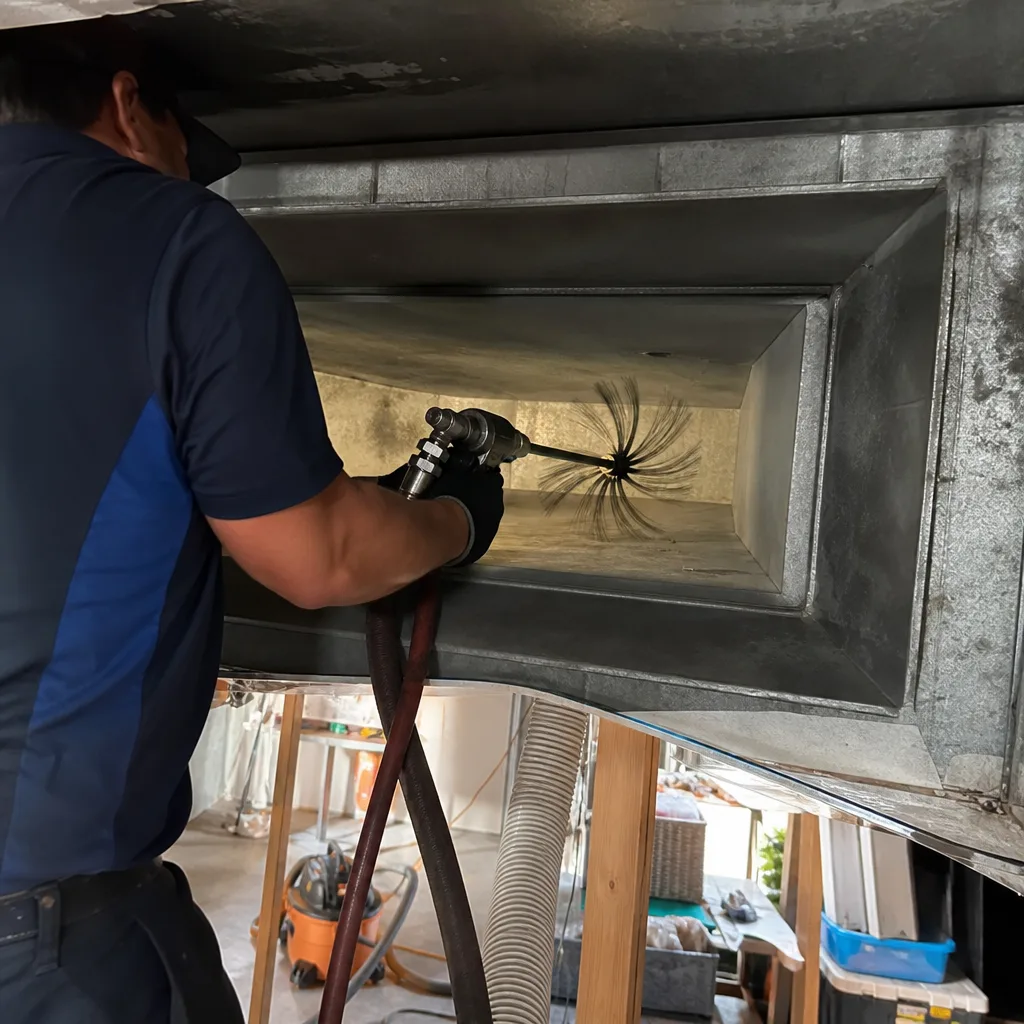
What the camera shows determines what the job requires. A light coating of dry particulate responds to agitation and negative-pressure extraction. A sticky film requires different agitation tools and sometimes a change in cleaning agent. Active mold requires containment, HEPA filtration, and post-clean verification - a separate protocol with separate documentation.
Source Removal vs. Blow-and-Go: The Airflow Numbers
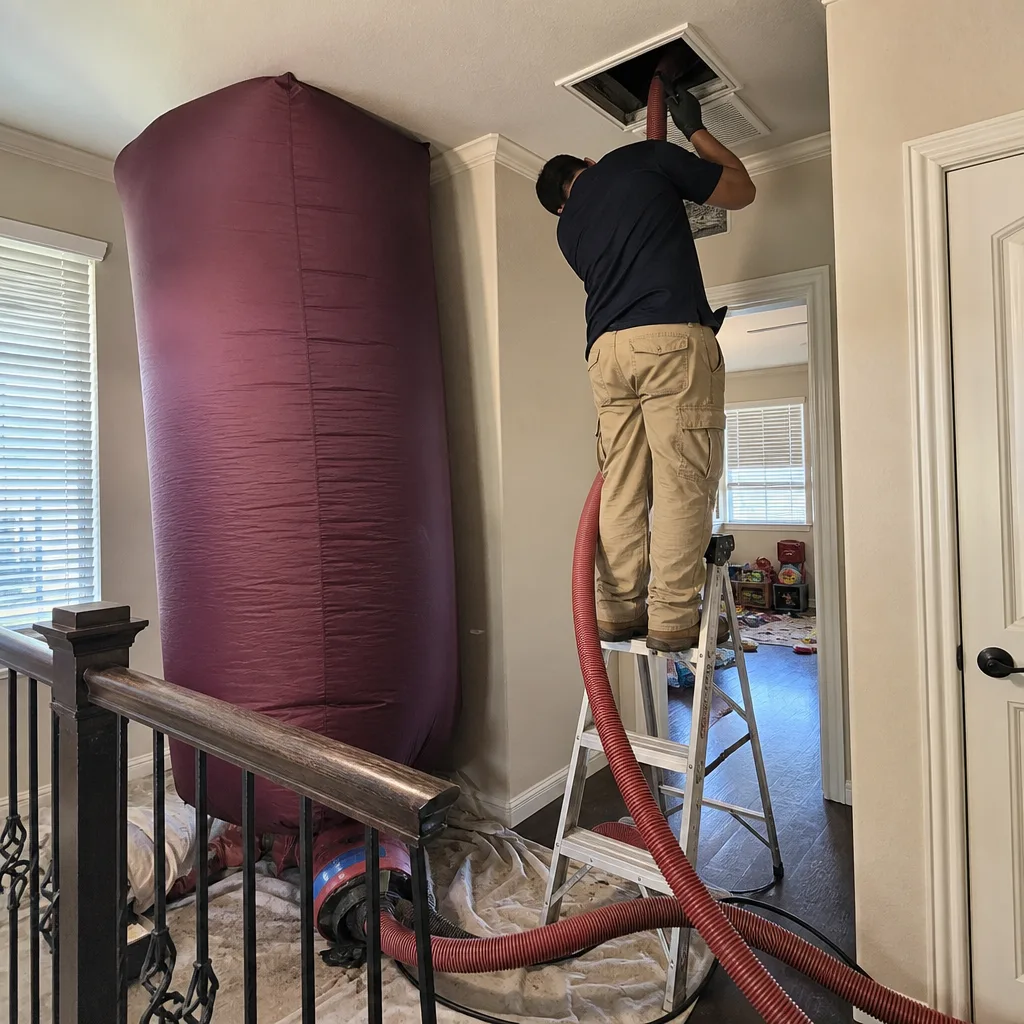
The National Air Duct Cleaners Association (NADCA) standard is source removal: debris is dislodged from duct walls and immediately extracted at the point of dislodgment. This requires two things working together: mechanical agitation to break debris free, and sufficient airflow to carry it out before it resettles.
Here is the equipment reality:
| Method | CFM at Source | Typical Equipment | What Happens to Debris |
|---|---|---|---|
| Shop vac at register | 80-120 CFM | Consumer wet/dry vacuum | Loosened debris redistributes to next duct run |
| Portable HEPA vacuum | 200-400 CFM | Commercial portable unit | Partial extraction; significant resettling in trunk lines |
| Negative-pressure truck mount | 4,000-8,000 CFM | Gas-powered collection system (Nikro, Abatement Technologies) | Complete extraction at source; HEPA filtration on exhaust |
| Negative-pressure with portable power | 2,000-4,000 CFM | Electric portable collection (Rotobrush, Nikro) | Effective for residential systems; requires proper hose sizing |
The $79 coupon model typically uses a portable electric vacuum, sometimes with a rotary brush on a drill. The brush dislodges debris at one register. The vacuum, positioned at that same register, captures what it can. What it cannot capture - and at 200 CFM, that is most of what was loosened - travels to the next register, the next room, or back to the air handler where it is redistributed through the system over the following weeks.
We have arrived at jobs in Irving where the homeowner hired a coupon service six months prior and called us because “the dust came back worse.” The camera showed a pattern we recognize: clean duct walls at the registers that were serviced, heavy accumulation two turns downstream where debris had settled, and a clogged evaporator coil that was not part of the original scope. The coupon service had performed source relocation, not source removal.
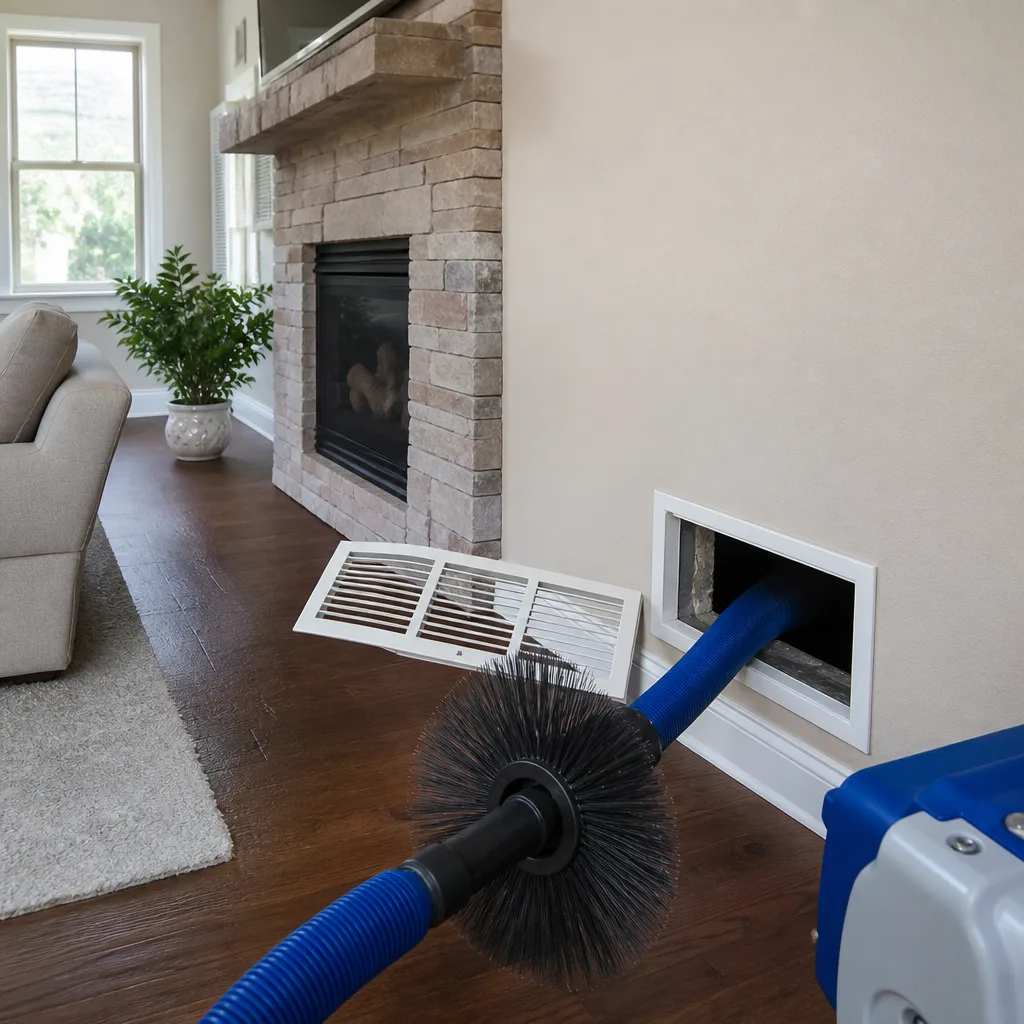
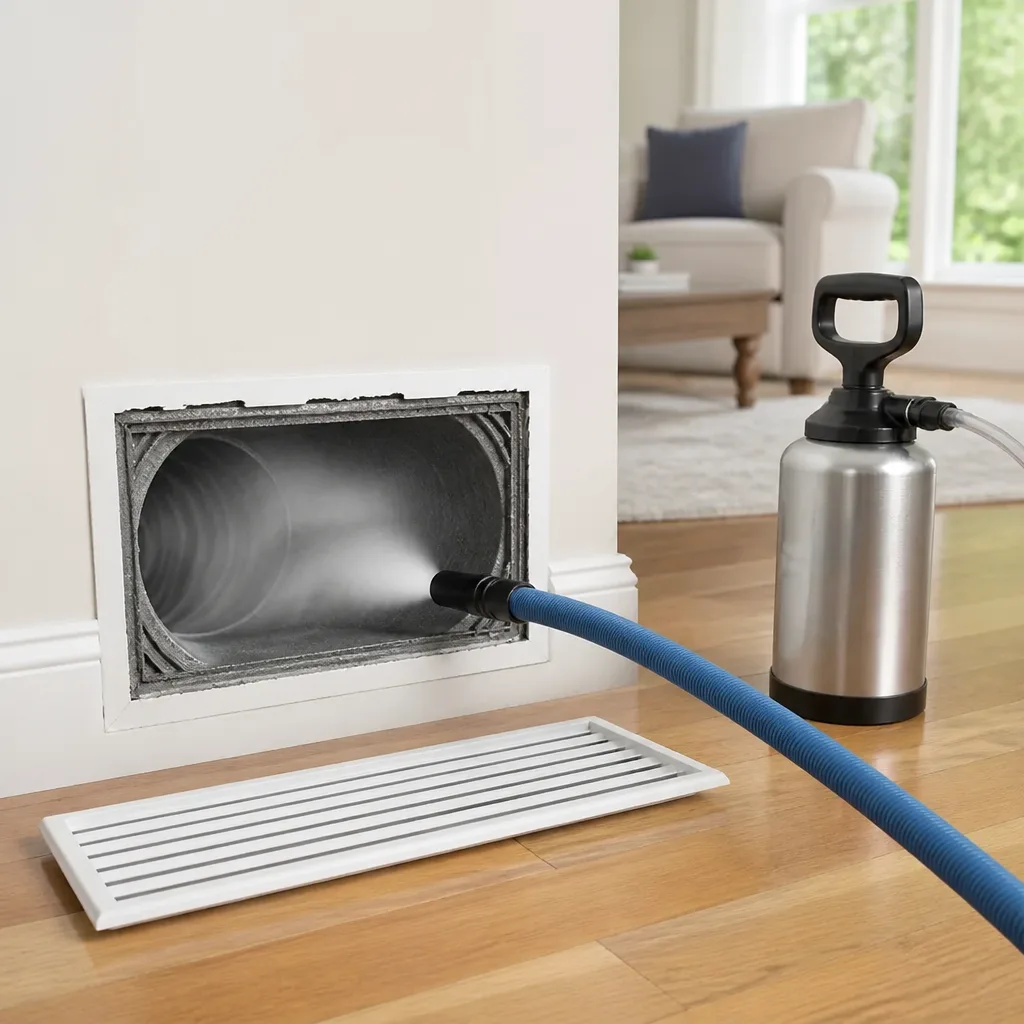
Negative-pressure extraction works differently. The collection unit attaches to the main trunk line or air handler, creating suction throughout the entire system. Agitation tools - rotary brushes, air whips, compressed air snakes - operate at each register in sequence. The debris dislodged at any point is drawn immediately toward the collection point by the pressure differential. At 4,000+ CFM, the transport velocity in the duct exceeds 3,000 feet per minute. Debris does not have time to settle.
This is why NADCA specifies negative pressure for source removal, and why the photo record matters: a legitimate job shows clean walls at every register, every elbow, and every trunk line section, not just the ones that were easiest to reach.
How Irving’s Weather Cycle Accelerates Duct Contamination
Irving’s climate is not extreme by Texas standards, but its specific pattern creates conditions that accelerate duct contamination compared to other metros in the state.
Humid summers, dry winters. From June through September, Irving averages relative humidity above 65%. The HVAC system runs continuously, moving large air volumes through ducts that may be 20-30 degrees cooler than attic air. Condensation on duct exteriors is common. In winter, humidity drops below 35%, and the heating cycle reverses the temperature differential: warm air in cool ducts. The expansion and contraction of duct seams from this thermal cycling is more pronounced in Irving than in markets with more stable year-round conditions.
Construction dust loading. Irving has been under continuous development since the 2010s. The DFW Airport expansion, the Toyota Music Factory construction, and ongoing residential builds in the northern and western sections generate particulate that enters the ambient air. Homes within two miles of active construction sites - common in the Cypress Waters and Las Colinas Urban Center areas - show measurably higher dust loading in return air ducts. We have documented this with pre-filter weights and photo sequences.
Clay soil and foundation stress. The expansive clay soils of the Blackland Prairie, which underlie most of Irving, swell with moisture and shrink in drought. This movement cracks slab foundations, shifts walls, and separates duct connections. A separated duct connection in an attic or crawl space does not just leak air; it creates a pressure imbalance that draws attic air - hot, dusty, sometimes mold-laden - into the system. In homes built before 1990 in the Irving Heights and Plymouth Park areas, we find these separations more often than in newer construction with more flexible duct materials.
Pollen and allergen cycles. Irving’s tree pollen season begins in February with cedar elm and oak, peaks in March and April, and continues with grass pollen through June. Ragweed extends the season into October. Homes with fresh air intakes or older windows that do not seal tightly experience higher particulate loading. The HVAC filter captures what it can; what passes the filter deposits in the ductwork. In homes with pets, the combination of pet dander and pollen creates a sticky matrix that adheres to duct walls more tenaciously than either component alone.
The practical implication: an Irving home with 2,000 square feet, two HVAC systems, pets, and proximity to construction may require cleaning every 3-4 years. A similar home in a drier, more stable climate with no construction nearby may go 6-8 years between services. The difference is not the home’s cleanliness; it is the environmental load.
What “Clean” Actually Looks Like: Documentation Standards
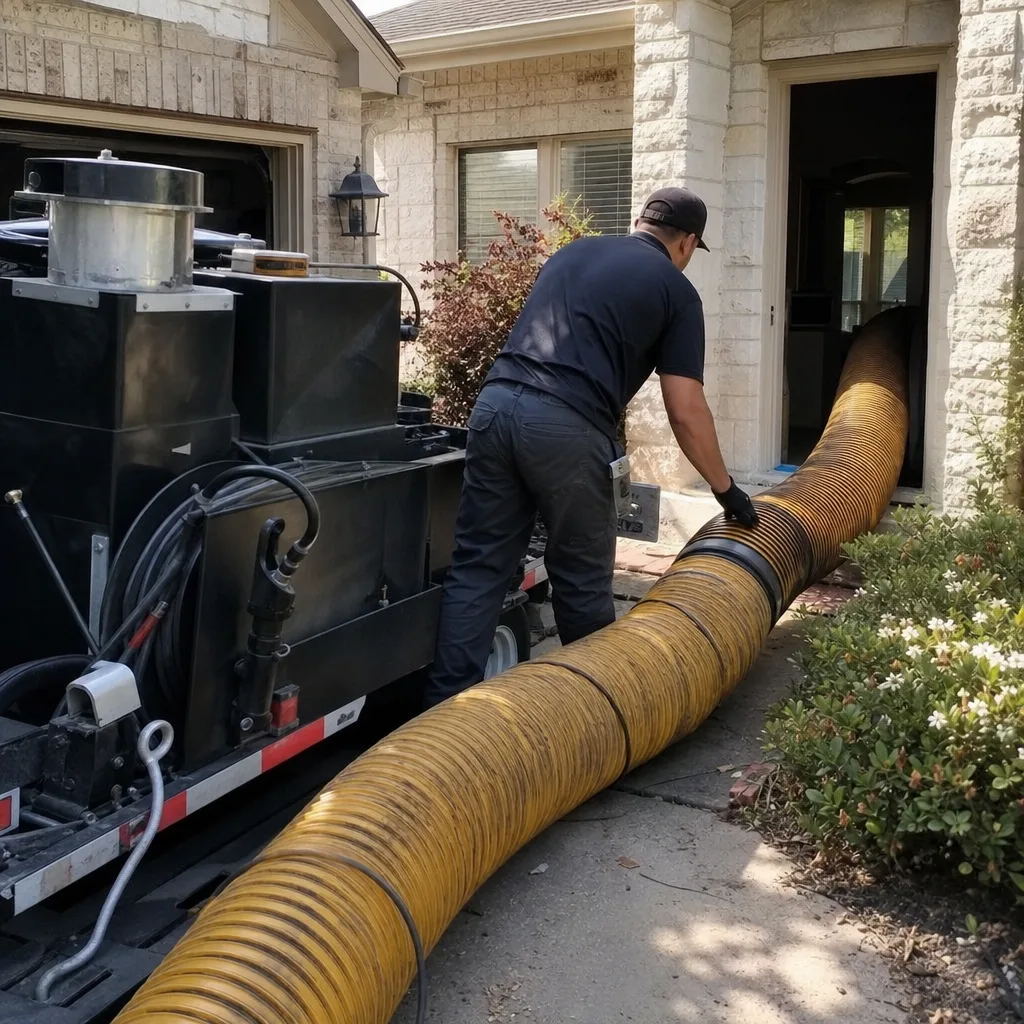
After the equipment is packed and the crew leaves, what should you have in your hands? This is where the legitimate job separates from the coupon visit. At CleanRun, every job concludes with a written job report and a Documented Photo Record. Here is what that contains, and why each element matters.
The Written Job Report
A proper report names what was done, where, and with what result. It should include:
- Register count and location. “12 supply registers: 4 bedrooms, 2 bathrooms, living room, kitchen, dining room, office, hallway, media room, master closet.” This establishes the scope and allows you to verify that every register was addressed.
- Linear footage cleaned. The total length of ductwork from air handler to terminal register. A typical Irving home with one system has 80-120 linear feet. Two systems: 160-240 linear feet. This number should match what you were quoted.
- Static pressure readings before and after. Static pressure is the resistance the blower motor works against, measured in inches of water column. A dirty system runs higher pressure; a clean system, lower. We record this at the air handler with a digital manometer. A typical reading before cleaning: 0.7-1.0 inches WC. After cleaning: 0.4-0.6 inches WC. The drop confirms that airflow obstruction has been removed, not just relocated.
- Equipment used. The specific tools and machines: “Nikro HP20G gas-powered negative pressure collector, 5,500 CFM; Rotobrush BrushBeast agitation system; Honeywell True HEPA post-filter.” This allows verification that professional-grade equipment was used, not a shop vac with a brush attachment.
- Photo timestamps. Every before-and-after image carries a timestamp and register identifier: “Supply BR2, 10:47 AM, before” and “Supply BR2, 11:23 AM, after.” This prevents the common shortcut of photographing one clean duct and presenting it as representative of the whole system.
The Photo Record
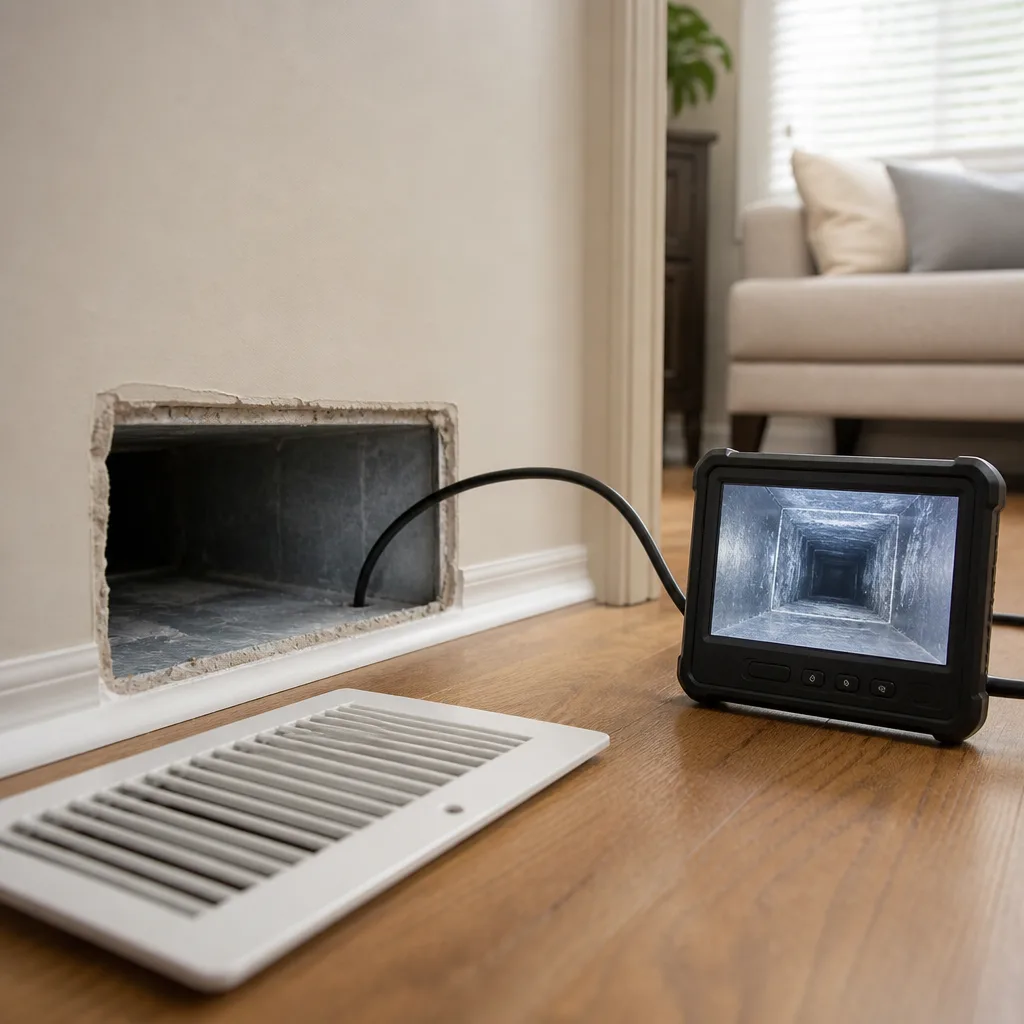
The Documented Photo Record is not marketing material. It is evidence. Each image shows the interior of a specific duct run, identified by register location, with the camera positioned at the same depth for before and after comparison. What you should see:
- Before: a visible coating of debris, discoloration, or in some cases, active mold growth
- After: bare metal or duct board with no visible residue, the surface color uniform with the original material
- At transitions and elbows: the same standard applied, not just the straight runs that are easiest to photograph
We have encountered competitors who show only register face photos - the visible grille - or who photograph the duct mouth but not the interior beyond the first bend. The camera we use extends 25 feet into the duct run. If the debris was three feet beyond the elbow, the photo shows it was three feet beyond the elbow, and that it was removed.
The photo record is delivered as part of the standard job record, not as an upsell. Haven Standard Clause 1 requires written pricing before work begins; Haven Standard Clause 6 requires documented delivery of what was promised. The photo record satisfies Clause 6.
What Air Duct Cleaning Costs in Irving: Real 2025 Pricing
We do not offer coupon pricing, and we do not quote per-vent rates that balloon once the van is in the driveway. The price we write before work starts is the price you pay. Here is what full-system duct cleaning costs in Irving at market rate, based on the homes we have serviced since 2023.
| Home Size / System Configuration | Typical Register Count | Linear Footage | Price Range |
|---|---|---|---|
| 1,200-1,600 sq ft, single system | 8-10 registers | 60-90 ft | $450-$580 |
| 1,600-2,400 sq ft, single system | 10-14 registers | 90-130 ft | $580-$750 |
| 2,400-3,200 sq ft, single or dual system | 14-20 registers | 130-200 ft | $750-$950 |
| 3,200+ sq ft, dual or zoned system | 20-30+ registers | 200-300+ ft | $950-$1,400 |
| Dryer vent cleaning (add-on or standalone) | N/A | 10-25 ft | $120-$220 |
What moves a job to the higher end of the range:
- Additional access required: cutting into ductwork to reach trunk lines, removing and reinstalling insulation
- Mold or biofilm remediation: separate containment, HEPA filtration, post-clean verification testing
- Duct repair or sealing: separating seams, replacing damaged flex duct, sealing with mastic
- Multiple HVAC systems: each system is a separate cleaning scope with separate equipment setup
What is not included in these ranges and should be named separately:
- Evaporator coil cleaning: typically $180-$320, requires access panel removal and chemical treatment
- Blower motor cleaning: $120-$180, requires disassembly of the air handler
- UV light installation: $280-$450, including Aprilaire or Honeywell units
- Whole-home air purifier: $400-$900, depending on capacity and installation complexity
The $79 coupon model survives by quoting a per-vent rate for the visible register only, then charging separately for “main line cleaning,” “sanitizing,” and “vent cover removal” once the technician is inside. We have reviewed competitor invoices from Irving homeowners who expected to pay $200 and paid $800. Our written price includes every element of the agreed scope. If the scope changes - we find mold we could not see from the access point - we stop, show you the camera image, and write a revised price before continuing. Haven Standard Clause 1: no surprises.
For an exact quote on your home, we measure register count and system configuration during a brief site visit or video walkthrough. Estimates are free. Call (682) 297-4068 to schedule.
How to Choose a Duct Cleaning Company in Irving
The NADCA membership directory lists fewer than ten certified contractors in the full Dallas-Fort Worth metroplex. This is not a crowded field of qualified providers; it is a large market with a small core of legitimate operators and a long tail of coupon marketers using rented equipment.
Here is what to verify before inviting any company into your home:
- License and insurance, named and verifiable. In Texas, the Air Conditioning and Refrigeration Contractors license (TDLR) is required for any work that disturbs the HVAC system. Ask for the license number and verify it at CleanRun Air Duct Cleaning Irving home. Ask for a certificate of insurance naming you as additional insured for the day of service. CleanRun publishes its license number on every proposal and carries general liability and workers compensation coverage under the H.A.V.E.N. Standard.
- Equipment you can look up. The brands matter because they have specifications you can verify. A Nikro HP20G produces 5,500 CFM and carries HEPA filtration. An Abatement Technologies PRED1200 is a portable negative pressure unit rated for residential and light commercial. A Rotobrush BrushBeast is a rotary agitation system with adjustable torque for different duct materials. If the company cannot name its equipment, it is likely using consumer-grade tools or rented units.
- Written scope and price before work begins. Not an estimate. A fixed price for a defined scope. The scope should name register count, linear footage, equipment to be used, and deliverables (photo record, static pressure readings). If the answer is “we’ll see when we get there,” the answer is no.
- Photo documentation as standard, not optional. The photo record is your proof of performance. It should be included in the base price, not sold as a $79 add-on. Ask to see a sample report from a previous job (with identifying information redacted). The quality of the sample predicts the quality of your job.
- Technician identification and background verification. Haven Standard Clause 3: Verified Crews. You should receive the technician’s name and photo before arrival, and the technician should arrive in a marked vehicle, in uniform, with identification. This is basic security; it is also a signal that the company employs rather than subcontracts its labor.
- A guarantee with substance. The 365-Day Done Right Promise means that if the work is not right, we make it right - backed in writing, not subject to manager discretion. Ask what “not right” means and how it is resolved. A guarantee without a defined remedy is marketing language.
Red flags specific to the Irving market:
- Out-of-area phone numbers with local forwarding: many coupon services operate call centers in other states
- “Free mold testing” offers: legitimate mold assessment requires laboratory analysis, not a flashlight and a scare tactic
- Pressure to add sanitizing or sealing: these services have specific applications and should be recommended based on inspection findings, not scripted upsells
- No physical address: verify the business location; CleanRun operates from a facility in Irving with fleet vehicles stored on-site
What to Expect: Preparation, Duration, and Deliverables
A typical residential duct cleaning in Irving takes 3-5 hours for a single system, 5-8 hours for dual systems. Here is the sequence:
- Pre-arrival: You receive technician name, photo, and ETA. Clear a path to the air handler (usually attic, closet, or garage) and to all registers. Remove fragile items from shelves near registers; vibration from agitation tools can dislodge objects.
- Arrival and verification: Technician reviews the written scope with you, confirms register count, and notes any access limitations. The price is already fixed; this is confirmation, not negotiation.
- System inspection and photo documentation: Camera inspection of representative duct runs to confirm condition matches what was quoted. If significant mold or damage is found that was not visible from access points, work stops for consultation.
- Setup of negative pressure collection: The collection unit attaches to the main trunk line or air handler. All registers are sealed except the one being serviced.
- Agitation and extraction, register by register: Each supply register is opened, agitated with rotary brush or compressed air whip, and extracted. The process repeats for return registers. Trunk lines and plenum receive separate attention.
- Post-cleaning inspection and photo documentation: Camera re-inspection of the same runs photographed before, with timestamps. Static pressure measured and recorded.
- Cleanup and deliverables: Work area cleaned, equipment removed, written report and photo record delivered. Payment processed at the pre-agreed price.
What you should not expect: chemical fogging as a default, “sealing” of ductwork that was not previously leaking, or pressure to schedule the next service before the current one is complete. We will recommend a reasonable interval based on your specific conditions, and we will note it in your file. We will not call before that interval unless you contact us first.
Maintaining Clean Ducts Between Professional Visits
Professional cleaning resets the system. Maintenance extends the reset. Browse our more guides & resources for ongoing maintenance tips. In Irving’s climate, these practices measurably reduce recontamination rates:
- Filter discipline: Use the highest MERV rating your system can handle without stressing the blower motor (typically MERV 8-13 for residential). Change filters every 60-90 days during high-use months, not when they look dirty. A clogged filter is worse than no filter; it collapses and dumps its load into the ductwork.
- Return air pathway management: Keep return grilles unobstructed and the spaces around them clean. The return side is the duct system’s intake; whatever is near it enters the system. In homes with central returns, this means managing dust in hallways and common areas, not just the rooms with supply registers.
- Humidity control: Maintain indoor relative humidity between 40% and 55%. Below 40%, particulate remains airborne longer. Above 60%, the sticky film condition accelerates. A whole-home dehumidifier, properly sized and ducted, reduces the moisture load on the HVAC system and the ductwork.
- Construction awareness: If you renovate, seal return grilles and the air handler itself before demolition begins. Run the system on fan-only with a fresh filter after construction to capture airborne particles, then replace the filter. Schedule duct inspection if the construction generated significant dust.
- Annual HVAC maintenance: A tuned system runs less, cycles less, and moves air more efficiently. Less runtime means less particulate transport. Clean coils and proper refrigerant charge also reduce condensation in the air handler, which reduces the moisture available for microbial growth.
For homes in Irving’s high-construction zones - currently the northern and western corridors - we recommend checking filters monthly and scheduling a mid-interval inspection at the 2-year mark. The inspection is camera-only, no cleaning, and carries a separate, lower fee. It confirms whether the full service interval is appropriate or whether conditions warrant earlier cleaning.
Common Mistakes to Avoid
- Booking based on coupon price without verifying scope. The $79 offer covers “up to 10 vents” but defines “vent” as the visible grille, not the duct run behind it. Main line cleaning, the actual work, is priced separately. By the time the invoice is written, the total exceeds legitimate market rate.
- Ignoring the return side. Supply ducts deliver conditioned air; return ducts pull air back to the air handler. The return side is typically dirtier because it is unfiltered. A quote that names supply register count but not return register count is under-scoped.
- Accepting chemical fogging as standard. EPA-registered sanitizers have specific applications and require specific dwell times. Fogging without source removal is perfume on dirt. It is also unnecessary in most residential systems unless mold has been confirmed.
- Scheduling cleaning after a mold remediation without independent verification. If mold was present, the remediation contractor should provide clearance testing before ducts are cleaned. Cleaning contaminated ducts without clearance risks spreading spores.
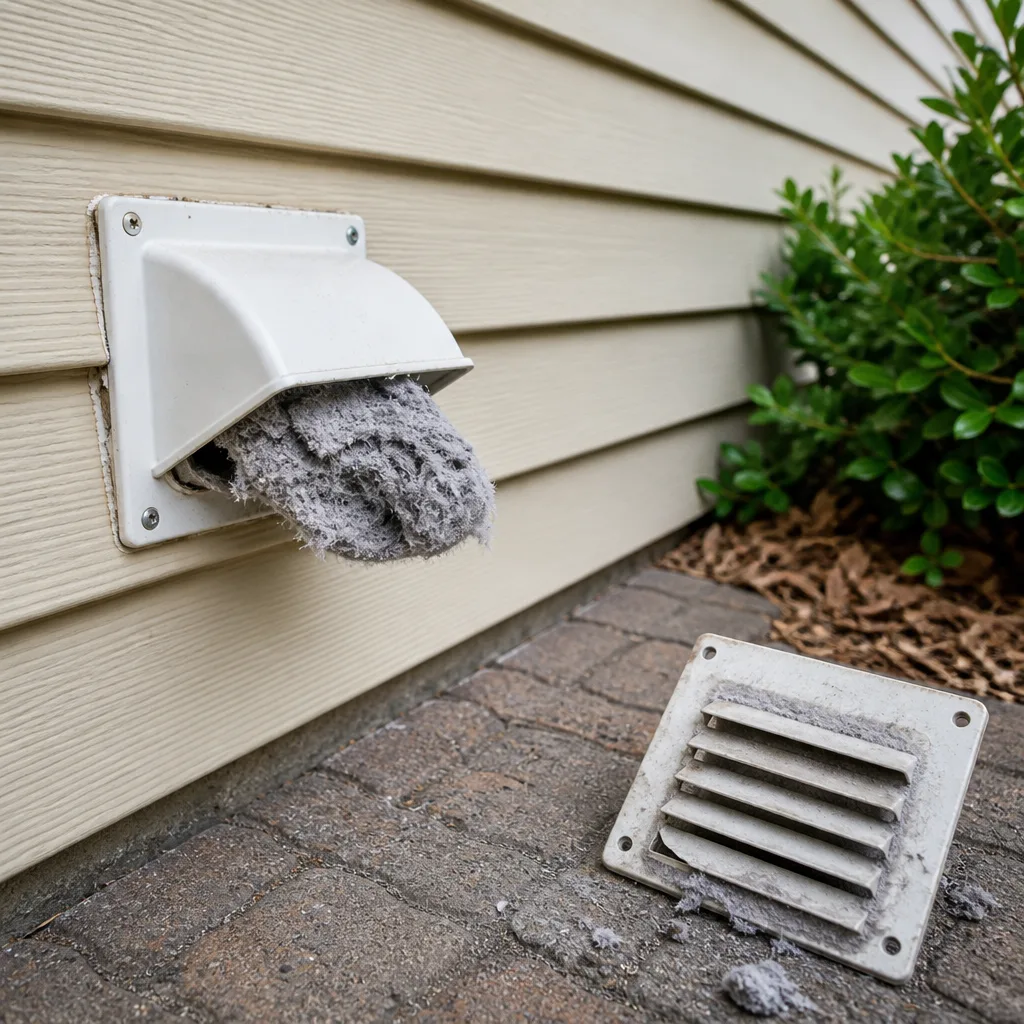
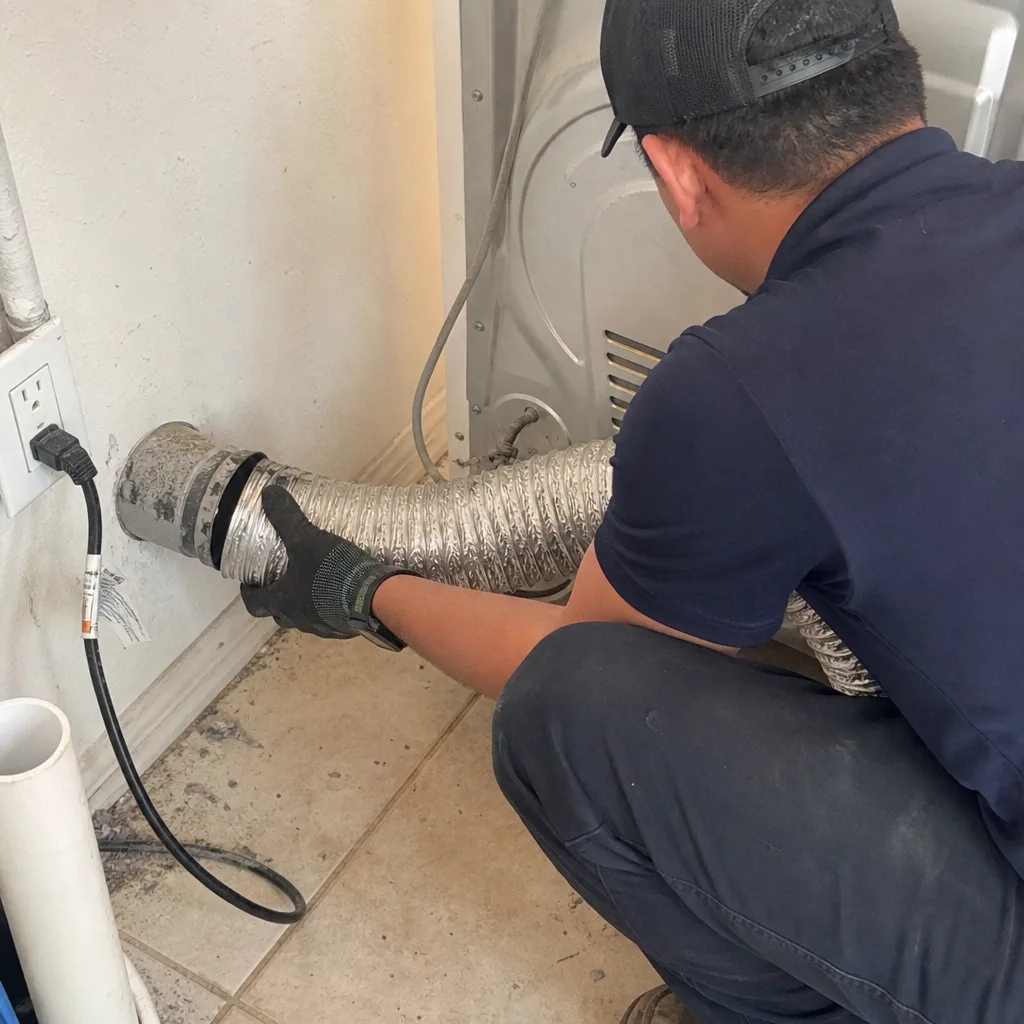
- Neglecting the dryer vent. A clogged dryer vent restricts airflow, extends drying time, and creates fire risk. It also pressurizes the laundry room, forcing lint into return air pathways. Dryer Vent Cleaning in Irving is often scheduled with duct cleaning but should be scoped separately.
- Assuming new construction means clean ducts. New homes in Irving’s development corridors often have the worst duct contamination we see. Construction debris, left in ducts during the build, is baked in by months of HVAC operation before occupancy. The first cleaning in a new home should happen within the first two years, not after five.
- Treating all duct materials the same. Flexible duct, fiberglass duct board, and galvanized steel each require different agitation tools and cleaning pressures. A company that uses one tool for all materials is either uninformed or indifferent to damage.
When to Call a Professional
Schedule an inspection, not necessarily a cleaning, if you notice visible dust accumulation at registers shortly after cleaning, persistent musty odor when the system runs, uneven heating or cooling that correlates with specific duct runs, or recent water intrusion or pest activity in attic or crawl space spaces. These are symptoms of conditions that cleaning alone may not resolve.
Schedule cleaning without delay if you have confirmed mold growth inside ductwork, experienced a rodent or insect infestation in the duct system, completed major renovation with the system operational, or purchased a home where the prior maintenance history is unknown and the system has operated more than five years without service.
CleanRun Air Duct Cleaning Irving offers free estimates in Irving. Every estimate includes a brief camera inspection of accessible duct runs, a written scope and fixed price, and no obligation. Call (682) 297-4068 to schedule. We also provide HVAC Cleaning in Irving for homeowners who need full system maintenance beyond ductwork alone.
Frequently Asked Questions
A complete residential duct cleaning in Irving costs $450-$950 for most homes, depending on square footage, register count, and system configuration. Homes over 3,200 square feet with multiple systems may reach $1,400. This is for full source-removal cleaning with negative-pressure extraction, photo documentation, and written report. Prices below $300 typically indicate a coupon model with limited scope and significant upsell risk. Call (682) 297-4068 for an exact quote on your home - estimates are free.
The low quote is usually a per-vent rate for register-face cleaning only, not the full duct run. The main trunk line, plenum, and return ducts are priced separately once the technician arrives. We have reviewed invoices where the final charge was 4x the quoted rate. A legitimate quote names the total register count, linear footage, and equipment to be used, with no category left open. CleanRun provides this in writing before work begins, every time, under Haven Standard Clause 1.
You should receive a photo record showing the interior of every duct run before and after, with timestamps and register identifiers. You should also receive static pressure readings showing reduced resistance after cleaning. If a company cannot or will not provide this, you have no verification that the work occurred. CleanRun’s Documented Photo Record is standard on every job, delivered as part of the written job record, not as an optional add-on.
Most Irving homes benefit from cleaning every 4-6 years. Homes with pets, recent construction nearby, or high occupancy may need service every 3-4 years. Homes with water intrusion history, confirmed mold, or rodent activity may need more frequent inspection and cleaning. The interval should be based on camera inspection findings, not a calendar alone. We note recommended intervals in each customer’s file and do not market to them before that date.
It can, but the effect is specific and measurable, not dramatic. A heavily obstructed system shows reduced static pressure after cleaning, which means the blower motor works less hard to move the same air volume. In our Irving jobs, we typically see static pressure drop 0.2-0.4 inches WC after cleaning. This translates to modest energy savings and reduced wear on the blower motor. It does not transform a 15-year-old system into a new one. The primary benefit is air quality: reduced particulate circulation and removal of contamination sources.
It is safe when done with appropriate tools and pressure. Older galvanized steel ducts, common in Irving homes built before 1985, are durable but may have rust or separated seams. Flex duct, common from the 1990s onward, requires lower agitation pressure to avoid tearing the inner liner. A qualified technician inspects duct material before selecting tools. We have cleaned ductwork in Irving homes from the 1960s without damage; we have also declined jobs where the ductwork was too deteriorated to withstand agitation, recommending repair or replacement instead.
The Bottom Line
Air duct cleaning in Irving is not a commodity service. The difference between legitimate source removal and a coupon visit is measured in CFM, photo documentation, and whether the debris left your home or just your living room. Irving’s clay soil, humidity swings, and ongoing construction create specific contamination patterns that require specific responses: negative-pressure extraction, register-by-register agitation, and a written record that proves what was done. The price should be fixed before work starts, the equipment should be named and verifiable, and the guarantee should be in writing. Anything less is vacuum noise.
Written by Tomas Reyes, Owner at CleanRun Air Duct Cleaning Irving, serving Irving since 2013.