
Last updated September 23, 2026
Whole-system duct and dryer vent check with before-and-after photos - you see exactly what came out of your vents
That "$99 whole-house special" is a bait ad - the real number appears once they are in your hallway, or the "clean" is a shop-vac at the register. We photograph the inside of your ducts before and after instead.
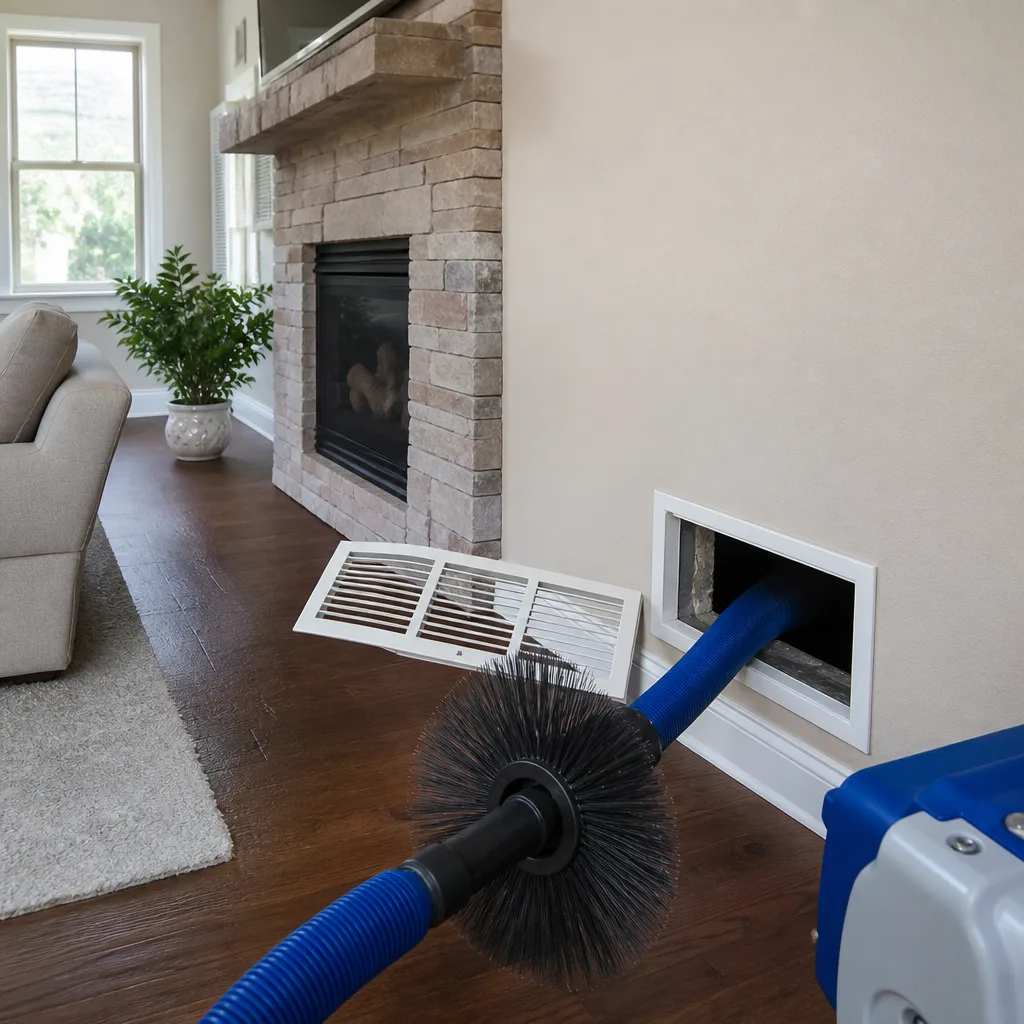
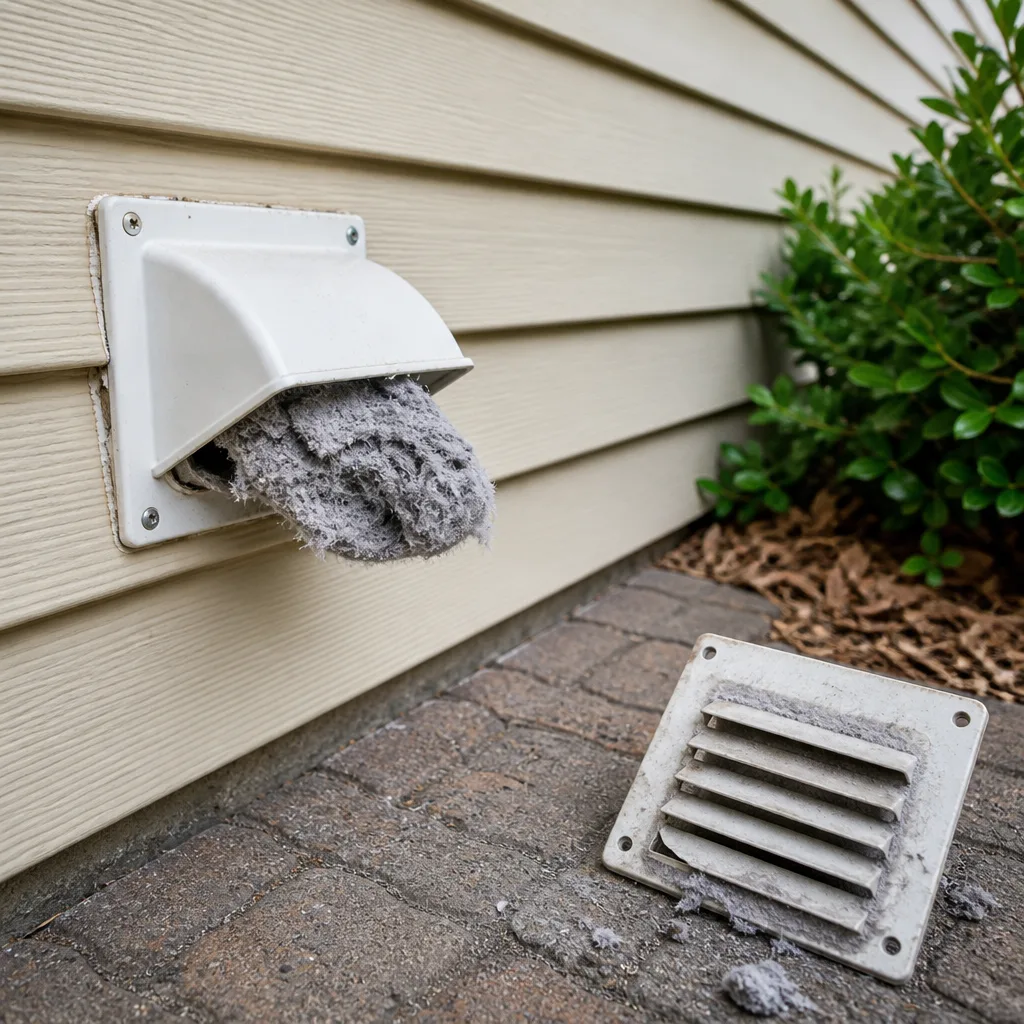
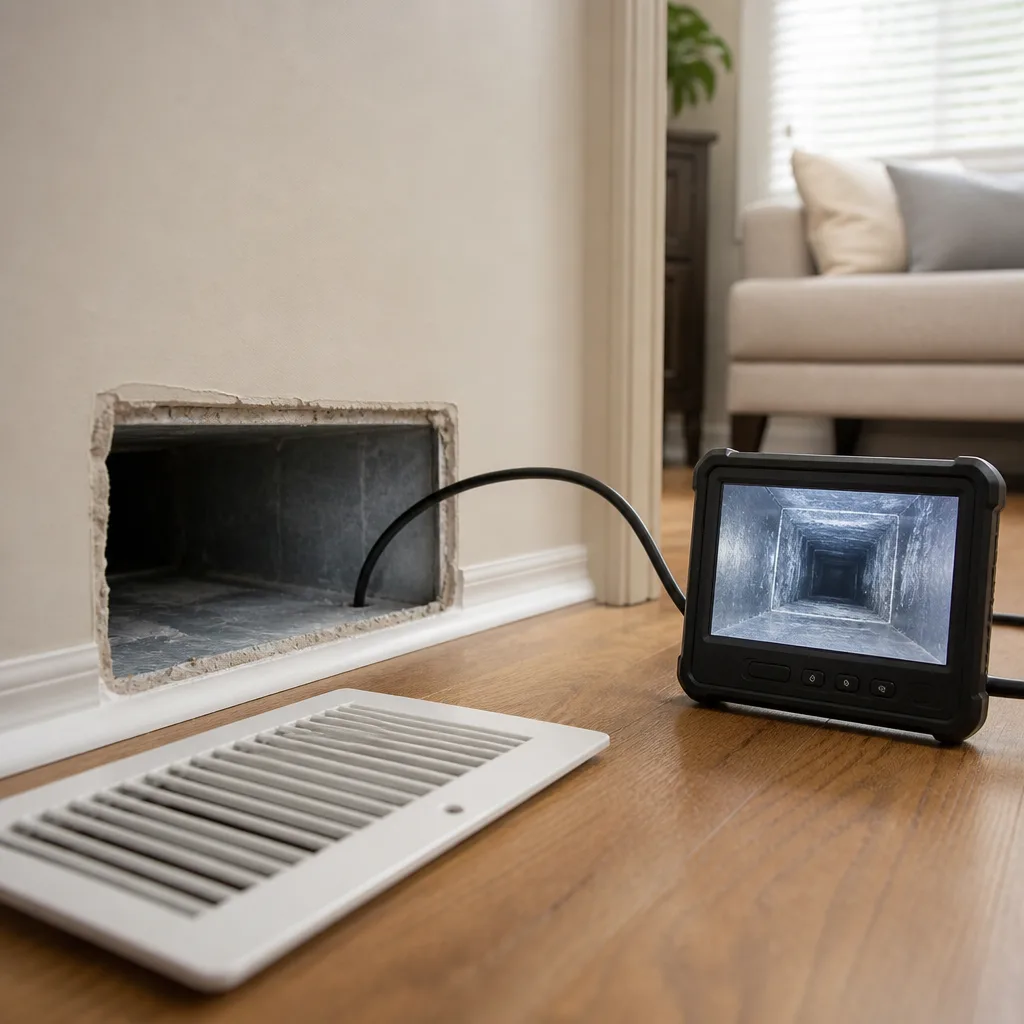
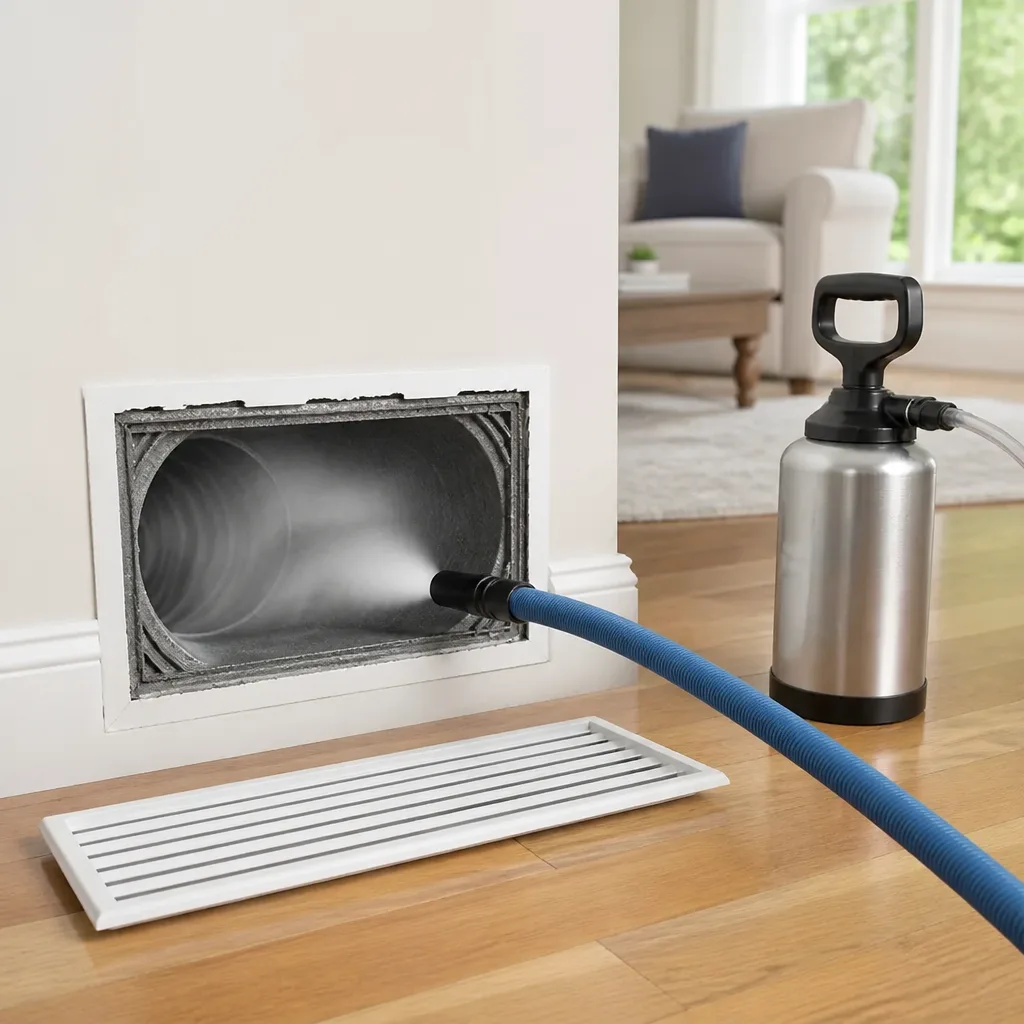
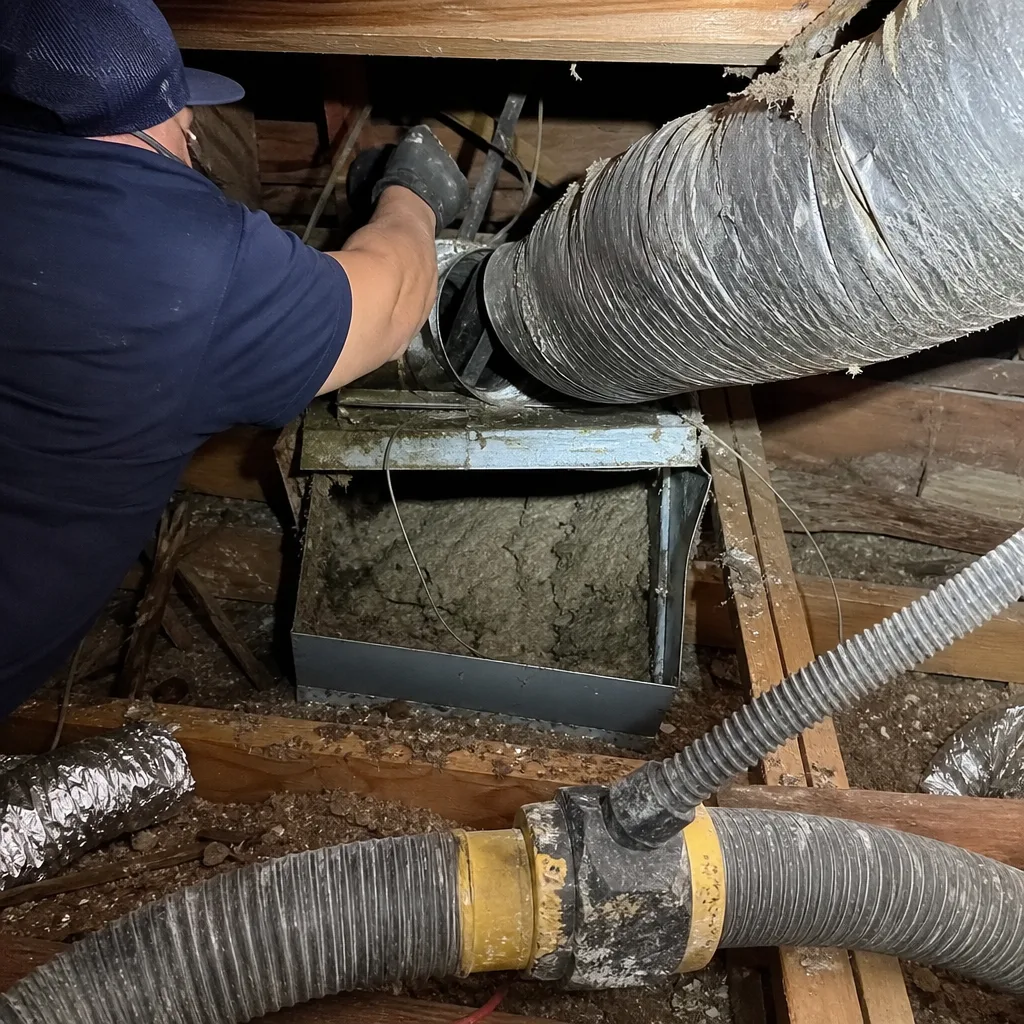 Before
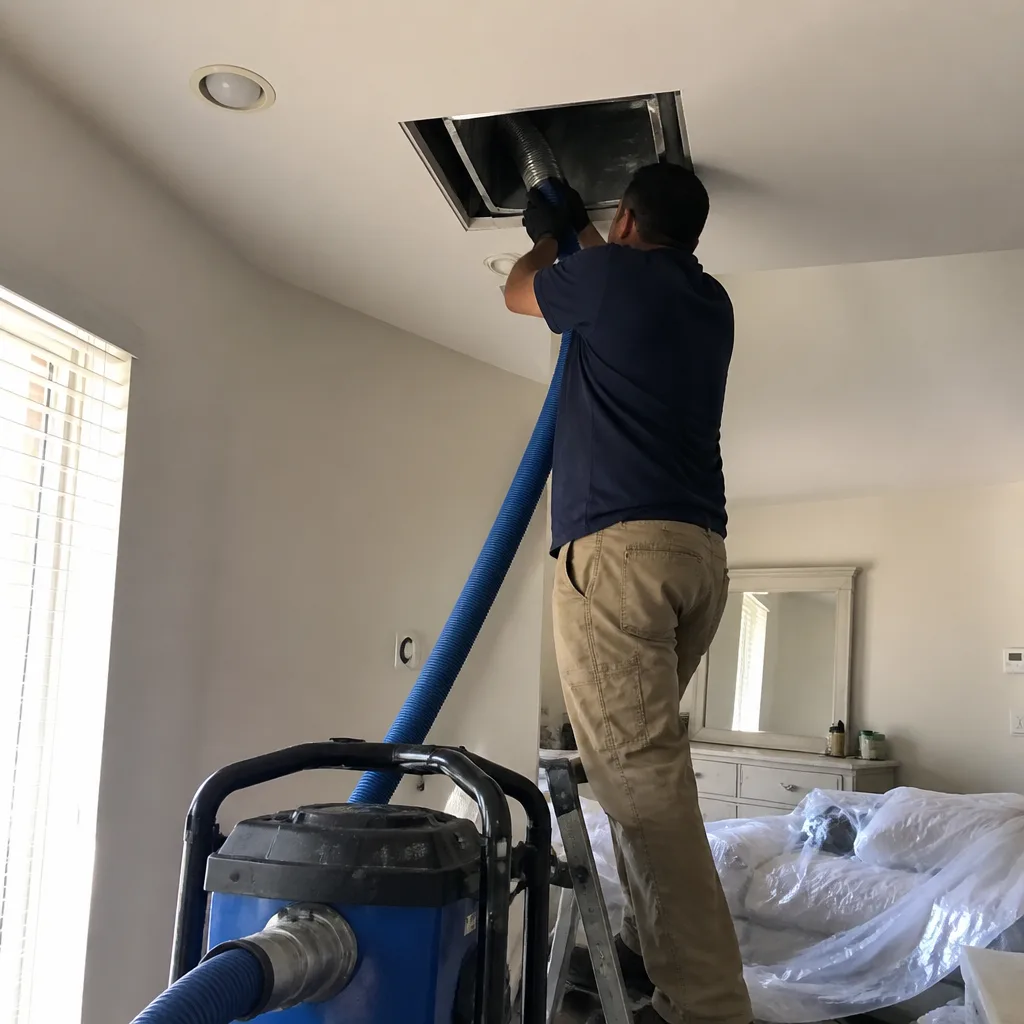 After
After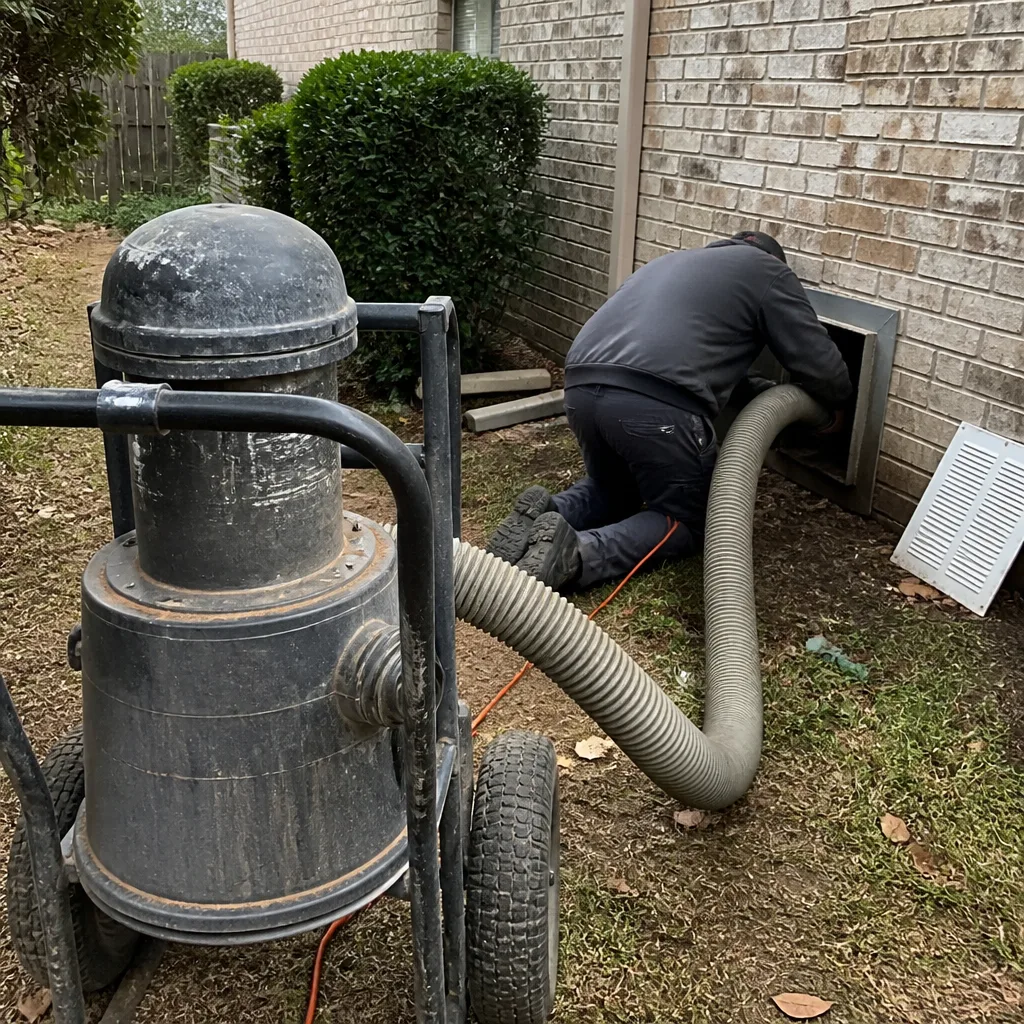 Before
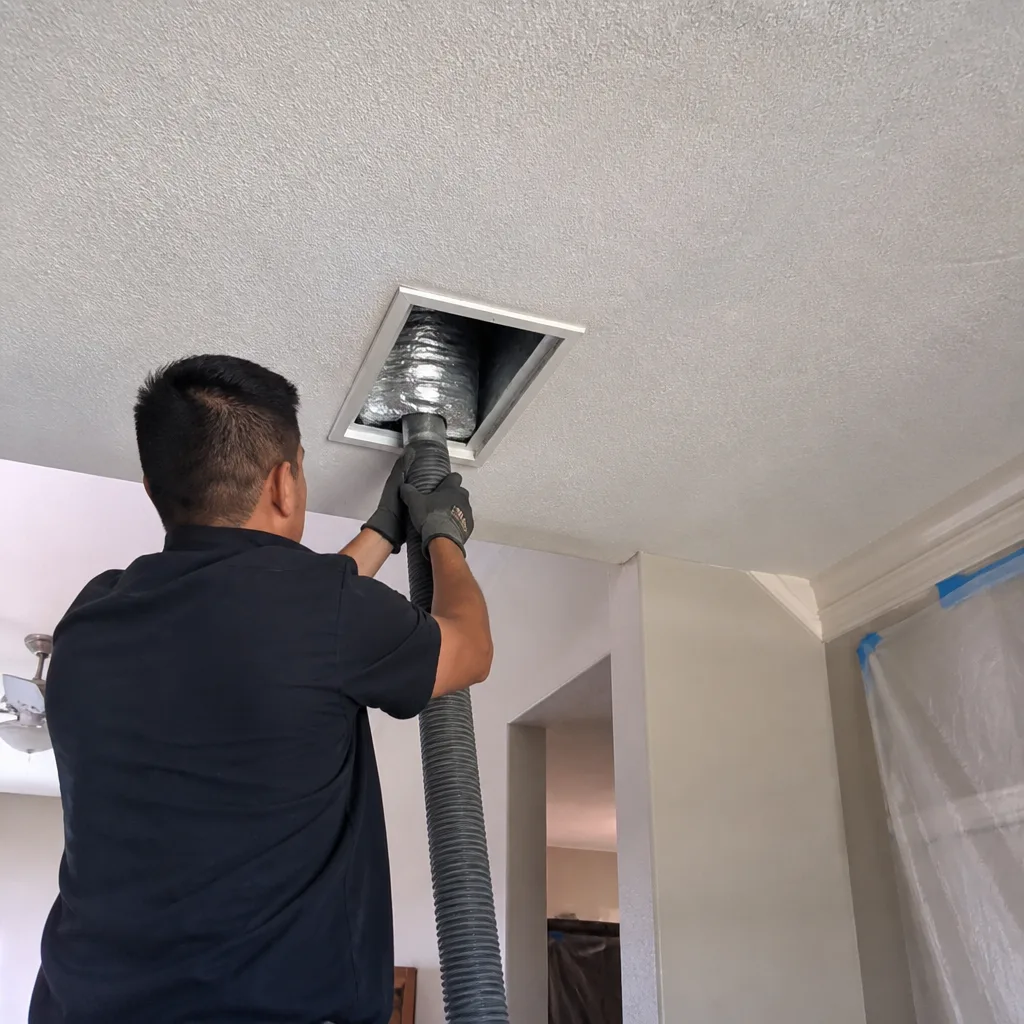 After
After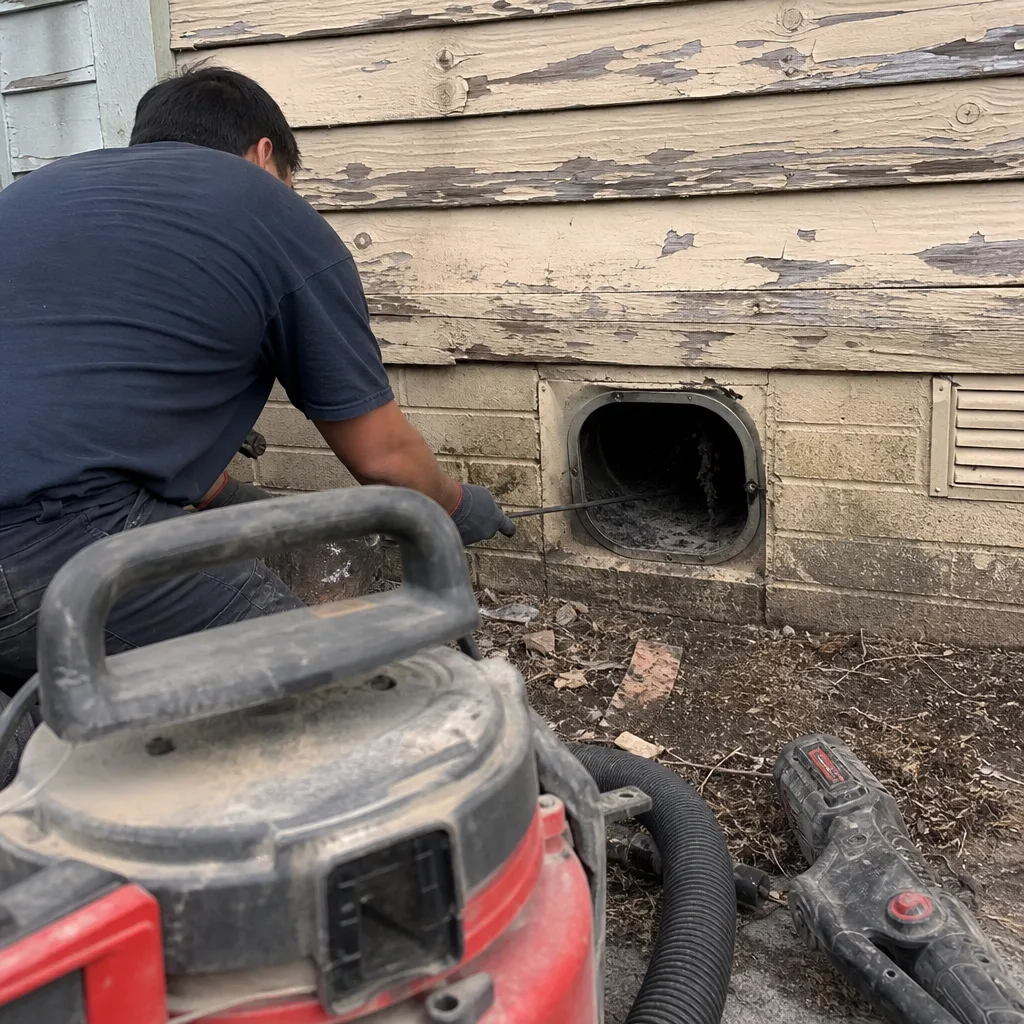 Before
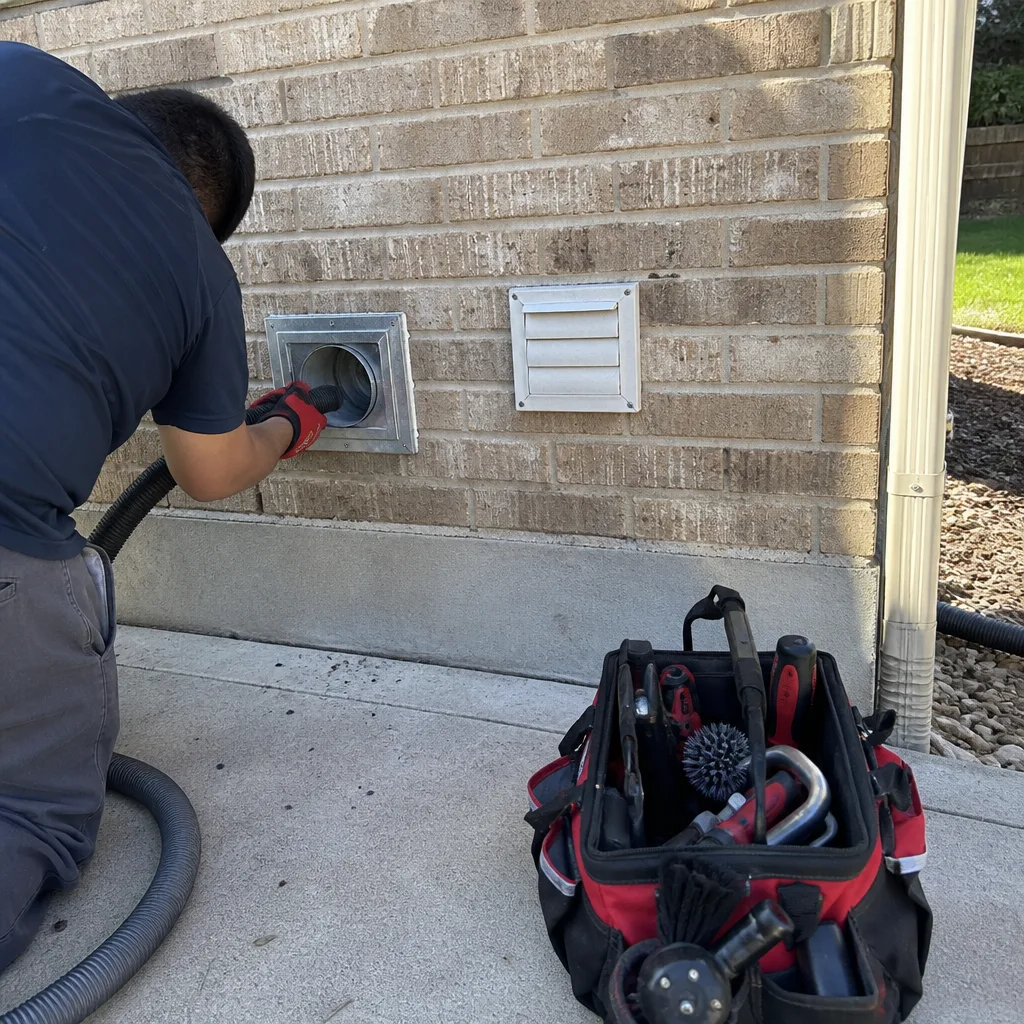 After
AfterDIY vs Professional Air Duct Cleaning: The Irving Homeowner’s Decision Guide
A rented HEPA vacuum produces roughly 150 CFM of suction at the hose end. Professional truck-mounted duct cleaning equipment produces 4,000 to 8,000 CFM at the collection point. You can clean the visible surface of a register with the first number. You cannot move debris from the far end of a 25-foot duct run back toward the collection point with it. In Irving, where summer humidity pushes 80% and winter temperature swings force HVAC systems to work overtime, the debris in your ducts isn’t surface dust - it’s compacted, moisture-bound particulate that requires measurable extraction force to remove. This guide documents what DIY can legitimately accomplish versus what requires professional extraction equipment, so you can make an accurate decision rather than a hopeful one.
Quick Answer
DIY air duct cleaning in Irving can handle register grilles, accessible duct boots within arm’s reach, and short dryer vents under 6 feet. Whole-system cleaning, post-construction debris, confirmed mold, and any flex-duct accumulation require professional Air Duct Cleaning with negative-pressure extraction equipment that generates 4,000+ CFM to move debris through the full duct run without pushing it deeper into the system. Professional air duct cleaning in Irving typically runs $350-$750 for a complete residential system, while DIY material and rental costs range from $80-$220 for tools that clean only what you can directly see and touch.
Table of Contents
- The Physics of Negative-Pressure Extraction
- What DIY Cleaning Actually Accomplishes
- When DIY Is the Right Choice
- When Professional Equipment Is the Only Path
- Honest Cost Comparison: DIY vs Professional
- Irving-Specific Factors That Affect Your Decision
- Consumer-Grade vs Professional Equipment: A Technical Breakdown
- Common Mistakes to Avoid
- When to Call a Professional
- Frequently Asked Questions
BeforeAfterThe Physics of Negative-Pressure Extraction
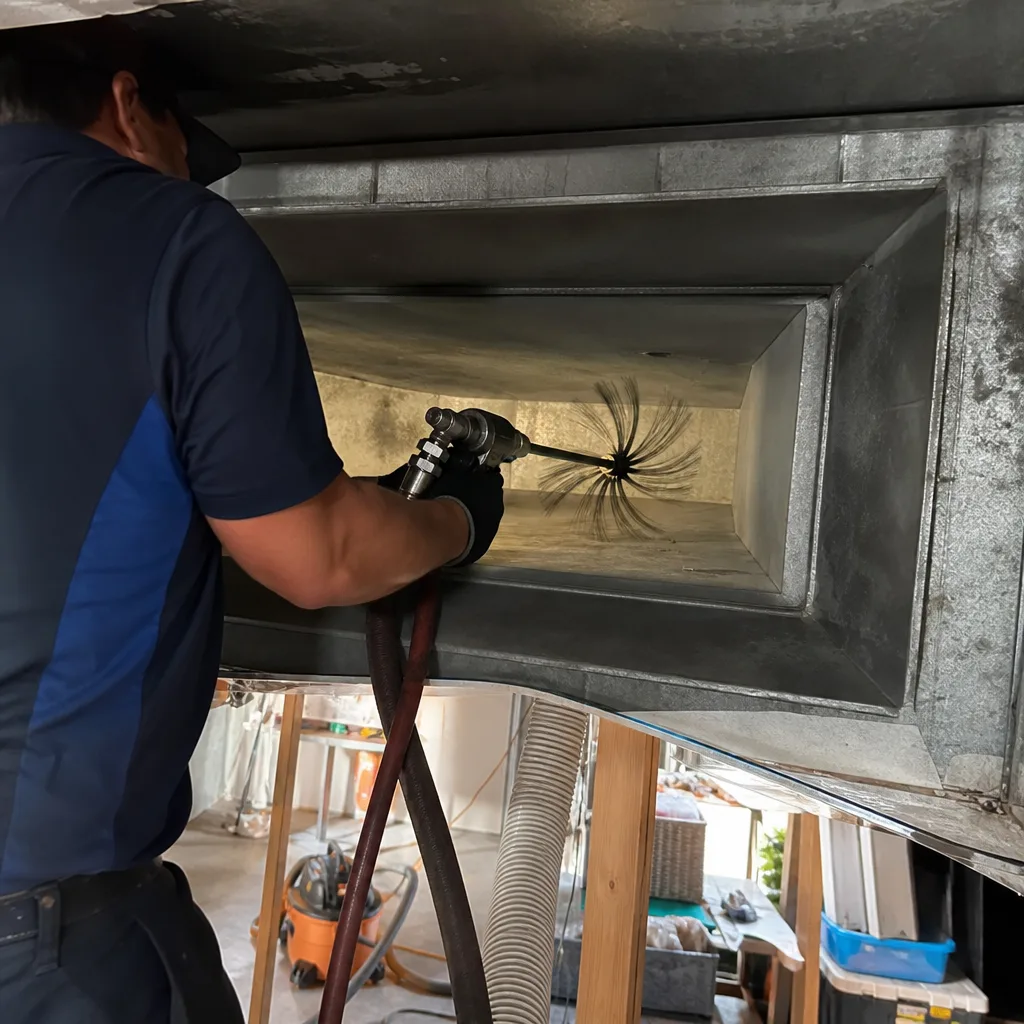
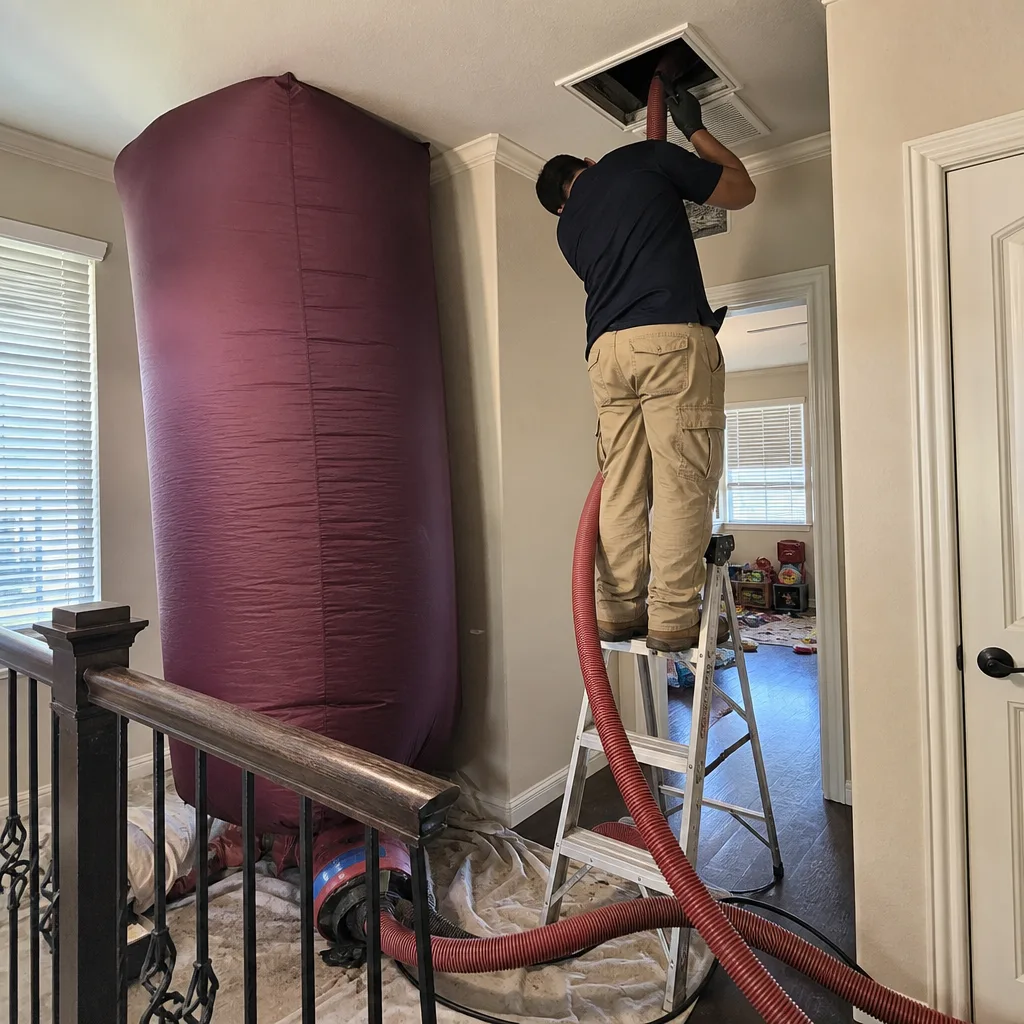
Negative-pressure extraction is the method every reputable duct cleaning operation uses. The duct system is sealed, a powerful vacuum is attached at the collection point (usually near the air handler or furnace), and air is drawn through the entire duct network at high velocity. Debris is carried by that airflow from the far reaches of the system back to the vacuum, where it’s captured in a filtered collection chamber.
The critical number is CFM - cubic feet per minute - measured at the collection point, not at the nozzle. A shop vacuum or rented HEPA unit might show impressive suction when you hold your hand over the hose. But suction at the nozzle is not what moves debris through 25 feet of rectangular duct, around elbows, past dampers, and through transitions between trunk lines and branch runs. What moves debris is sustained airflow volume through the entire cross-section of the duct.
Here’s the threshold: to maintain sufficient transport velocity for typical residential debris (dust, pollen, skin cells, construction particulate, pet dander), you need approximately 4,000 CFM at the collection point for a standard-sized home system. Professional truck-mounted units from manufacturers like Nikro and Abatement Technologies are engineered to this specification. Consumer equipment isn’t built for it, and no combination of extension wands or brush attachments changes the fundamental physics.
Without adequate CFM, two things happen. First, debris near the vacuum opening gets removed. Second, debris farther into the system gets disturbed - loosened by brushes or compressed air - but not extracted. It resettles deeper in the duct run, often past the point where it can be reached on a subsequent attempt. We’ve documented this in Irving homes where a homeowner’s DIY attempt preceded our call, and the camera showed a clean first 3 feet of duct followed by a dense debris line where loosened material had compacted against a damper or elbow.
The plenum (the large distribution box attached to your air handler) is particularly vulnerable to this. It’s the central junction where all duct runs converge. Disturb debris there without extraction capacity, and you risk distributing it into every branch line simultaneously.
What DIY Cleaning Actually Accomplishes
DIY duct cleaning has legitimate applications. The key is matching the tool to the actual geometry of what you’re trying to clean. Here’s what consumer-grade equipment can realistically do:
- Register grille and faceplate cleaning. Remove the register, wash it in warm soapy water, dry thoroughly, and reinstall. This eliminates surface dust, cooking grease film, and visible buildup. It improves appearance and removes a source of immediate recontamination - every time the system cycles, air passes over that grille and can redistribute surface debris. A microfiber cloth, mild detergent, and screwdriver are sufficient. Expected outcome: clean grilles, zero impact on internal duct conditions.
- Accessible duct boot cleaning. The duct boot is the short transition piece between the register opening and the main duct run. In some Irving homes, particularly ranch-style construction with attic ductwork, the boot may be accessible within arm’s reach after register removal. A flexible dryer vent brush on an extension rod can reach 2-4 feet into the boot and dislodge loose surface debris. A shop vacuum held at the register opening will capture some of this - how much depends on the seal between your vacuum hose and the register boot. Expected outcome: modest debris removal from the immediate vicinity, no impact on the trunk line or distant branch runs.
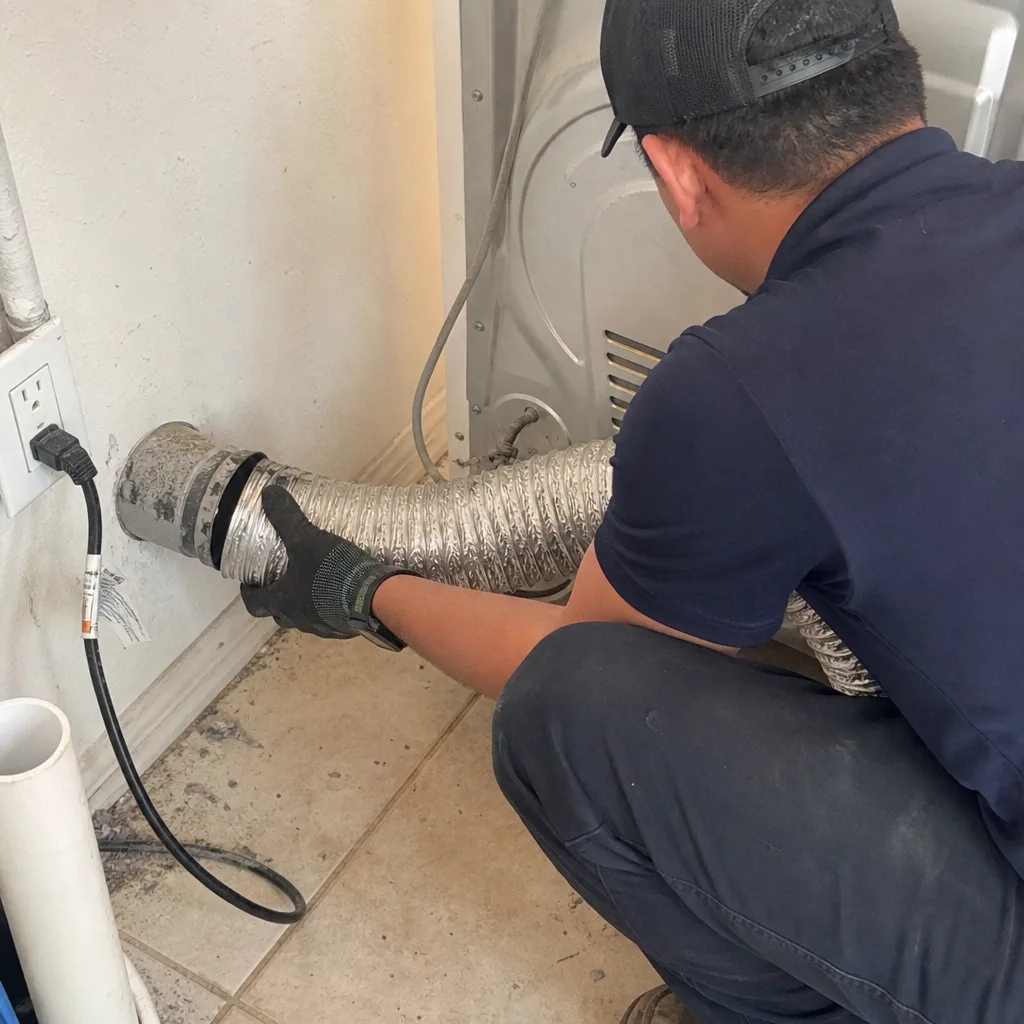
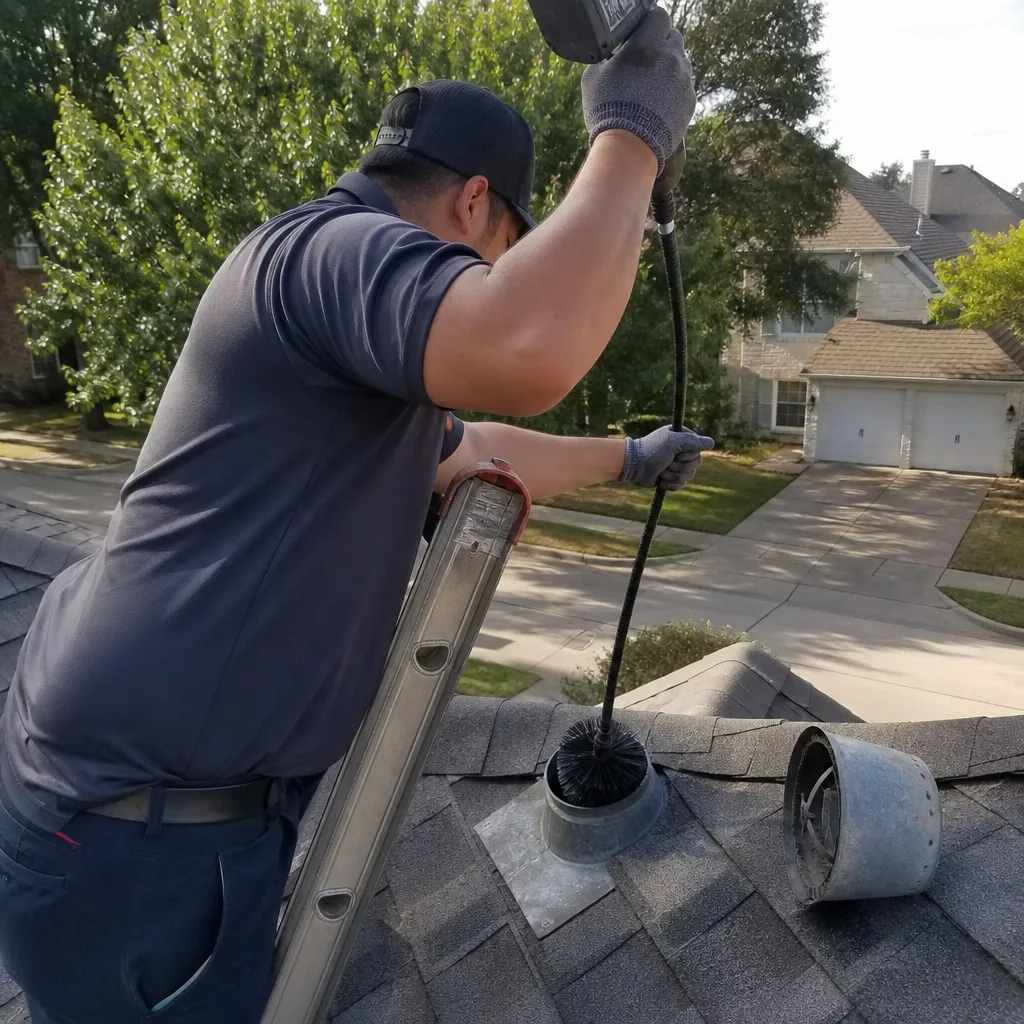
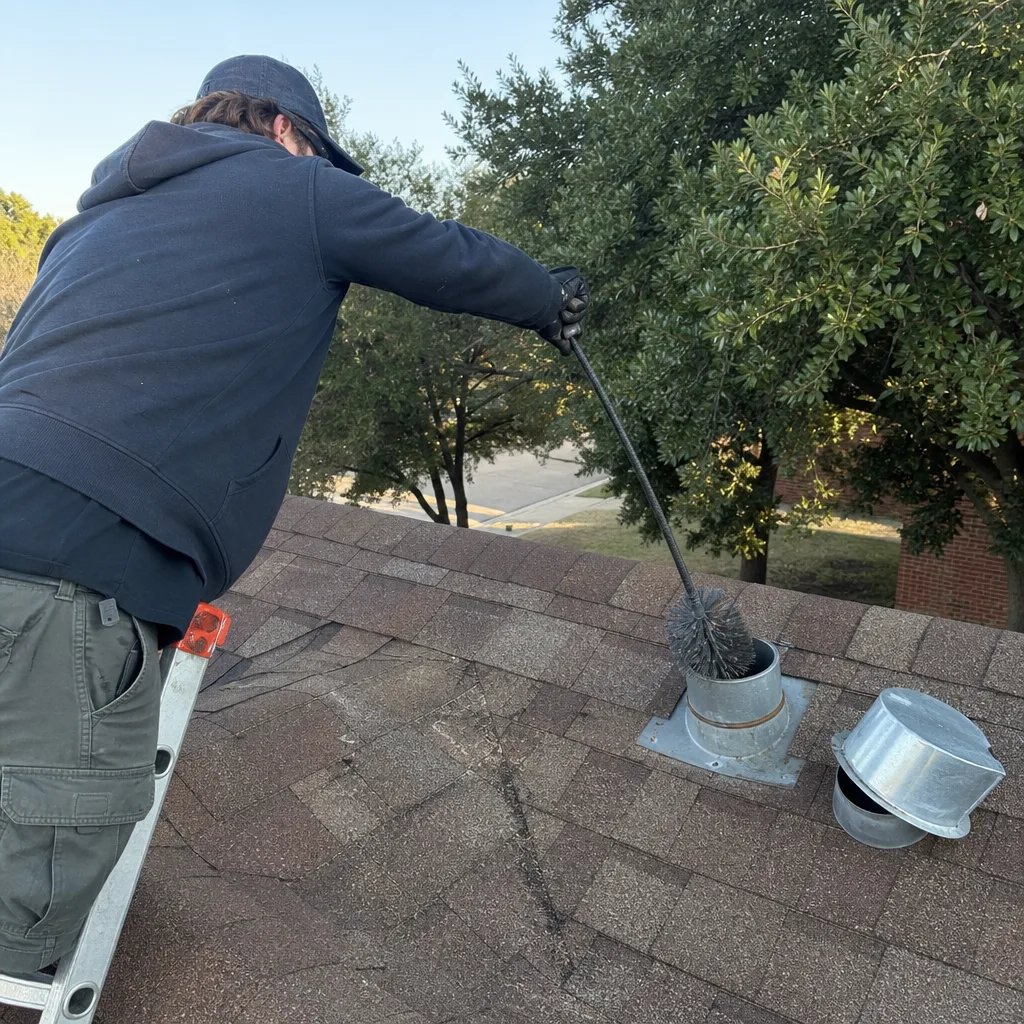
- Dryer vent maintenance (short, straight runs only). A dryer vent under 6 feet with no elbows, running through an exterior wall, can often be cleaned with a rotary brush kit ($25-$45 at hardware stores) and a standard shop vacuum. Disconnect the dryer, insert the brush from the interior end, rotate manually or with a drill attachment, and vacuum the dislodged lint. Expected outcome: restored airflow, reduced fire hazard, measurable lint removal. This is the single most effective DIY duct maintenance task, and it’s limited by geometry - every additional elbow or foot of run reduces effectiveness and increases the risk of compacting lint into an obstruction.
- Filter replacement and housing cleaning. Not strictly duct cleaning, but the most impactful maintenance most homeowners neglect. A clogged filter forces the system to pull air around the filter frame, bypassing filtration entirely. Clean the filter housing with a damp cloth during each filter change. Expected outcome: restored filtration efficiency, reduced debris load entering the duct system.
What DIY cannot do, regardless of tool quality or effort: extract debris from the full length of a duct run, clean the plenum or air handler cabinet, address moisture-compacted debris, or verify results with visual documentation. The geometry of residential ductwork - concealed behind drywall, under insulation, routed through wall cavities - makes full-system access physically impossible without system disassembly that would violate building envelope integrity.
When DIY Is the Right Choice
Certain scenarios in Irving lend themselves to homeowner maintenance. The climate and construction patterns here create specific conditions where limited cleaning is appropriate and cost-effective.
New construction dust after renovation. If you’ve completed a kitchen remodel, bathroom update, or flooring replacement and the work was contained to one or two rooms with proper dust barrier protocols, surface cleaning of the affected registers and immediate duct boots may be sufficient. Construction dust is typically dry, loose, and recent - it hasn’t had time to bind with humidity or compact into the duct surface. In Las Colinas and Valley Ranch, where we’ve seen extensive interior renovation of 2015-2020 construction, this scenario is common. Clean the registers, replace the filter, run the system for 48 hours, and assess whether dust is still visible at the supply registers. If it is, the debris has migrated deeper and professional extraction is warranted.
Single-register odor issues. A musty smell from one register in a guest bathroom or rarely used bedroom often traces to the register boot or the immediate duct section, not the full system. Remove the register, inspect with a flashlight and mirror, clean visible surfaces, and check for moisture staining or pest activity. If the odor persists after cleaning, the source is deeper in the system and requires camera inspection.
Accessible dryer duct under 6 feet with zero elbows. As noted above, this is the most defensible DIY duct task. In Irving’s single-story patio home communities - parts of Hackberry Creek and the older sections of Irving near MacArthur Boulevard - some dryer configurations meet this criteria. Verify the run length with a tape measure before purchasing tools. If you encounter resistance with the brush, stop - you’ve likely hit a lint compaction or an elbow you didn’t know existed.
Seasonal register maintenance. Quarterly removal and cleaning of all supply and return registers is reasonable homeowner maintenance. It improves appearance, reduces immediate recontamination, and gives you visual access to the duct boot for early problem detection. Mark your calendar for filter changes and register cleaning - April and October align well with Irving’s heavy HVAC usage seasons. For deeper maintenance planning, see our Seasonal Air Duct Cleaning Care for Irving: Year-Round Homeowner’s Guide.
When Professional Equipment Is the Only Path
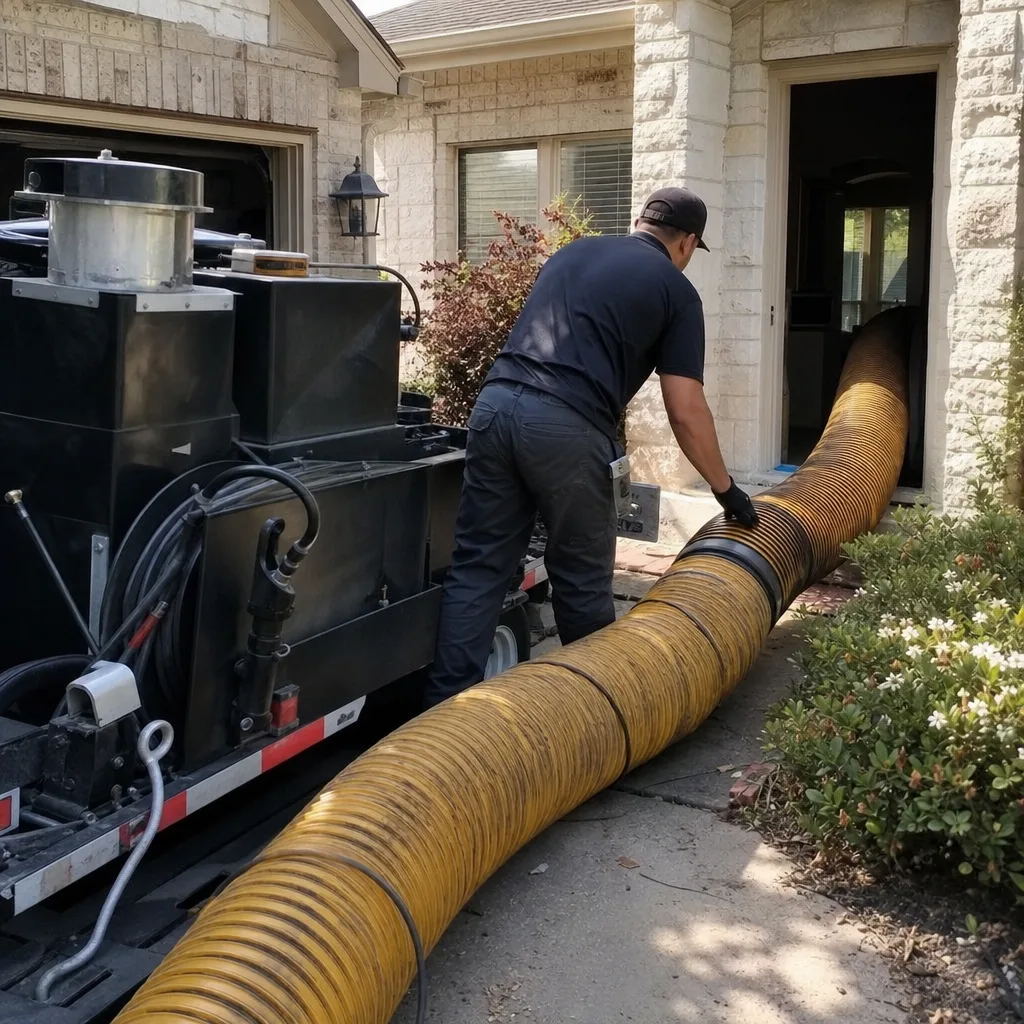
These scenarios require the CFM threshold, camera verification, and documented outcome that only professional equipment delivers:
- Whole-system debris accumulation. If you can see dust accumulation at multiple registers, or if you’ve never had professional cleaning in a home older than 5 years, debris has distributed throughout the system. The average 2,000-square-foot home in Irving has approximately 150-200 linear feet of ductwork. No consumer tool can generate transport velocity across that network.
- Post-flood or post-fire remediation. Water intrusion into ductwork, even from a minor roof leak or condensate overflow, creates conditions for microbial growth and debris binding that requires aggressive extraction followed by sanitizing. Smoke particulate from even a small kitchen fire bonds with duct surfaces at high temperature and requires professional agitation and extraction. These are not cleaning tasks - they’re restoration protocols with health implications.
- Confirmed mold presence. If you’ve seen visible mold at a register or had a positive mold test, DIY disturbance without containment and negative-pressure extraction risks spreading spores throughout the system. Professional remediation includes HEPA filtration, containment barriers, and post-treatment verification. In Irving’s humid summers, we’ve documented mold in attic ductwork in homes as new as 2018, particularly where insulation contact has created condensation points.
- Systems with flex duct. Flex duct - the corrugated, flexible tubing common in attic installations - holds debris in the valleys between corrugations. Brush agitation without simultaneous high-velocity extraction drives debris deeper into those valleys and can damage the inner liner. Professional equipment uses controlled agitation with immediate extraction, and camera verification confirms debris removal without liner damage. Much of Irving’s 2000-2015 construction relies heavily on flex duct in attic spaces.
- Persistent odors after DIY cleaning. If you’ve cleaned registers and boots and the odor returns within days, the source is deeper in the system. Common culprits in Irving include rodent activity in attic ductwork (particularly in established neighborhoods near Trinity River greenbelt areas), decomposing organic matter in condensate pans, and debris accumulation at the air handler that recirculates with each cycle.
- Before/after documentation for real estate or health purposes. Home sales, insurance claims, and physician-directed air quality improvements all require verifiable documentation. The photo record we deliver - interior of every duct run, before and after - meets this standard. DIY cleaning produces no documentation.
Honest Cost Comparison: DIY vs Professional
Cost comparisons fail when they compare price without comparing outcome. Here’s what each approach costs and what it produces.
DIY Costs (Realistic Tooling)
| Item | Cost Range |
|---|---|
| HEPA vacuum rental (weekend) | $45-$85 |
| Rotary dryer vent brush kit | $25-$45 |
| Flexible duct brush with extension rods (20 ft) | $30-$60 |
| Microfiber cloths, cleaning solution, screwdriver set | $15-$30 |
| Replacement filters (2) | $20-$40 |
| Total DIY Investment | $135-$260 |
What this produces: clean register grilles, modest boot debris removal from accessible points, maintained dryer vent (if geometry permits), and a sense of maintenance completed. What it does not produce: measurable debris extraction from the full duct network, documentation, or verification of system cleanliness.
Professional Costs (Irving Market, 2024-2025)
| Service Scope | Price Range |
|---|---|
| Standard residential system cleaning (single HVAC, up to 12 registers) | $350-$550 |
| Larger home or dual-zone system (13-20 registers) | $500-$750 |
| System with flex duct requiring additional care | Add $75-$150 |
| Dryer vent cleaning (professional rotary extraction) | $125-$225 |
| Sanitizing treatment (upon request, after cleaning) | $75-$150 |
What professional service produces: complete system extraction with 4,000-8,000 CFM negative-pressure equipment, agitation tools appropriate to duct material, camera inspection and photo documentation of every run, written scope and pricing before work begins, and a documented photo record delivered as a standard job deliverable. At CleanRun, this also includes the Air Duct Cleaning in Irving 365-Day Done Right Promise - if the work is not right, we make it right, backed in writing on every job.
The honest math: DIY costs roughly 35-50% of professional service but addresses approximately 5-10% of the actual duct system. Professional service costs more and delivers a documented, verifiable outcome across 100% of the accessible network. The comparison is not $200 versus $500 - it’s $200 for clean grilles versus $500 for a documented, whole-system result with accountability.
Irving-Specific Factors That Affect Your Decision
Local conditions in Irving influence both the need for cleaning and the method that makes sense.
Climate and humidity. Irving’s summer humidity averages 75-80% from June through September. High humidity causes dust and debris to bind with moisture at the duct surface, particularly in the evaporator coil plenum where condensate forms. This binding makes debris heavier and more resistant to low-CFM disturbance. Dry-climate DIY methods that work in Arizona or Colorado are less effective here. We’ve found that debris in Irving systems typically requires 15-20% more extraction time than identical systems in drier climates.
Construction era and duct materials. Irving’s housing stock spans decades with different duct standards. Pre-1990 homes often have galvanized steel duct with screwed joints - durable but prone to rust and debris adhesion at joints. 1990-2010 construction frequently used fiberboard duct, which cannot be brushed aggressively without surface damage. Post-2010 builds rely heavily on flex duct, with the debris-trapping corrugations noted above. Each material requires different professional tooling. DIY brushing without material awareness risks damage, particularly to fiberboard and flex duct liners.
Neighborhood-specific considerations. In Las Colinas and the Irving Highlands, mature tree coverage produces high pollen loads that accumulate in outdoor air intakes. In the Valley Ranch area, lake proximity elevates ambient moisture. Near the DFW Airport corridor and industrial zones along SH-183, particulate from jet exhaust and commercial traffic loads filters differently than in residential interiors. We adjust our extraction protocols based on these local factors - something no generic DIY guide can address.
Local code and permit context. While duct cleaning itself does not require permits in Irving, any duct modification, repair, or sealing that involves access to the building envelope may trigger inspection requirements. Professional operations carry the licensing and insurance to perform this work under code. DIY modifications to ductwork can create compliance issues at sale or insurance claim time.
Consumer-Grade vs Professional Equipment: A Technical Breakdown
Understanding what you’re renting or buying versus what professionals deploy helps clarify the capability gap.
Consumer HEPA vacuums and shop vacuums: Typically 2.5-6.5 horsepower motors producing 100-200 CFM at the hose end. Filtration is often HEPA-rated at the filter but not at the exhaust, meaning fine particulate escapes during operation. No sealed duct attachment system - you’re holding a hose near an opening, not creating negative pressure throughout a sealed network. Best use: surface debris at accessible points, general shop cleanup, water removal.
Rented “duct cleaning” equipment: Some hardware stores rent rotary brush systems with vacuum collection. These units typically produce 300-800 CFM - better than a shop vacuum, still an order of magnitude below professional threshold. Brush rotation is often uncontrolled, risking damage to flex duct and register boots. Collection is via a small canister that fills quickly with fine debris, reducing suction as the job progresses. Best use: short, straight dryer vents; light register boot cleaning.
Professional truck-mounted systems (Nikro, Abatement Technologies): Diesel or gasoline engines driving blowers that produce 4,000-8,000 CFM at the collection point. The duct system is sealed with adhesive access panels; all airflow is controlled and measured. HEPA filtration at multiple stages with verified exhaust. Rotary brush systems are pneumatically or electrically driven with torque control appropriate to duct material. Camera systems allow real-time verification of debris removal. The photo record - interior of every run, before and after - is generated from this equipment and delivered as a standard job document.
Portable professional units: Used in commercial buildings where truck access is impossible, these electric units produce 2,000-3,500 CFM - below truck-mounted capacity but still above consumer equipment. They’re not typically used in residential settings where truck access is available. In Irving’s suburban residential context, truck-mounted equipment is the standard for whole-home cleaning.
The equipment gap is not about brand prestige or marketing. It’s about measurable airflow volume, sealed system operation, and verification capability. You cannot bridge this gap with more effort, better technique, or longer rental periods. The physics are fixed.
Common Mistakes to Avoid
- Using a standard vacuum brush attachment in the register opening. This disturbs surface debris without extraction capacity, pushing it past the boot and into the main duct run. We’ve found compacted debris lines in Irving homes where this “cleaning” preceded our call by months.
- Applying chemical sprays or foams without extraction. Consumer-grade “duct cleaning” foams coat debris in place rather than removing it. In humid Irving conditions, these products can add moisture that promotes microbial growth. Any sanitizing treatment should follow mechanical extraction, not substitute for it.
- Ignoring flex duct vulnerability. The corrugated interior of flex duct catches brush bristles and can tear the inner liner. A torn liner exposes insulation to airflow, introducing fiberglass particulate into the conditioned air. If your Irving home has attic flex duct, verify material before any brush insertion.
- Cleaning without sealing the system. Professional negative-pressure extraction seals all registers except the one being worked, forcing airflow through the intended path. DIY cleaning with open registers creates bypass airflow that leaves debris in place and can redistribute it to previously clean sections.
- Assuming visible register cleanliness indicates system cleanliness. The grilles are the easiest 1% to clean. They’re also the least important for system performance and air quality. A clean grille over a debris-packed boot and trunk line provides cosmetic improvement only.
- Delaying professional service after failed DIY. If you’ve attempted cleaning and still see dust at registers, smell odors, or have allergy symptoms, the DIY attempt may have worsened the distribution of debris. Earlier professional intervention is simpler and more effective than addressing compacted, redistributed material.
When to Call a Professional
Call a professional when the job requires extraction force you cannot generate, verification you cannot perform, or accountability you need documented. Specifically: whole-system cleaning after 5+ years without service, any confirmed or suspected mold, post-flood or fire restoration, persistent odors after register cleaning, flex-duct systems, or any situation where you need before-and-after documentation for health, legal, or real estate purposes.
CleanRun Air Duct Cleaning Irving home offers free estimates in Irving - call (682) 297-4068. Every estimate includes a written price before any work starts, under Haven Standard Clause 1. We also provide a Free Second Opinion on any competitor’s written estimate. Our technicians are background-checked and uniformed under Haven Standard Clause 3: Verified Crews, and every job concludes with a Documented Photo Record of every duct run, included as standard. Equipment on every truck includes Rotobrush, Nikro, and Abatement Technologies systems - brands you can verify independently.
Frequently Asked Questions
A standard residential system in Irving typically runs $350-$550 for a single HVAC unit with up to 12 registers; larger homes or dual-zone systems range $500-$750. If you’re researching providers, read our How to Hire a Air Duct Cleaning Contractor in Irving: A Step-by-Step Guide first. CleanRun delivers a written price before any work starts - no exceptions - under Haven Standard Clause 1. Call (682) 297-4068 for a specific estimate; estimates are free.
The $79-$149 coupon offers typically cover register wiping and a brief vacuum at the plenum, not full-system extraction. The crew arrives, performs minimal work, and presents a revised invoice for “additional services” once in your home. CleanRun does not operate this way - the written price agreed before work starts is the complete price. If you’re evaluating a low quote, ask specifically: what CFM equipment will be used, will every duct run be cleaned and photographed, and is the quoted price the final price?
Demand a photo record. CleanRun photographs the interior of every duct run before and after, delivering these images as part of the standard job documentation. If a company cannot or will not show you the inside of your ducts, you have no verification that extraction occurred. The photo record has been our standard practice since 2013.
For most Irving homes, every 3-5 years with standard fiberglass filters, or every 5-7 years with high-MERV pleated filters changed on schedule. Homes with pets, recent construction, or allergy-sensitive occupants may need more frequent service. The “every year” recommendation some companies promote is unnecessary for typical residential systems and is often a sales tactic.
You can clean register grilles, accessible duct boots within arm’s reach, and short straight dryer vents. You cannot extract debris from the full length of duct runs, clean the plenum, or verify results. A shop vacuum produces roughly 150 CFM; professional equipment produces 4,000-8,000 CFM at the collection point. The physics of debris transport require that volume.
Irving’s high summer humidity causes debris to bind with moisture, making it heavier and more resistant to casual cleaning. Temperature swings force HVAC systems to cycle frequently, distributing debris more actively than in milder climates. These factors don’t necessarily increase cleaning frequency, but they do increase the importance of effective extraction methods when cleaning is performed - low-CFM disturbance without extraction is particularly ineffective in humid conditions.
The Bottom Line
The DIY versus professional question is not about effort or cost - it’s about whether your equipment can generate the negative pressure required to extract debris from a sealed duct system. Consumer tools cannot. They clean surfaces you can see and touch. Professional equipment extracts debris from the full network, verifies removal with camera documentation, and delivers accountability in writing. In Irving’s humid climate, where debris binds and compacts, this distinction matters more than in drier regions. Match your method to your actual need: surface maintenance for grilles and short vents, professional extraction for whole-system cleaning, mold remediation, or any situation requiring documented results. Explore more guides & resources on our blog for additional homeowner support. The decision becomes straightforward when you evaluate what each approach can physically accomplish rather than what you hope it might.
Written by Tomas Reyes, Owner at CleanRun Air Duct Cleaning Irving, serving Irving since 2013.