
Last updated September 23, 2026
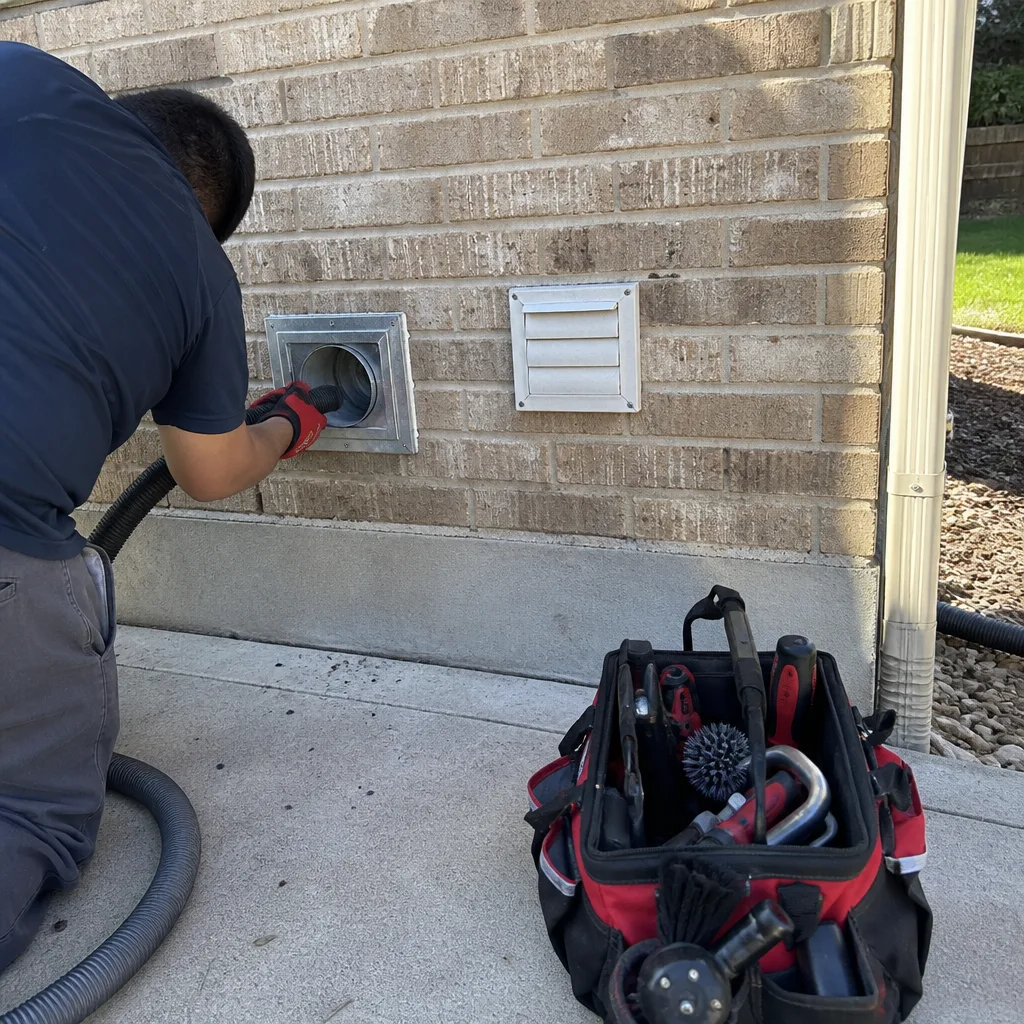
Whole-system duct and dryer vent check with before-and-after photos - you see exactly what came out of your vents
That "$99 whole-house special" is a bait ad - the real number appears once they are in your hallway, or the "clean" is a shop-vac at the register. We photograph the inside of your ducts before and after instead.
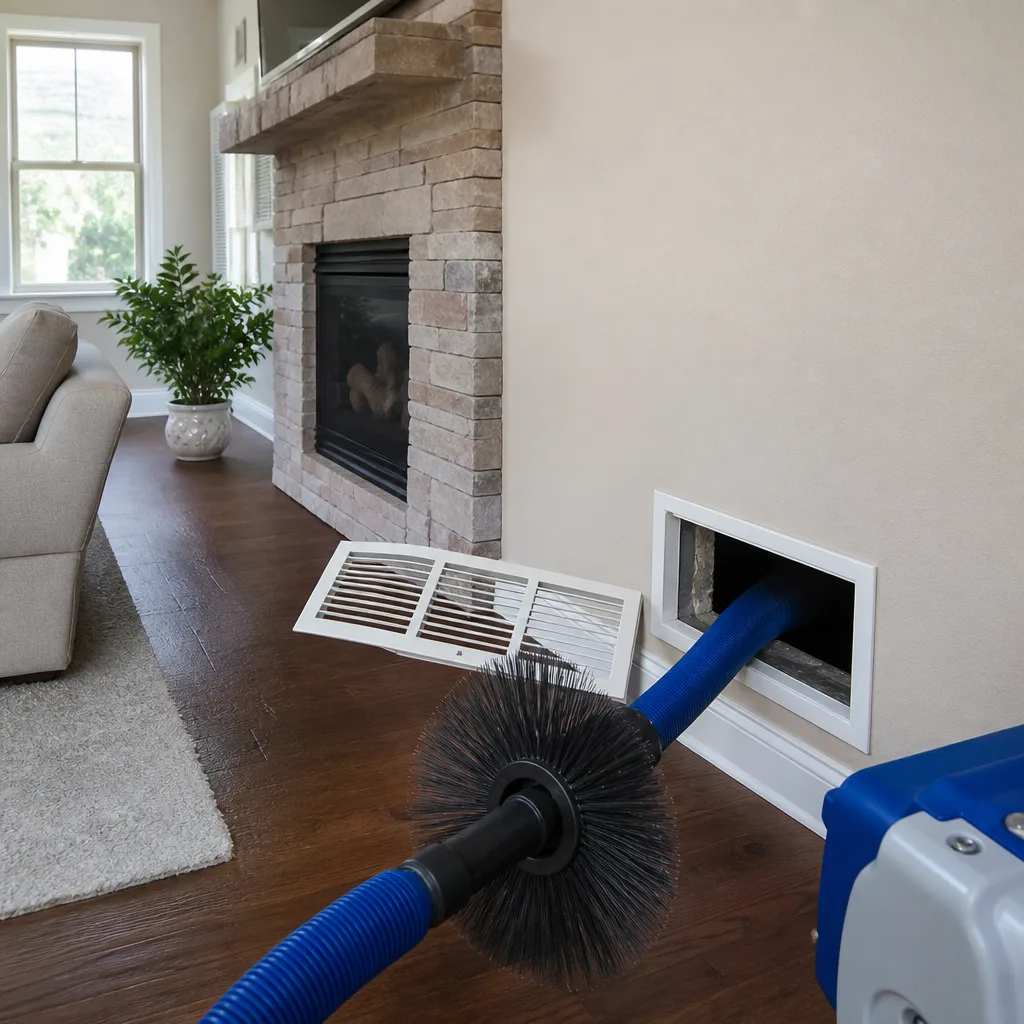
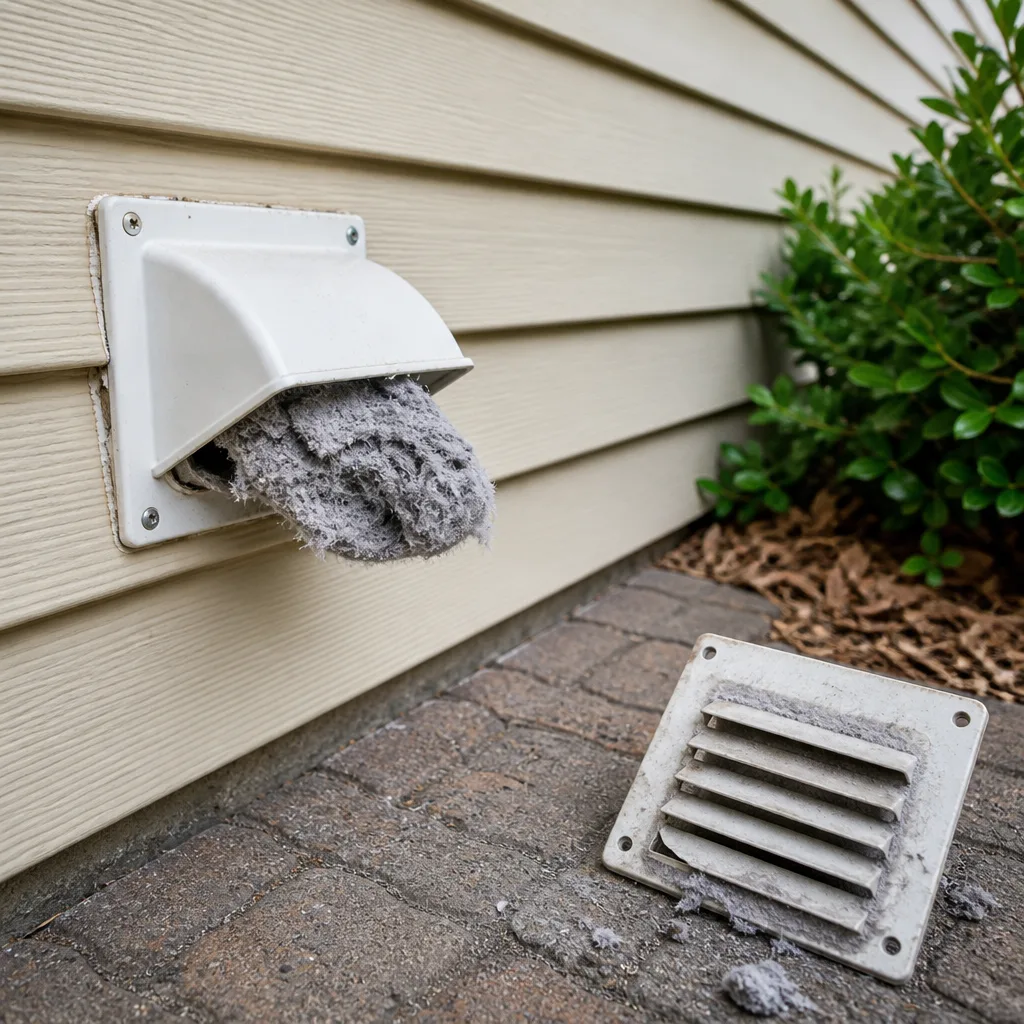
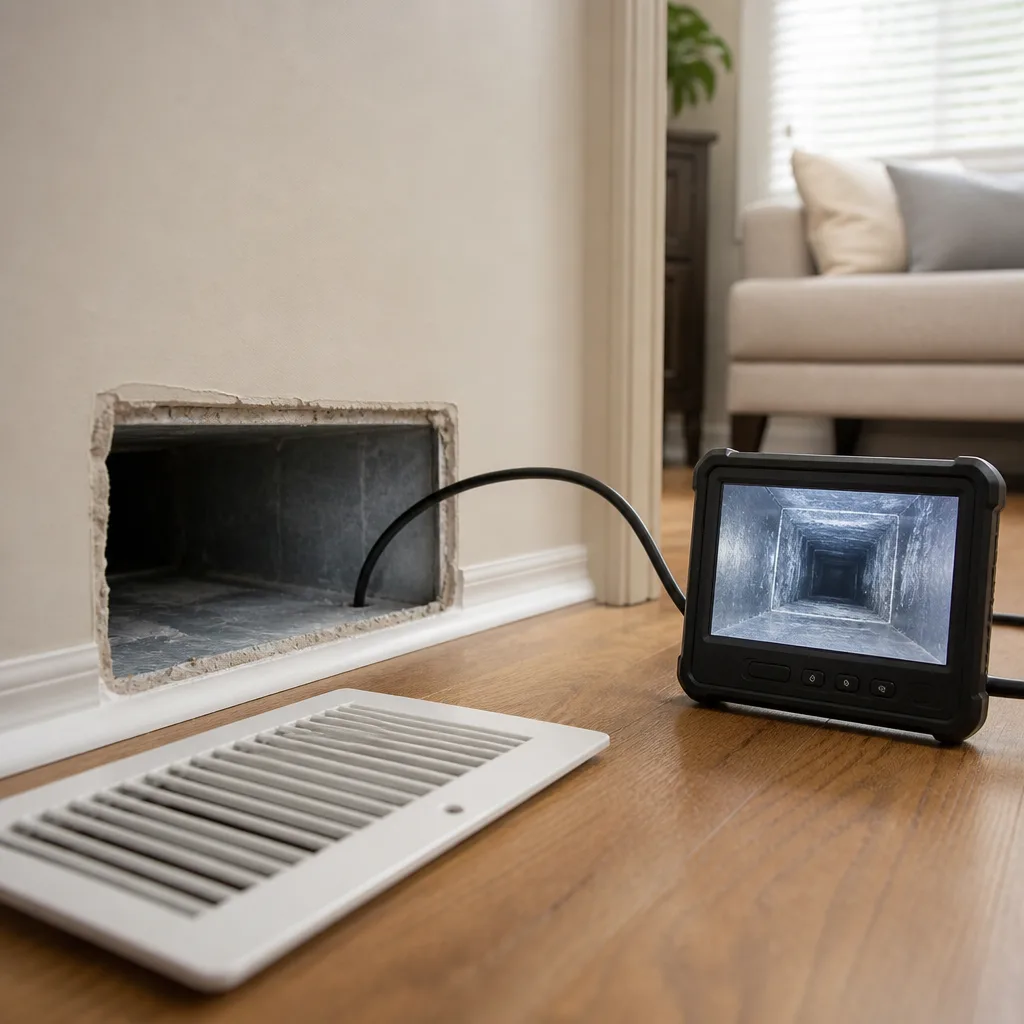
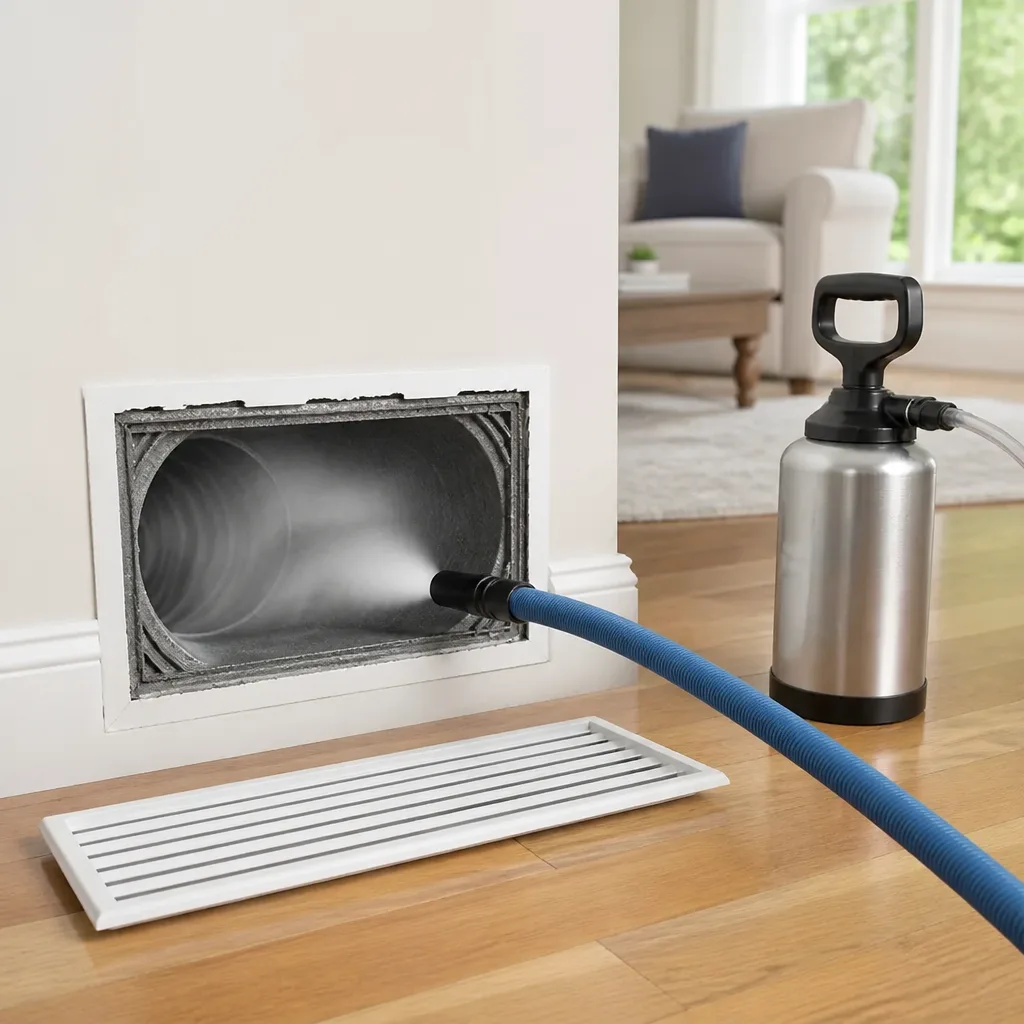
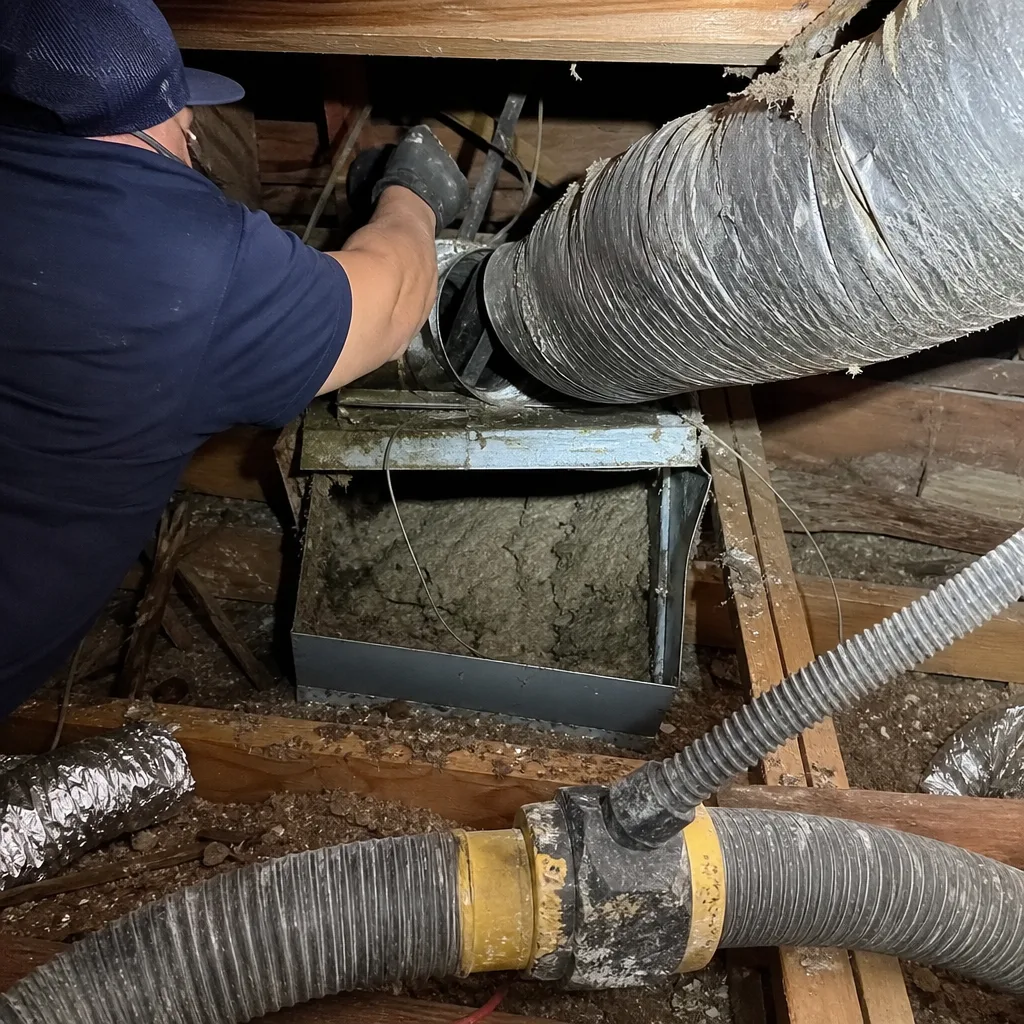 Before
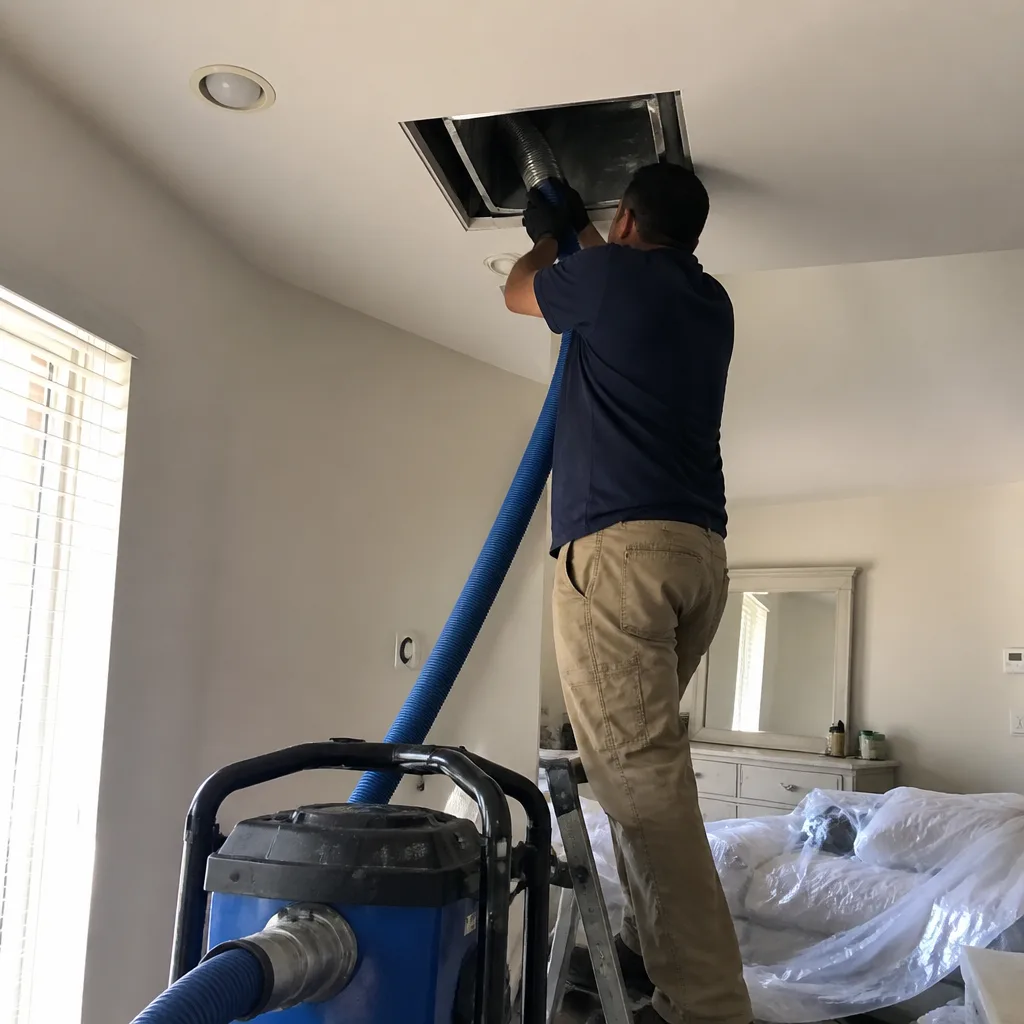 After
After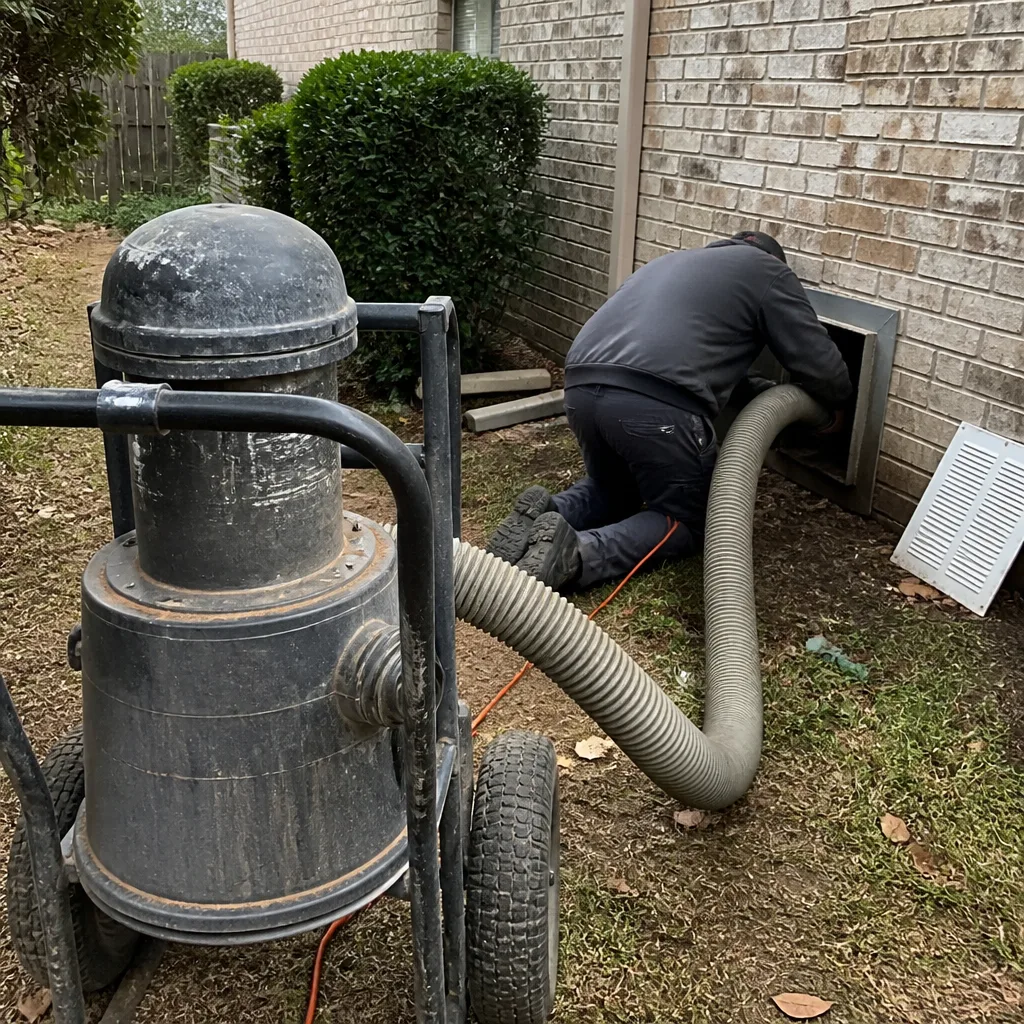 Before
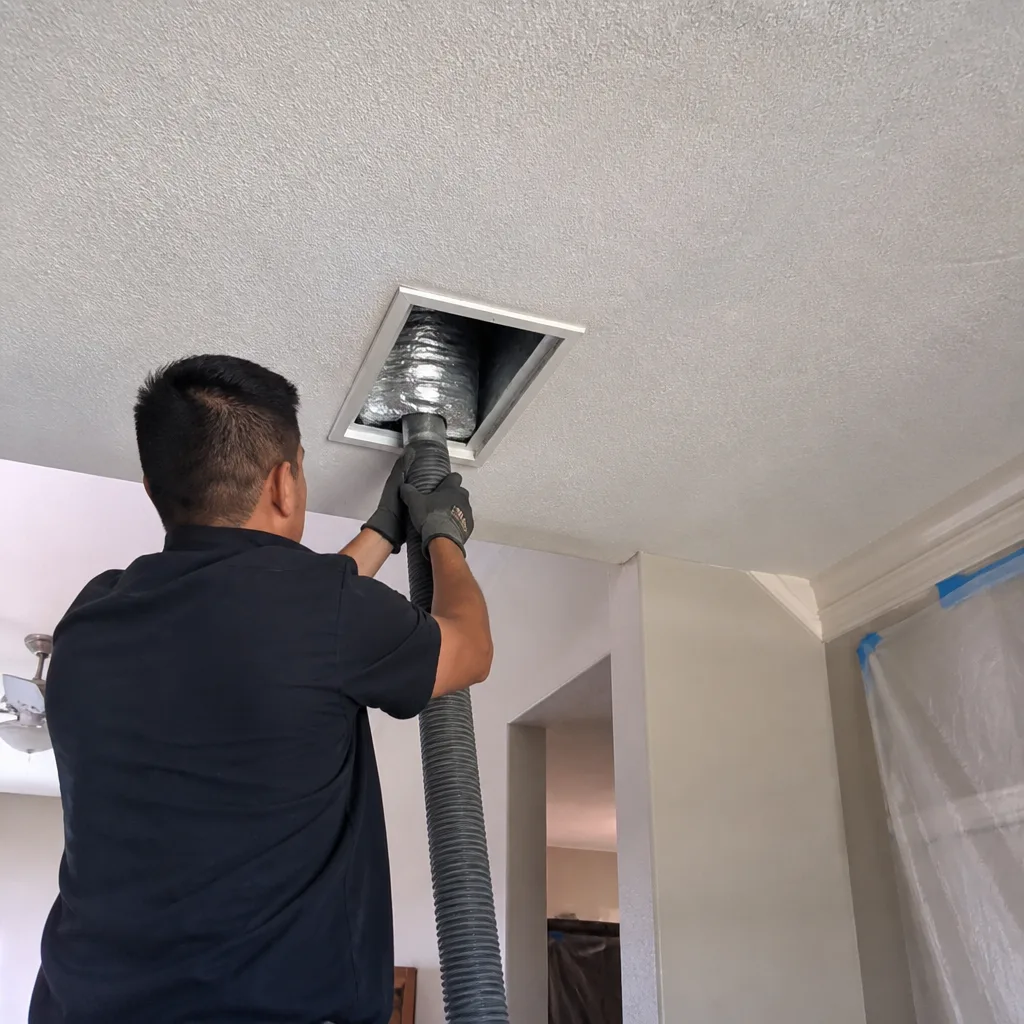 After
After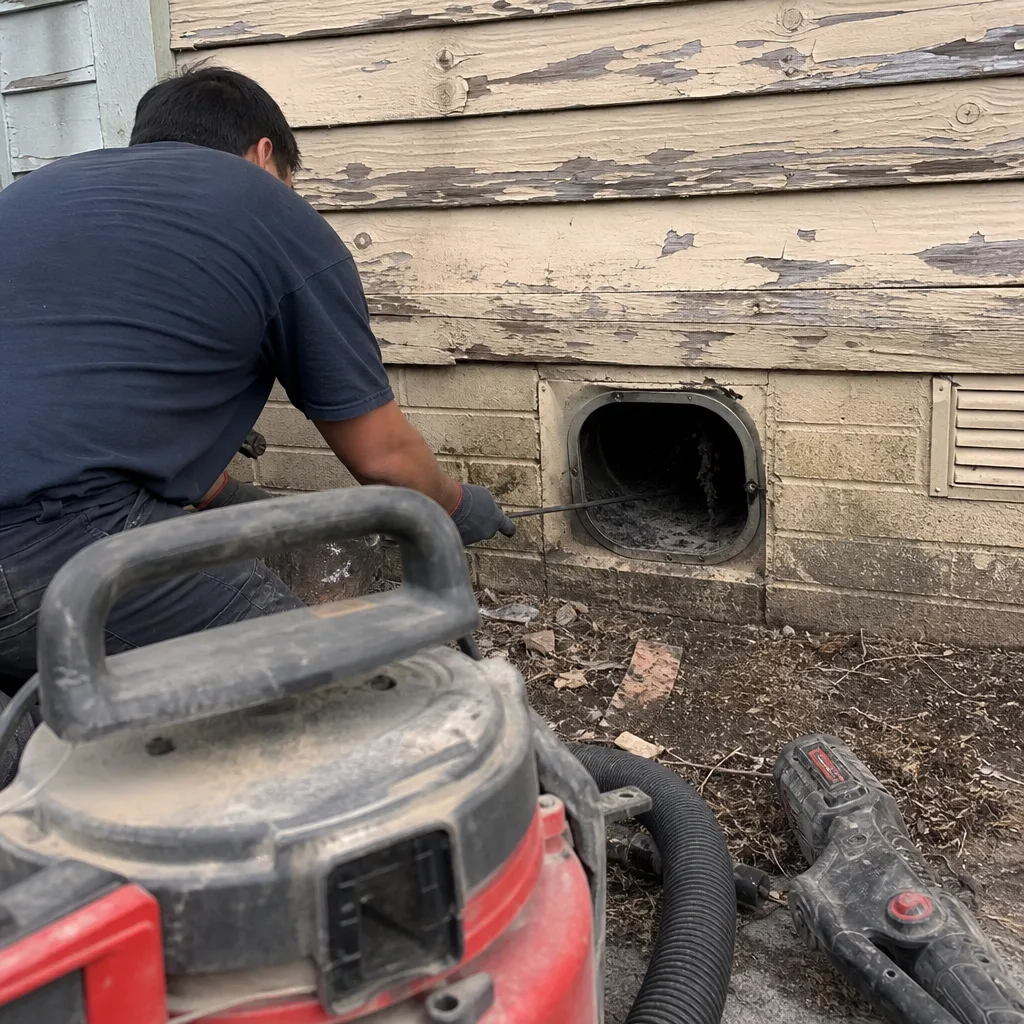 Before
 After
AfterAir Duct Cleaning Maintenance Checklist for Irving Homeowners
The most expensive duct cleaning job CleanRun has seen in Irving wasn’t caused by years of neglect. It was caused by a 1-inch filter running for 14 months in a 5-inch filter housing, leaving a 4-inch gap that bypassed filtration entirely. The homeowner had changed the filter on schedule. No checklist they had ever seen mentioned measuring filter fit. In this guide, we’ll give you a month-by-month maintenance checklist built specifically for Irving’s seasonal pressures, plus the self-inspection steps that catch problems before they become invoices. Print it, date it, and keep it with your home’s service records.
Quick Answer
Irving homeowners should inspect accessible registers monthly, verify filter fit quarterly, and schedule Air Duct Cleaning every 3 to 5 years. This checklist tracks observable conditions through Irving’s allergy season, peak cooling months, and heating switchover so you can spot problems with a flashlight and white cloth before calling anyone.
Table of Contents
- Month-by-Month Checklist for Irving’s Seasons
- How to Self-Inspect Registers and Return Grilles
- Filter Sizing: How to Measure and Spot Bypass Gaps
- What Documentation to Keep Between Professional Cleanings
- When Cleaning Can Wait Versus When to Call Early
- Recognizing Professional-Grade Equipment
- Common Mistakes to Avoid
- When to Call a Professional
- Frequently Asked Questions
BeforeAfterMonth-by-Month Checklist for Irving’s Seasons
Irving sits in the Cross Timbers ecological region, where pollen counts spike in March, summer humidity pushes 80 percent, and the first cold snap typically arrives in late November. Your ductwork faces different pressures each season. This checklist is organized around what actually happens to air in Irving homes.
March through May: Allergy Season
Oak pollen in Irving regularly exceeds 2,000 grains per cubic meter. If your filter is undersized or your return grille seals are failing, that pollen loads into the ductwork and recirculates for months.
- Check filter fit. Remove the filter and measure the actual media against the housing frame. Look for light leaks around the edges. A bypass gap as small as a quarter-inch lets unfiltered air enter the plenum, the main distribution box that feeds every duct run.
- Inspect return grilles. Wipe the backside of each return grille with a white cloth. Yellow-green staining indicates pollen loading. Gray or black indicates dust and debris from the attic or wall cavity.
- Note odor at startup. The first AC cycle of the season often produces a musty smell. If it persists beyond 48 hours, moisture may be collecting in the evaporator coil pan or in low spots of the ductwork.
- Photograph each register. Date the photo. This becomes your baseline for comparison in August.
June through August: Peak Cooling Load
Irving’s August cooling degree days average over 600. Your blower runs longer, moving more air through the same ductwork. Any existing debris gets redistributed.
- Feel for temperature imbalance. A room that cooled adequately in May but struggles in August may have a partially blocked duct run, not an undersized unit.
- Listen for whistling. New whistling at registers often means the filter is clogged and the system is pulling air through gaps in the duct seams.
- Check condensate drain. A clogged drain raises humidity in the plenum, which can support microbial growth on fiberglass duct liner.
- Re-inspect with white cloth. Compare to March photos. Darker debris in summer typically indicates the filter is failing or the ductwork has a return-side leak pulling attic air.
September through October: Transition
This is the optimal window for Air Duct Cleaning in Irving. Temperatures moderate, so the system can be shut down for several hours without discomfort. HVAC contractors have more scheduling flexibility before heating season demand spikes.
- Schedule professional cleaning if due. If your last cleaning was over 4 years ago, book now.
- Inspect outdoor condenser. Not ductwork directly, but a dirty condenser raises system pressure and can force the blower to work harder, increasing debris movement.
- Test heating startup early. Run the furnace for one cycle before you need it. Burning dust smell for 10 minutes is normal. Persistent odor or visible smoke suggests a problem beyond duct scope.
November through February: Heating Season
Irving’s winter temperature swings, from 70°F days to 28°F nights, cause ductwork to expand and contract. Metal ducts in unconditioned spaces flex at seams.
- Check for new rattling. Seasonal flex can loosen duct connections. Rattling that stops when you press on a register boot often indicates a disconnected duct run.
- Monitor for dry air symptoms. Static electricity, nosebleeds, and shrinking woodwork suggest the humidifier, if present, needs service. Dry air also increases dust suspension.
- Inspect after any renovation. Holiday projects often generate drywall dust that enters returns if contractors don’t seal grilles.
- Replace filter before heavy use. A clean filter at heating startup reduces the load of burned dust smell and improves efficiency through the season.
How to Self-Inspect Registers and Return Grilles
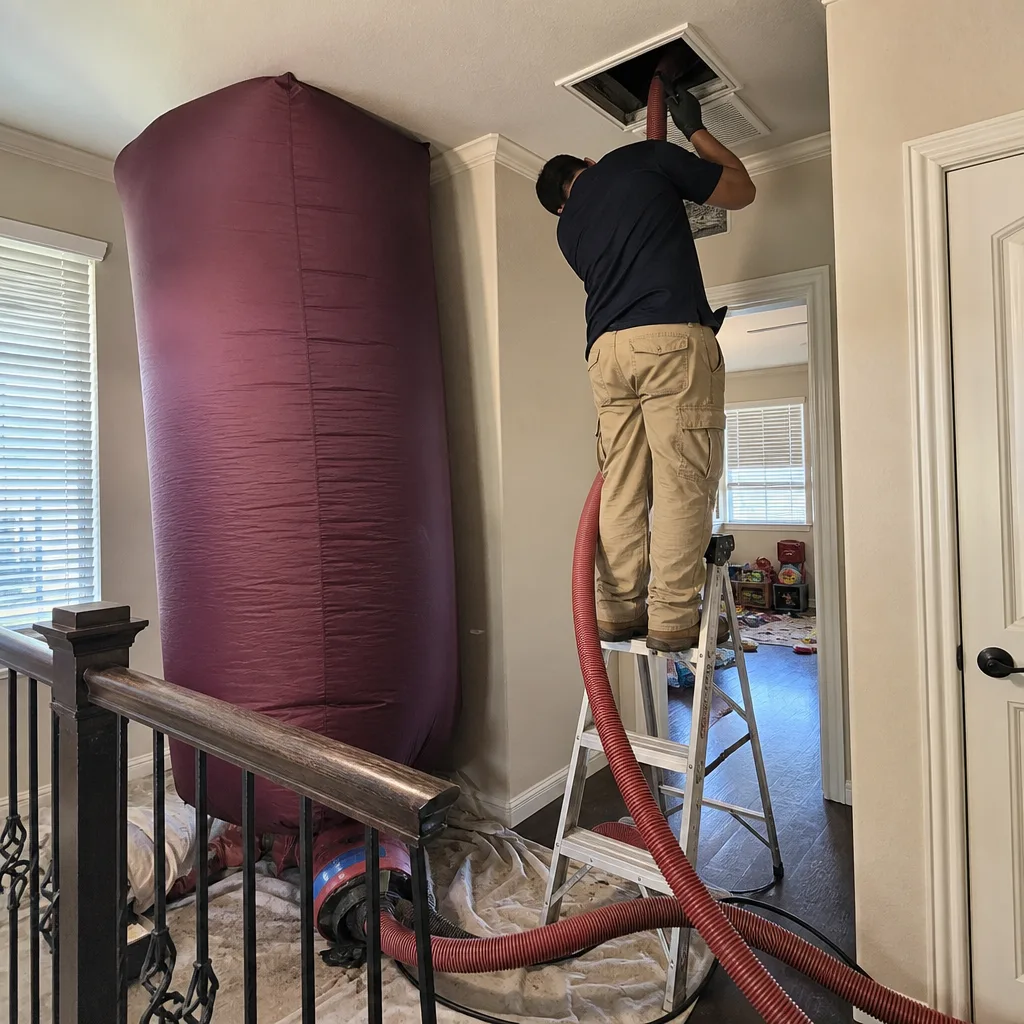
Professional duct cleaning uses negative-pressure extraction, a process that pulls debris from the duct run using a powerful vacuum connected to the plenum. But homeowners can detect many Air Duct Cleaning Warning Signs: A Irving Homeowner’s Reference Guide before that level of intervention is needed. Here’s what to look for.
Tools You Need
- Flashlight with focused beam (phone flashlight works for surface inspection, not deep duct viewing)
- White paper towel or microfiber cloth
- Tape measure
- Smartphone for dated photographs
Step-by-Step Register Inspection
- Remove the register. Most lift out or have two spring-loaded clips. Do not force painted-shut registers; note the location for a technician.
- Shine light straight down the duct. In sheet metal ducts, you should see reflective surfaces. A matte, fuzzy coating on the walls indicates debris buildup beyond normal dust.
- Wipe the duct wall 6 inches in. Use your white cloth. Normal dust is gray and powdery. Sticky, yellow residue suggests cooking grease or tobacco byproducts. Black, smeary residue may indicate mold or soot. Fibrous, insulation-like material means duct liner is degrading.
- Photograph and date. Include the room name in your file name.
Return Grille Inspection
Returns pull air back to the unit, so they collect what the filter missed. In Irving homes built 2015 to 2025, we often find returns located near interior doors or in hallways where pet hair and fine dust concentrate.
- Remove the grille. Most have hinged access or simple friction fit.
- Inspect the filter frame. Look for gaps where the filter does not seal. Light visible around the filter edge is a bypass path.
- Check the grille backside. A clean grille with a dirty filter housing suggests the filter was recently changed for appearance, not function.
- Wipe and photograph. Compare to your March baseline.
What the Colors and Textures Mean
| Appearance | Likely Source | Action |
|---|---|---|
| Gray, powdery, wipes clean | Normal household dust | Continue scheduled maintenance |
| Yellow-green, granular | Pollen, especially March-May in Irving | Verify filter fit; consider upgrade to MERV 11+ |
| Black, sooty, oily | Candle smoke, cooking, or possible mold | Professional inspection warranted |
| Fibrous, loose material | Deteriorating duct liner or insulation | Do not disturb; call for duct repair |
| White, chalky, hard | Construction debris (drywall, concrete) | Post-renovation cleaning needed |
Filter Sizing: How to Measure and Spot Bypass Gaps
The filter industry labels filters by nominal size, not actual size. A “16x25x1” filter typically measures 15.5 by 24.5 by 0.75 inches. That quarter-inch gap on each side, multiplied by the perimeter, creates a bypass area of roughly 20 square inches. In a 5-inch-deep media housing designed for a 4-inch or 5-inch filter, installing a 1-inch filter leaves a 3-inch to 4-inch channel of unfiltered air.
How to Measure Correctly
- Measure the housing, not the old filter. Use a tape measure on the metal frame where the filter sits. Record width, height, and depth.
- Check for channel depth. A deep housing with a shallow filter installed is the most common error we document in Irving homes. The filter may appear to fit the opening while leaving a massive bypass channel behind it.
- Look for light leaks. With the system running, hold a thin strip of tissue paper around the filter perimeter. Movement indicates air bypass.
- Verify the filter direction. Arrows on the filter frame should point toward the blower motor. Reversed installation loads debris on the wrong side and can collapse the filter media.
Filter Types for Irving Conditions
Standard fiberglass panels (MERV 1-4) capture little of the fine pollen that dominates Irving’s spring. Pleated media (MERV 8-13) improves capture but increases static pressure, the resistance the blower must overcome. Systems not designed for high-MERV filters can suffer reduced airflow and premature blower failure.
Electronic air cleaners, including brands like Honeywell and Aprilaire, use charged media or plates to capture particles without the airflow restriction of dense pleated filters. If your system has a dedicated electronic cleaner slot, use it as designed rather than substituting a disposable filter.
Never operate a system without a filter. The debris load on the evaporator coil and blower wheel will require professional cleaning within one season.
What Documentation to Keep Between Professional Cleanings
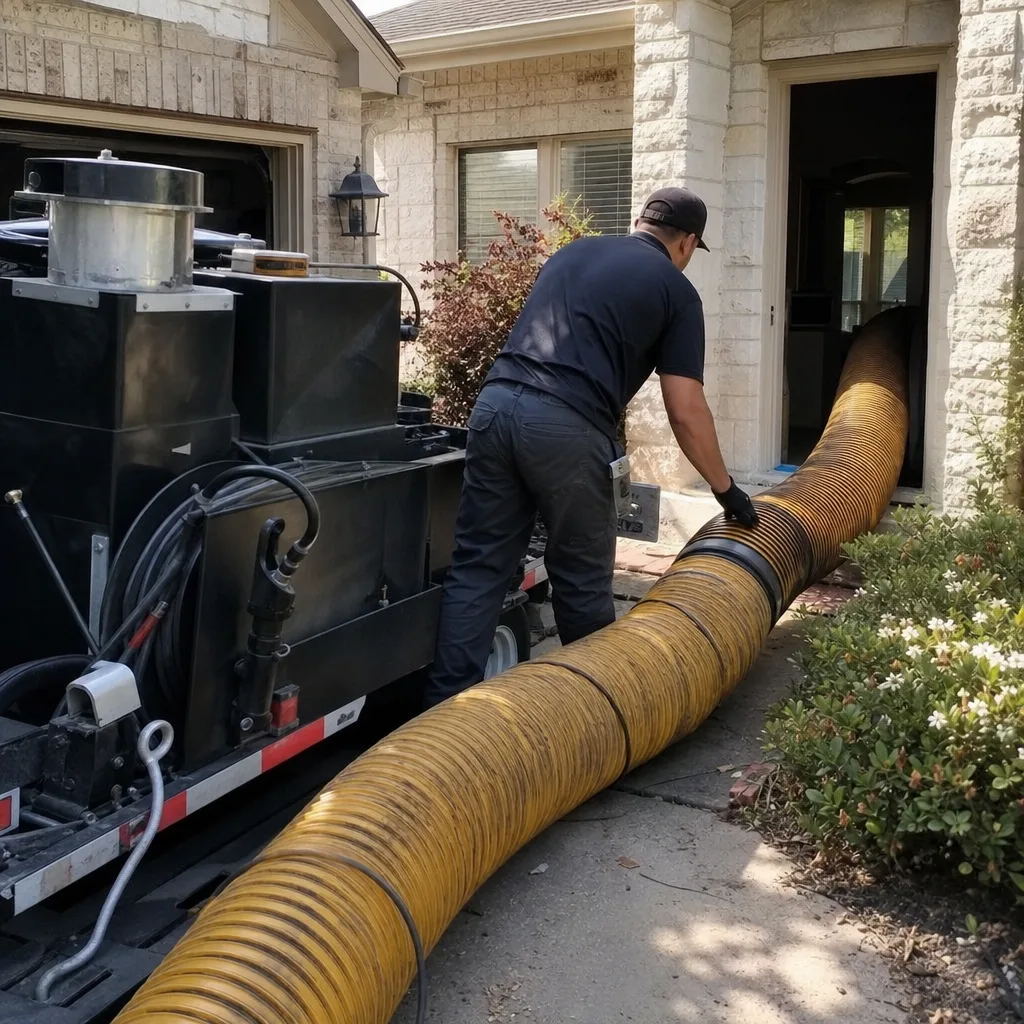
A documented record transforms vague memory into actionable evidence. When you call a professional, dated documentation lets them diagnose faster and quote accurately. CleanRun has served over 52,000 homes since 2013, and the homes with organized records consistently receive more precise scope definitions and fewer surprises.
The Homeowner Duct File
- Dated register photographs. One per room, same angle, same lighting. Name files: “2024-03-15_MasterBedroom_Return.jpg”
- Filter change log. Date, brand, nominal size, actual measured size, and any bypass noted.
- Static pressure readings. If your HVAC technician provides these during maintenance, record the supply and return pressures. Rising static pressure over time indicates accumulating debris or filter mismatch.
- Odor and airflow notes. Date, room, description, duration. “2024-08-12: Musty smell from office register for 3 hours after AC startup.”
- Professional service records. Scope of work, equipment used, before/after photo access, warranty terms.
What CleanRun Provides
Every CleanRun Air Duct Cleaning Irving home service concludes with a Documented Photo Record included as a standard deliverable. The inside of every duct run is photographed before and after, delivered to the customer as part of the job record. This is not a marketing promise; it is a concrete deliverable you can compare to your own homeowner file.
The written scope, delivered under Haven Standard Clause 1 before any work starts, specifies which duct runs will be cleaned, which will be sealed if accessible, and the flat price for the complete system. No per-vent pricing, no add-ons discovered after arrival.
When Cleaning Can Wait Versus When to Call Early
Not every observation requires immediate professional service. Separating “monitor” from “act” prevents unnecessary expense and catches genuine problems before they escalate.
Conditions That Can Be Monitored
- Light gray dust on register surfaces, wiped clean easily
- Occasional pollen loading during peak season, resolving when season ends
- Minor temperature variation (2-3°F) between rooms in a two-story home
- Burning dust smell at first heating cycle, dissipating within 20 minutes
- Filter slightly darkened at 60-day mark in high-use season
Conditions That Warrant Calling Ahead of Schedule
- Visible mold growth on register surfaces or in duct view
- Persistent musty odor that returns after filter change
- Debris visibly blowing from registers when system starts
- Significant temperature imbalance (5°F+) appearing suddenly
- Evidence of pests (droppings, nesting material, insect husks)
- Post-renovation dust still visible in ducts 30 days after construction ends
- Water staining on ceiling around duct boots
In Irving’s humid summers, we regularly see microbial growth in homes where the evaporator drain has backed up and moisture has wicked into fiberglass duct liner. This is not a cleaning scenario; it is a repair and replacement scenario. A documented photo record from your own inspection helps the technician distinguish surface debris from systemic moisture damage.
Recognizing Professional-Grade Equipment
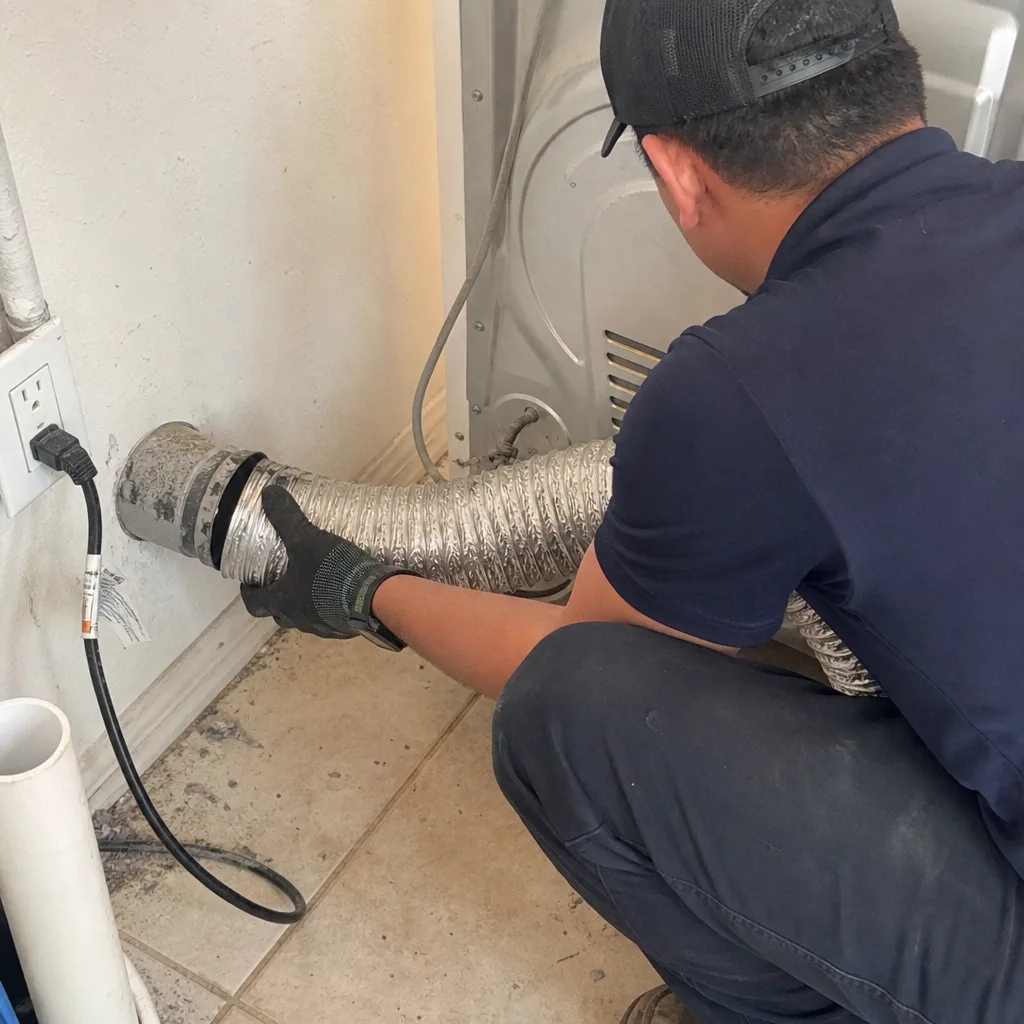
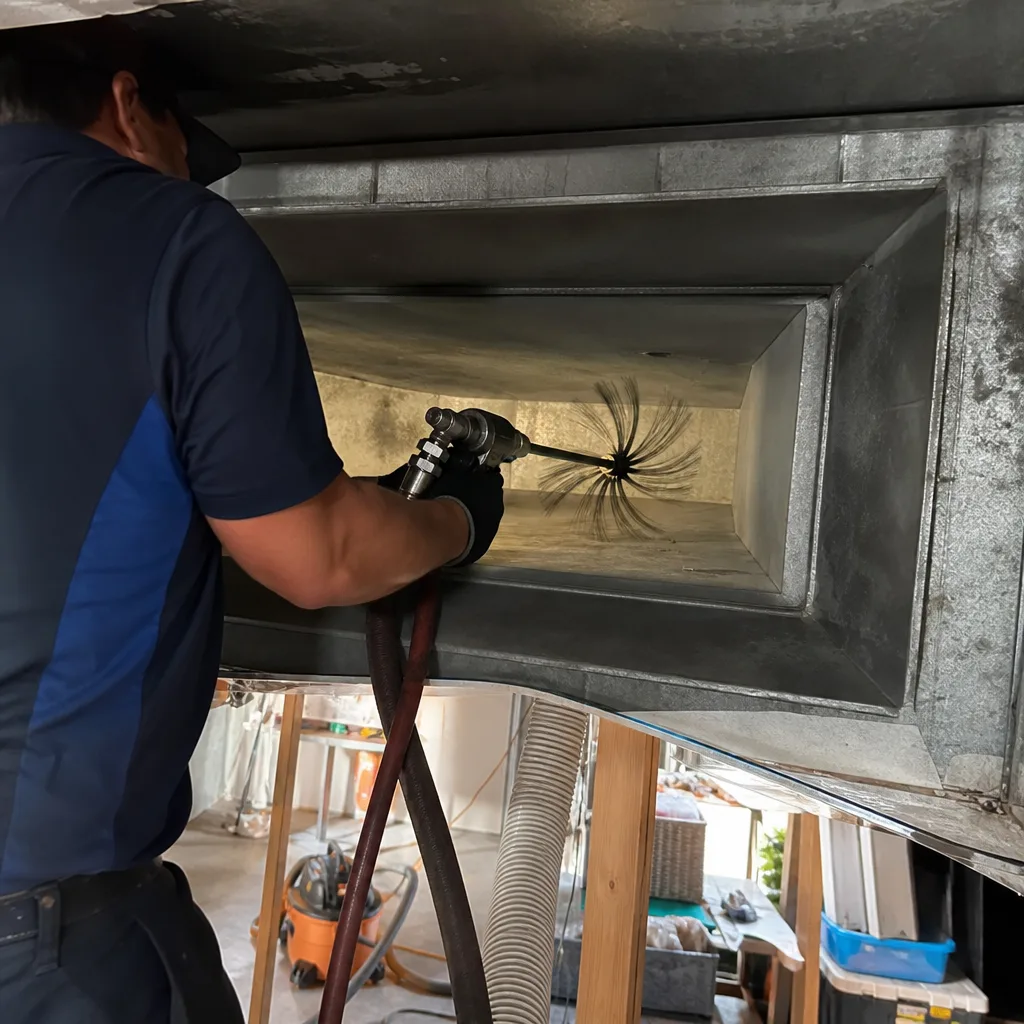
When you do hire a professional, the equipment matters. Consumer-grade shop vacuums and rotary brushes sold online do not generate the airflow or containment needed for duct cleaning. Negative-pressure extraction requires specific vacuum power and HEPA filtration to prevent redistribution.
Professional-grade equipment in this trade includes negative-pressure systems from Abatement Technologies, rotary brush systems from Rotobrush, and industrial vacuums from Nikro. These are tools you can look up independently. A technician should be able to name the equipment they will use on your specific job.
Air quality add-ons, when appropriate, may include UV-C installations or bipolar ionization. Honeywell and Aprilaire manufacture whole-home air purifiers designed for HVAC integration. Guardsman produces sealants and coatings for duct repair. These are trade-recognized brands, not proprietary or unverifiable products.
Ask for the equipment list in writing with your scope. If a company cannot name what they will use, they may not own professional equipment.
Common Mistakes to Avoid
- Installing a 1-inch filter in a 5-inch housing. The gap bypasses filtration entirely. We documented this exact error in the Irving job that prompted this checklist. Measure depth, not just length and width.
- Blocking return grilles with furniture. Restricted return airflow increases negative pressure in duct seams, pulling attic air and insulation into the system. In Irving’s hot attics, that air is 140°F and loaded with fiberglass particles.
- Using scented filters or sprays. These mask odors rather than remove sources. The fragrance oils can deposit on duct walls and attract more debris.
- Cleaning only visible registers. The supply register is the end of the duct run. Debris accumulates at low points and elbows upstream, invisible without a camera. Surface cleaning of registers is housekeeping, not duct maintenance.
- Ignoring post-renovation debris. Drywall dust is abrasive and hygroscopic, meaning it attracts moisture. Left in ductwork, it hardens into a cement-like coating that requires aggressive mechanical removal.
- Waiting for “recommended” intervals without observation. A home with three pets, recent construction, or a failing filter fit needs more frequent attention than the same floor plan next door. The checklist above lets you base timing on conditions, not calendar alone.
- Hiring based on coupon price without verifying scope. The $79 duct cleaning in Irving typically covers one or two registers with a shop vacuum, then presents a revised quote for “additional vents.” Written scope before work starts, under Haven Standard Clause 1, prevents this.
When to Call a Professional
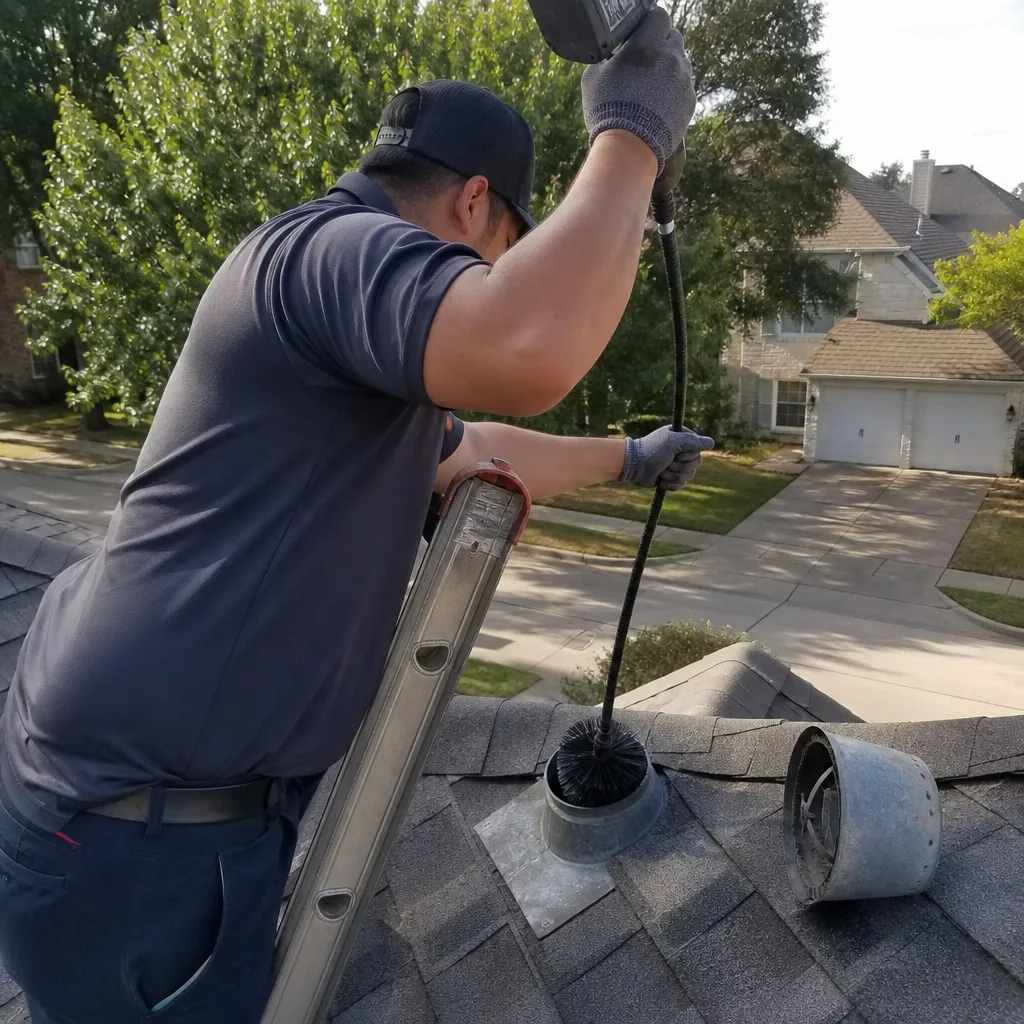
Call when your own inspection reveals mold, moisture staining, pest evidence, or debris that returns after cleaning. Call when temperature imbalance appears suddenly or when odors persist beyond normal seasonal startup. Call after any renovation that generated significant dust.
CleanRun Air Duct Cleaning Irving offers free estimates in Irving. Every estimate includes a written scope and flat price before any work starts, under Haven Standard Clause 1. Every job concludes with a Documented Photo Record of every duct run. The 365-Day Done Right Promise means if the work is not right, we make it right, backed in writing, not subject to manager discretion. Call (682) 297-4068.
For Dryer Vent Cleaning in Irving or HVAC Cleaning in Irving, the same documentation standards apply.
Frequently Asked Questions
Whole-system duct cleaning in Irving typically ranges from $400 to $900 for a single-family home, depending on system size, accessibility, and contamination level. CleanRun provides a written flat price per system before any work starts, under Haven Standard Clause 1. Call (682) 297-4068 for an exact quote; estimates are free.
Low quotes often cover only a visual inspection or surface register cleaning with a shop vacuum, then present additional charges for “extra vents” or “deep cleaning.” A legitimate quote specifies the number of duct runs, the cleaning method (negative-pressure extraction with rotary brush or compressed air whip), and whether before/after documentation is included. CleanRun’s written scope defines the complete system price with no per-vent add-ons.
Request a documented photo record showing the inside of each duct run before and after. CleanRun includes this as a standard deliverable on every job, a practice held since 2013. If a company cannot or will not provide internal duct photographs, you have no verification that the full duct run was cleaned.
Every 3 to 5 years for typical Irving homes, adjusted for conditions. Homes with pets, recent renovations, or confirmed filter bypass may need more frequent service. Use the month-by-month checklist above to base timing on observable conditions rather than calendar alone.
Surface register cleaning and filter replacement are appropriate homeowner maintenance. Internal duct cleaning requires negative-pressure extraction equipment, HEPA containment, and access tools that are not available for consumer purchase. Attempting to clean ducts without containment redistributes debris into the living space. For the same reason, we do not recommend compressed air alone without vacuum capture.
Irving’s position in the Dallas-Fort Worth metroplex exposes homes to higher pollen counts than coastal Texas and more temperature swing than deep South Texas. The Cross Timbers vegetation produces heavy spring oak pollen, and summer humidity combined with air-conditioned ductwork creates condensation risk in unconditioned spaces. These factors make filter fit verification and seasonal inspection particularly important for Irving homeowners compared to drier or less vegetated regions.
The Bottom Line
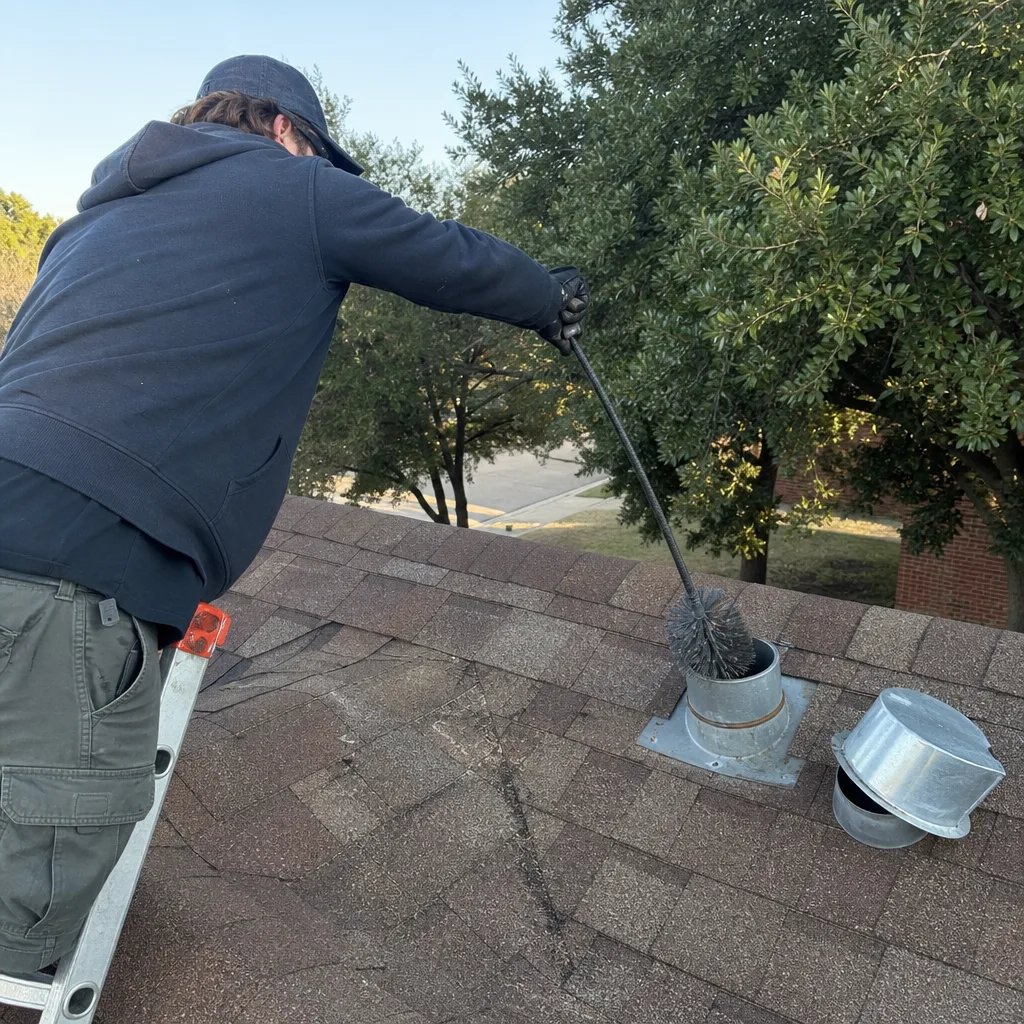
A maintenance checklist for Irving ductwork is not a generic reminder to change filters. It is a month-by-month record of observable conditions tied to local seasonal pressures: pollen loading in March, humidity stress in August, thermal flex in November. Measure your filter fit. Photograph your registers. Keep dated documentation. When you do hire a professional, demand written scope, named equipment, and a documented photo record before paying. For more guides & resources, visit our blog. The homeowners who avoid surprise invoices are the ones who detected the bypass gap, the moisture stain, or the sudden temperature shift before it became a system-wide problem.
Written by Tomas Reyes, Owner at CleanRun Air Duct Cleaning Irving, serving Irving since 2013.