
Last updated September 23, 2026
Whole-system duct and dryer vent check with before-and-after photos - you see exactly what came out of your vents
That "$99 whole-house special" is a bait ad - the real number appears once they are in your hallway, or the "clean" is a shop-vac at the register. We photograph the inside of your ducts before and after instead.
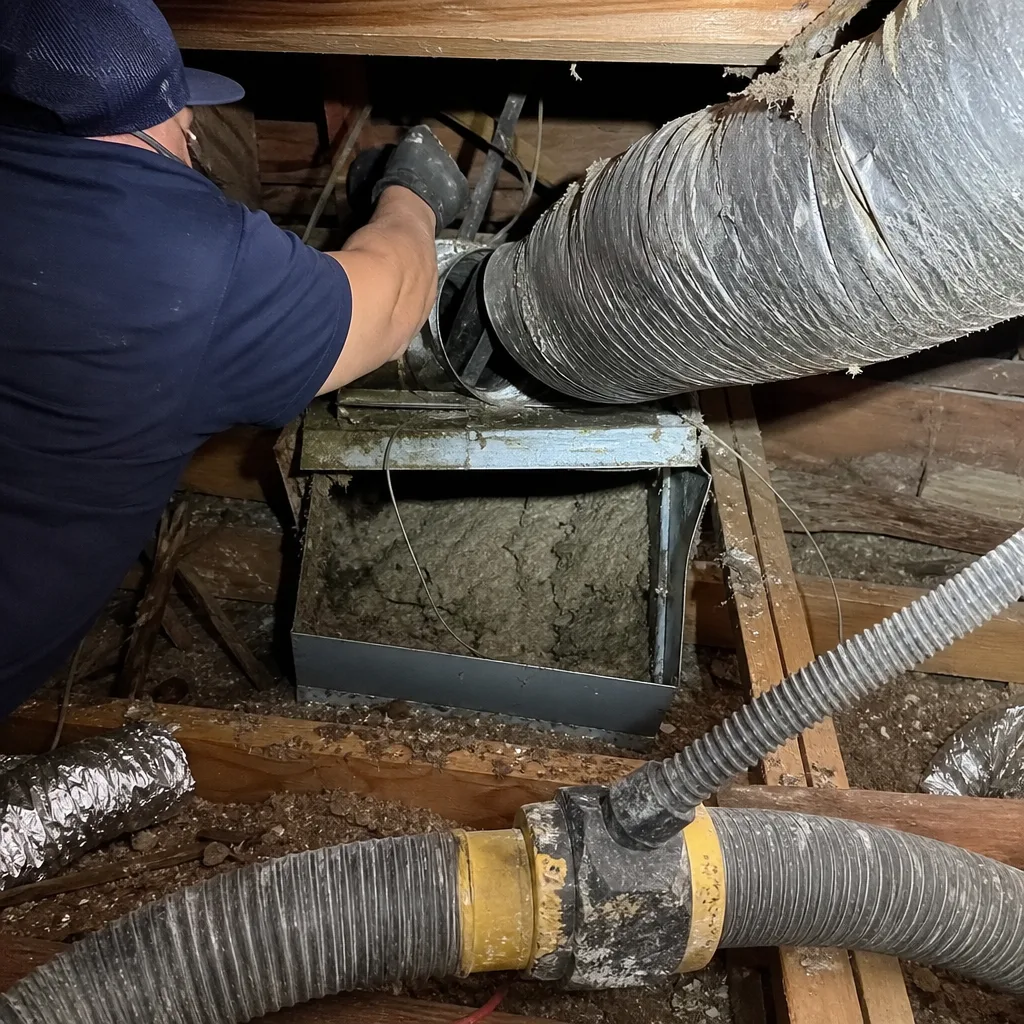 Before
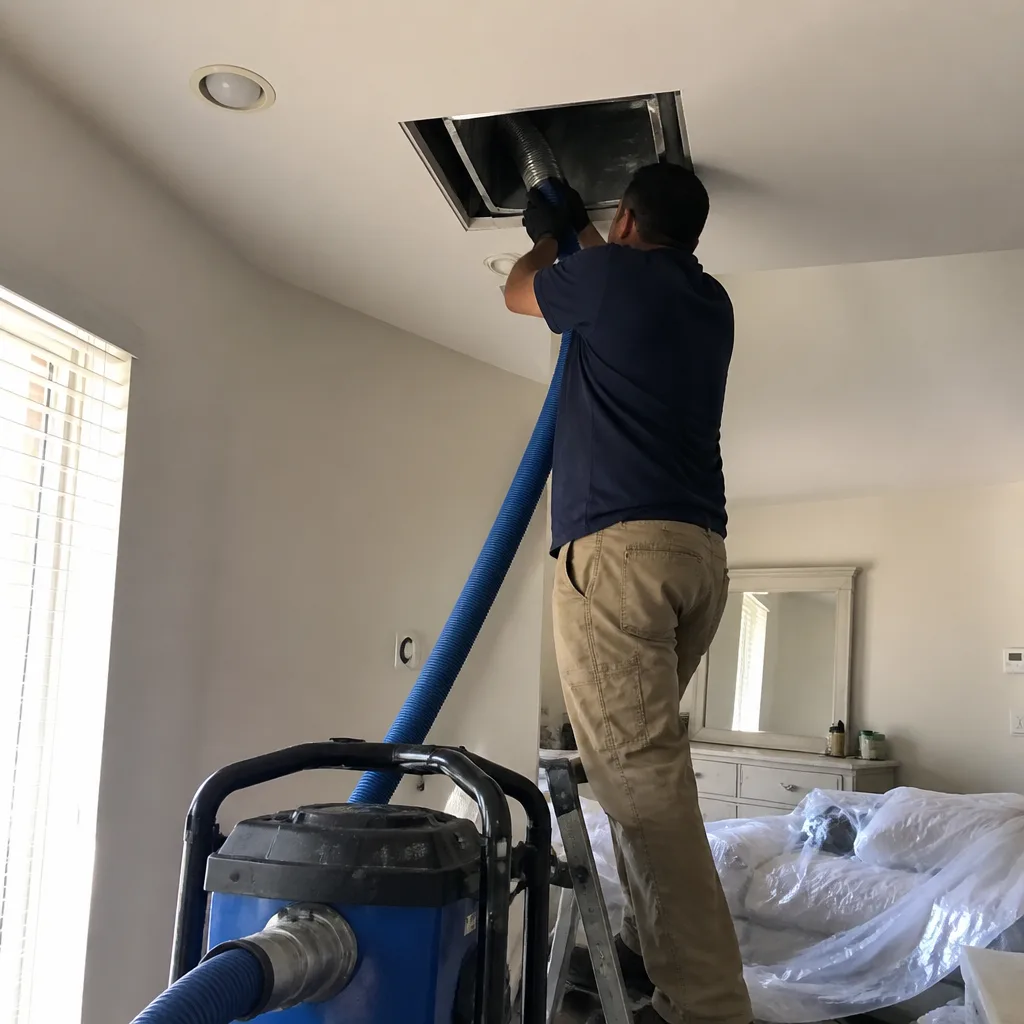 After
After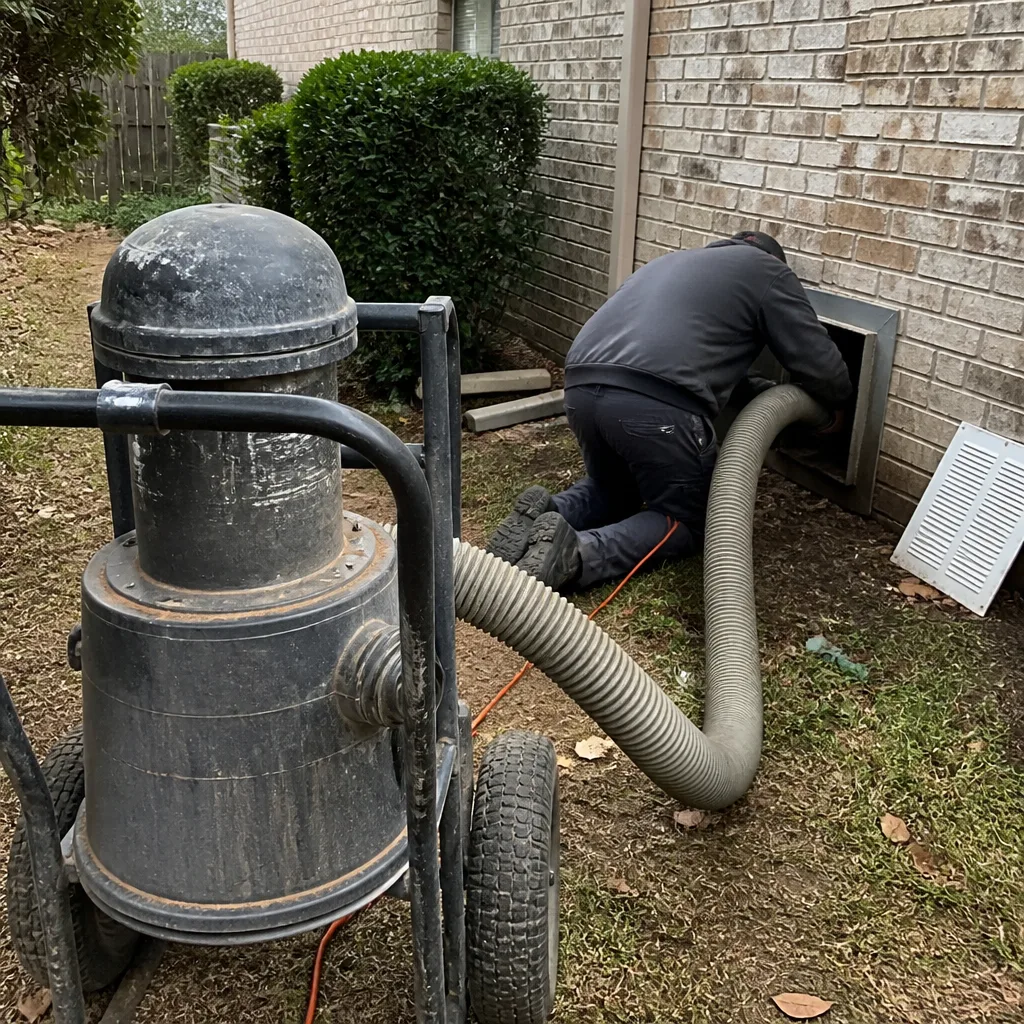 Before
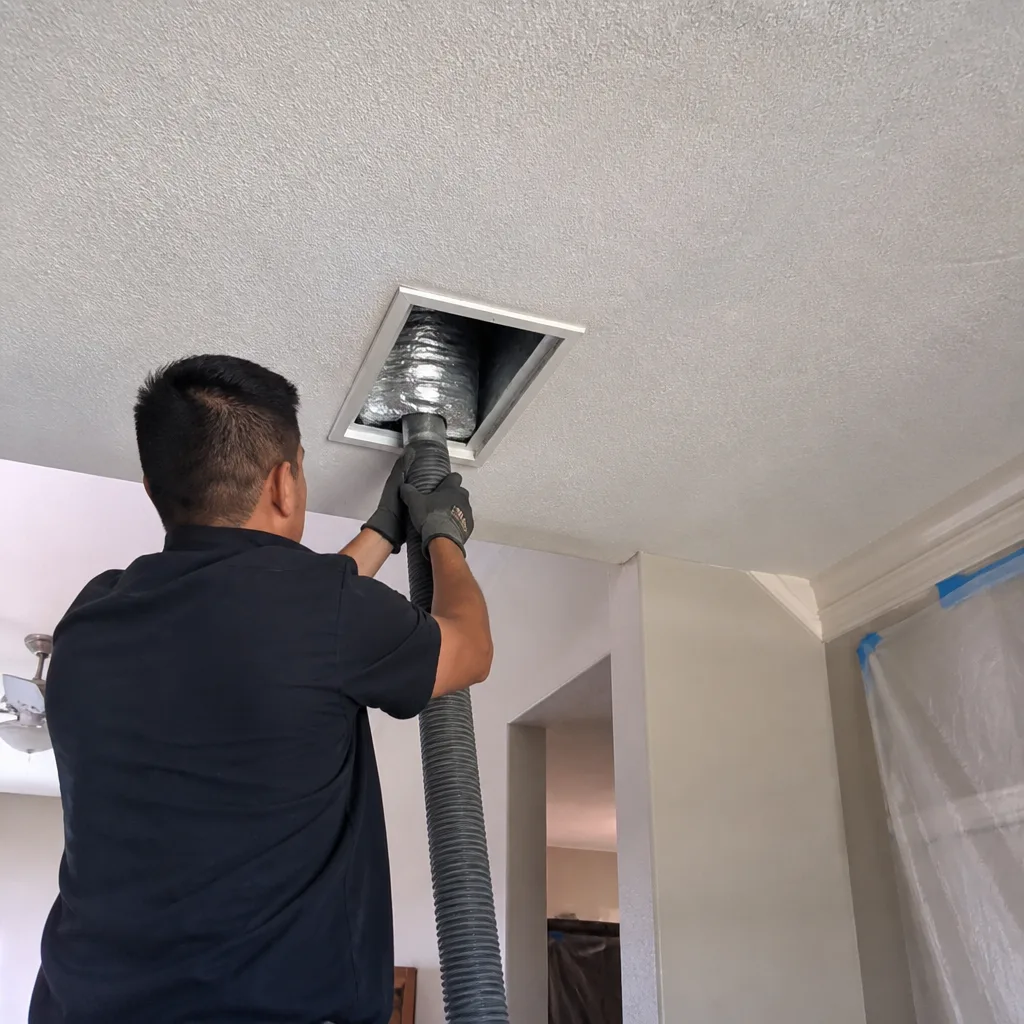 After
After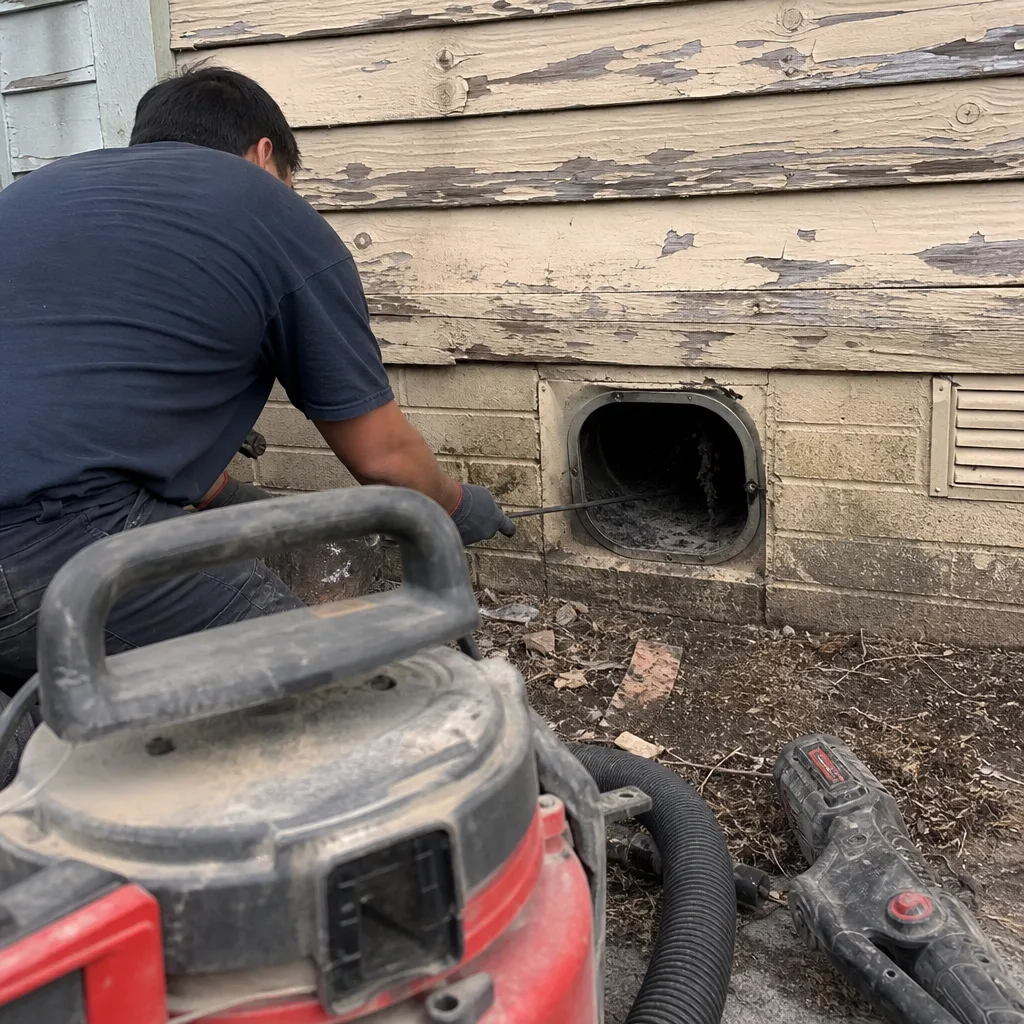 Before
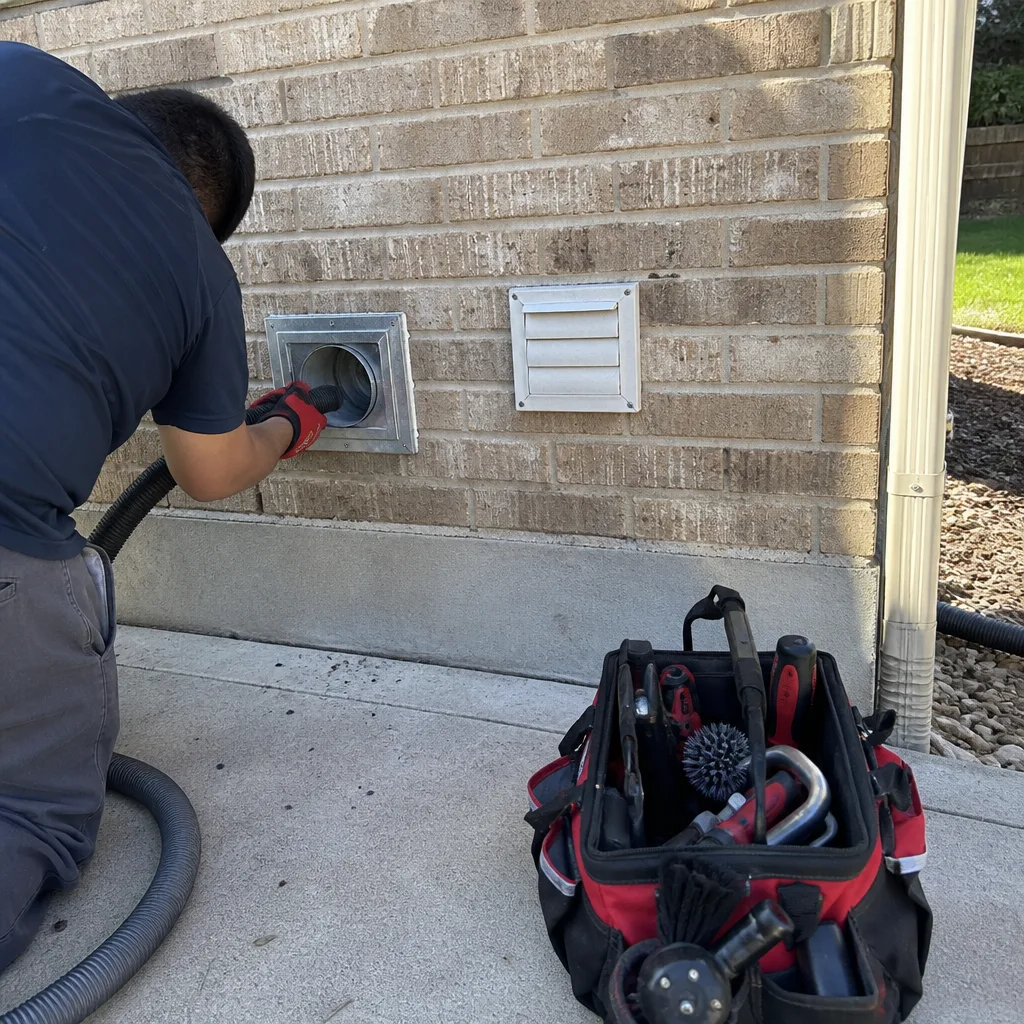 After
AfterSeasonal Air Duct Cleaning Care for Irving: Year-Round Homeowner’s Guide
Irving averages 239 sunny days per year, runs its air conditioning roughly eight months out of twelve, and sits adjacent to one of the country’s busiest construction corridors. That combination means the average Irving duct system runs under load three times longer per year than a comparable home in a northern climate - with more airborne particulate to capture. In this guide, we’ll map what actually enters Irving duct systems by season, what the debris looks like on camera, and how to time Air Duct Cleaning so you’re preventing contamination rather than recovering from it.
Quick Answer
The most effective air duct cleaning schedule for Irving follows four seasonal contamination windows: spring pollen infiltration (March-May), summer humidity and condensate issues (June-September), fall heating switchover debris (October-November), and winter construction dust from nearby development (December-February). For most Irving homes, the highest-value timing is post-summer, pre-heating-season - typically late September through October - when you can remove accumulated biological growth before the first heating cycle circulates it.
Table of Contents
- Spring in Irving: Pollen Infiltration and What Bypasses Your Filter
- Summer in Irving: Condensate, Humidity, and Early Mold Colonization
- Fall in Irving: The Heating Switchover and What You’re Actually Breathing First
- Winter in Irving: Construction Dust from Las Colinas and Surrounding Corridors
- How to Time Professional Cleaning for Maximum Benefit
- What Homeowners Can Do Between Professional Visits
- What Professional-Grade Cleaning Actually Looks Like
- Common Mistakes to Avoid
- When to Call a Professional
- Frequently Asked Questions
- The Bottom Line
BeforeAfterSpring in Irving: Pollen Infiltration and What Bypasses Your Filter
North Texas spring pollen counts regularly exceed 5,000 grains per cubic meter during peak cedar and oak release. In Irving, that peak typically hits between late February and mid-April, with oak pollen extending into May in the neighborhoods near Trinity River bottomlands.
Here’s what most homeowners don’t realize: your HVAC filter, even a MERV 13, is rated for particles captured at standard test airflow. When your system cycles on and off - which happens dozens of times per day during Irving’s mild spring mornings and hot afternoons - the pressure differential across the filter momentarily equalizes. During those equalization moments, pollen and fine debris can bypass the filter entirely through gaps in the filter frame, the return air grille seal, or the filter cabinet itself.
We’ve photographed this phenomenon in Irving homes since 2013. The camera shows a distinctive yellow-green film on duct walls, typically 8 to 14 inches downstream of the filter location. In ranch-style homes common in Valley Ranch and Hackberry Creek, where return ducts run through unconditioned attic space, that film often extends the full length of the trunk line. The pollen adheres to duct walls because of electrostatic charge and because North Texas pollen is coated with lipids that make it sticky.
What this means practically: by late May, an Irving duct system that ran continuously through spring has likely accumulated a measurable pollen layer. If anyone in your home has seasonal allergies that persist beyond the outdoor pollen season, this internal reservoir is a probable cause.
Spring maintenance priorities for Irving homeowners:
- Replace filters monthly during peak pollen, not quarterly
- Inspect the filter cabinet seal for gaps that allow bypass airflow
- Check return grilles in bedrooms - the rooms where people spend the most hours - for visible dust accumulation on grille fins
- Schedule camera inspection if allergy symptoms extend past outdoor pollen season
The air duct cleaning process we use in Irving during spring typically recovers 2 to 4 pounds of pollen-laden debris from a 2,000-square-foot home’s duct system. The photo record shows the difference between a filter that captured most particles and one that allowed significant bypass.
Summer in Irving: Condensate, Humidity, and Early Mold Colonization
Irving’s summer design temperature is 99°F, but the more relevant number for duct health is the dew point. From June through September, outdoor dew points in Irving regularly exceed 70°F, meaning the air holds enough moisture that any surface below that temperature will condense water.
Your evaporator coil sits at roughly 40°F during operation. The condensate drain removes the water that forms on it. When that drain slows - from algae growth, a partially blocked trap, or a cracked pan - humidity bleeds into the supply plenum, the large duct section that distributes conditioned air to all rooms.
Here’s what early mold colonization looks like before it spreads: in camera inspections, we see dark pinpoint spots on the upstream face of the evaporator coil housing, typically within 18 inches of the coil itself. These spots are Aspergillus or Cladosporium colonies, the two most common indoor molds in North Texas. They start where the velocity is lowest and moisture highest - at the corners and seams of the plenum, not on the coil face itself.
By August, in homes where the condensate drain has been slow for six weeks, those pinpoints become visible patches. The musty smell that homeowners report “only when the AC first kicks on” is these colonies releasing spores during the initial airflow surge. The smell fades after a few minutes because the nose adapts, not because the source has stopped.
What to check in summer:
- Verify condensate drain flow monthly - a cup of water poured into the pan should exit the drain line within 30 seconds
- Listen for gurgling from the indoor unit during startup, which indicates standing water in the pan
- Check the supply registers in bathrooms and interior rooms - the last stops on the duct run - for black debris accumulation on the fins
- Schedule inspection if you detect any musty odor at system startup, even if it fades
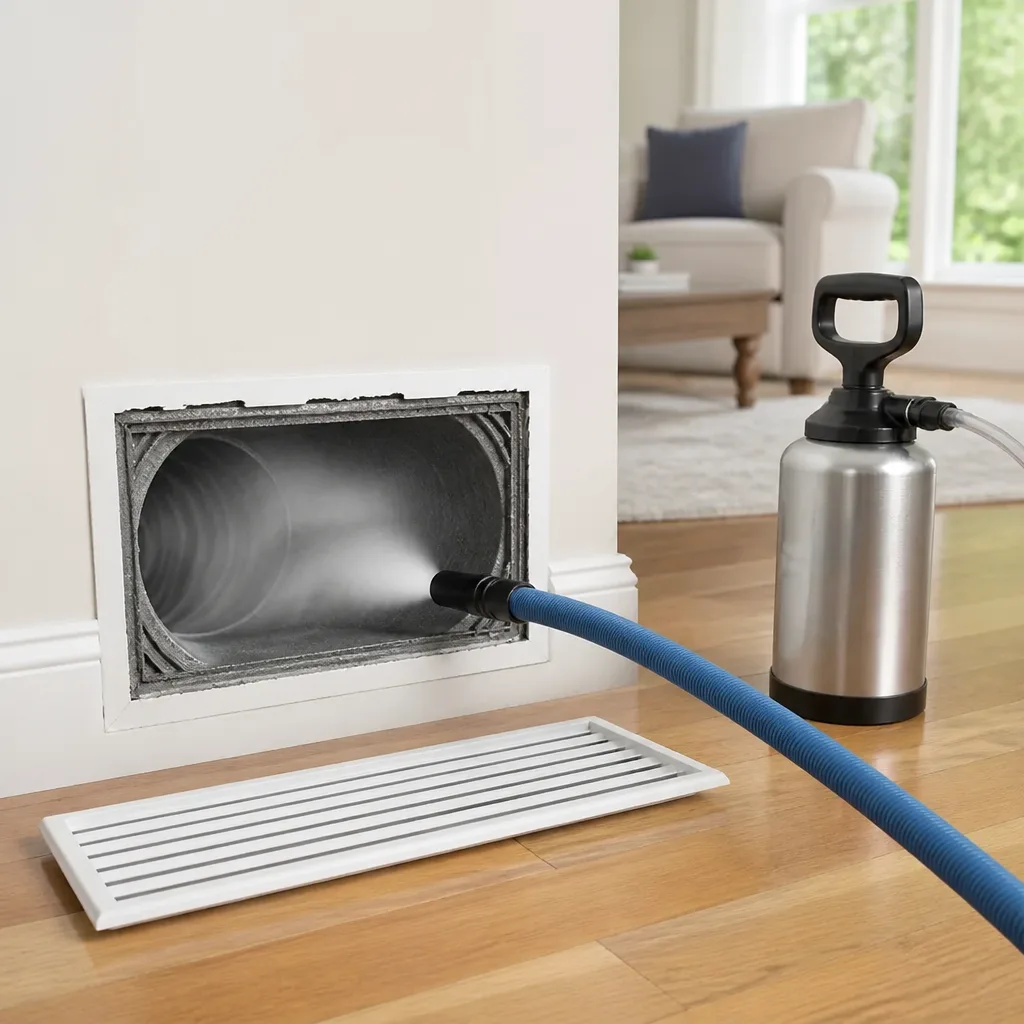
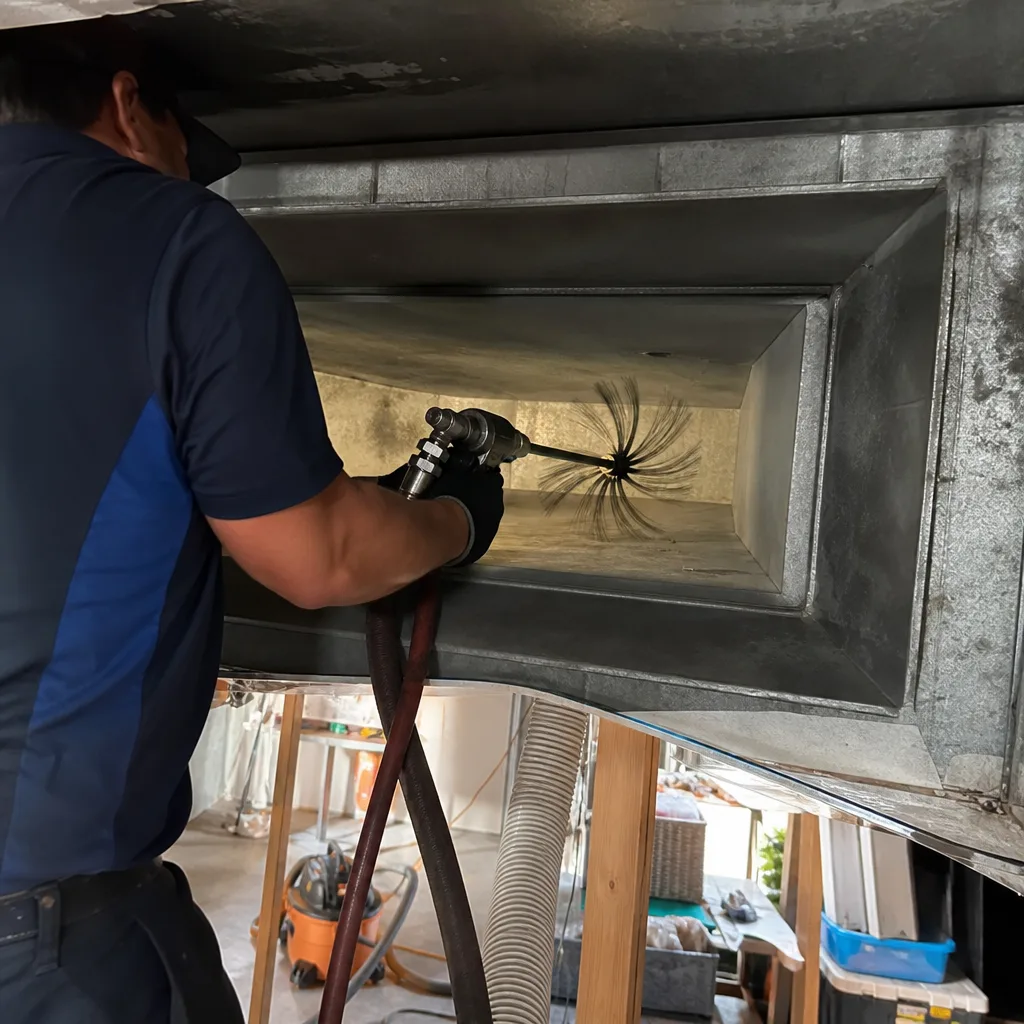
Professional cleaning during or immediately after summer addresses both the biological growth and the debris that supports it. Our crews use negative-pressure extraction - suction applied to the entire duct system while agitation tools loosen debris - to remove the organic material that would otherwise feed next season’s growth. The photo record documents the evaporator housing condition, not just the ducts.
Fall in Irving: The Heating Switchover and What You’re Actually Breathing First
Irving’s first sustained heating cycle typically occurs in late October or early November, when overnight lows drop below 55°F for several consecutive days. That first cycle is when accumulated summer debris becomes airborne.
During the six months the heating elements or heat exchanger sat idle, dust settled on all upward-facing surfaces. In gas furnaces, which dominate Irving’s market, the heat exchanger cells - the metal tubes that separate combustion gases from household air - accumulate a fine layer of household dust, skin cells, and any debris that migrated backward through the supply ducts during summer’s pressure fluctuations.
When the burner ignites, that layer heats rapidly. The first heating cycle circulates a visible puff through the supply system. In homes with significant summer debris accumulation, this puff can trigger smoke detectors or produce a noticeable haze in rooms with strong sunlight.
What accumulates specifically in Irving fall conditions:
- Cottonwood seed fluff from late summer, which enters through outdoor air intakes and gaps in return ductwork in attic spaces
- Fine soil particles from the dry late-summer period, common in Las Colinas and north Irving lots with recent landscaping disturbance
- Insect debris - particularly paper wasp nest fragments from attic-mounted units, which are common in Irving’s established neighborhoods
The fall switchover is also when homeowners first notice airflow problems that developed over summer. A register that seemed adequate in July may feel weak in November because the heating cycle operates at lower fan speed than cooling, making restrictions more apparent.
Our recommendation: schedule camera inspection in September or early October, before the first heating cycle. This timing allows cleaning and any needed repairs to be completed before debris is mobilized. The HVAC cleaning service includes heat exchanger visual inspection as part of the documented photo record.
Winter in Irving: Construction Dust from Las Colinas and Surrounding Corridors
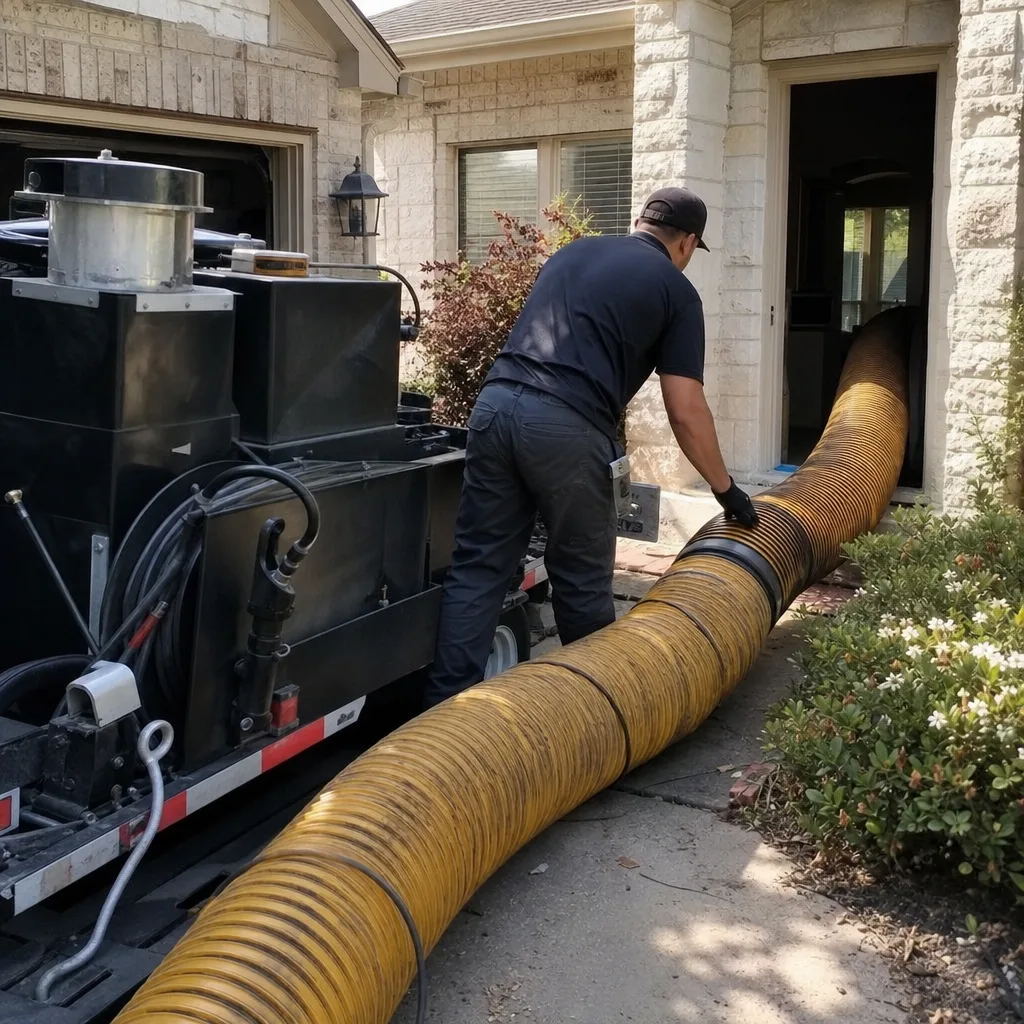
Irving’s development pipeline doesn’t pause for winter. The Las Colinas Urban Center, the Music Factory district, and ongoing residential infill in north Irving generate continuous fine particulate - specifically respirable crystalline silica from concrete cutting, drywall sanding, and soil disturbance.
Winter weather patterns make this worse. Cold fronts from the northwest push surface dust at ground level rather than dispersing it vertically. The prevailing wind direction in Irving winter is from the northwest at 10 to 15 mph, exactly the orientation of most construction sites relative to established neighborhoods. Homes in the Valley Ranch and Hackberry Creek areas, downwind of major corridor development, see measurable elevation in indoor particulate during winter months.
Here’s how construction dust enters duct systems: your return air path creates negative pressure at every gap and seam. In attic-mounted systems, common in Irving homes built 1995-2015, the return plenum often passes through unconditioned space with temperature differentials of 40°F or more. Thermal expansion and contraction loosen tape and mastic seals over time. Construction dust, which is finer and more angular than household dust, penetrates these loosened seals more readily than larger particles.
What winter construction dust looks like in ducts: gray-white, uniform, and unusually abrasive. Unlike pollen or organic debris, silica dust doesn’t clump. It distributes evenly along duct runs and is visible as a matte finish on metal surfaces that should be glossy. In camera inspection, it reflects light differently than organic debris - more sparkle, less shadow.
Winter-specific considerations for Irving homeowners:
- Check attic access hatches for visible dust accumulation on the upper surface - this indicates return system leakage pulling attic air into ducts
- Monitor indoor dust accumulation rates on horizontal surfaces; an increase without corresponding indoor activity suggests external infiltration
- Note any correlation between windy days and increased HVAC runtime - the system is compensating for infiltration load
- Consider duct sealing assessment if construction activity is ongoing within half a mile
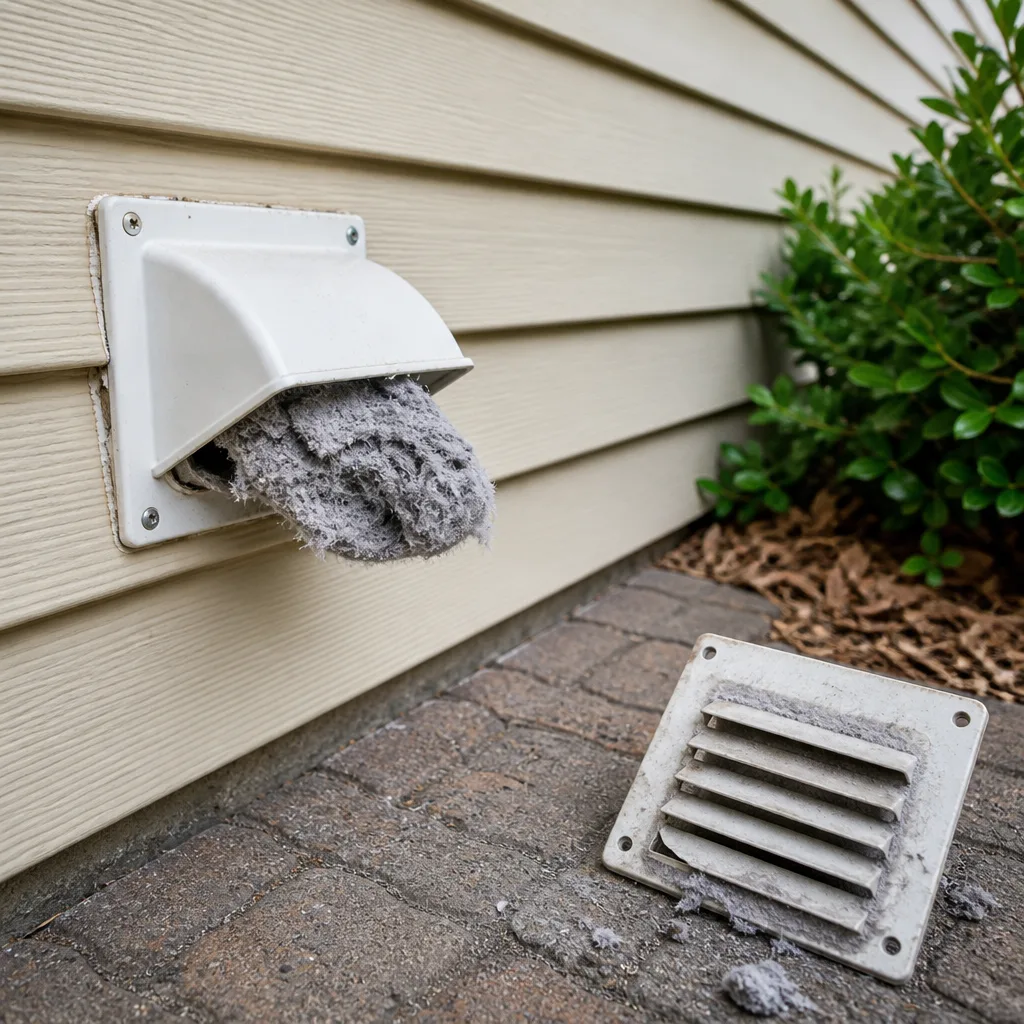
The dryer vent cleaning we perform in Irving winter often reveals similar construction dust accumulation in dryer ducts, which share exterior wall penetrations with HVAC components and experience the same pressure dynamics.
How to Time Professional Cleaning for Maximum Benefit
The question we hear most often from Irving homeowners isn’t whether to clean, but when. The answer depends on which contamination window you want to get ahead of.
The highest-value timing: late September through October
This window, between summer’s biological load and winter’s particulate load, offers three advantages. First, it removes accumulated mold-friendly debris before heating cycles mobilize it. Second, it prepares the system for the highest-indoor-air-quality months, when windows stay closed and occupants are indoors longest. Third, it allows any needed repairs - duct sealing, insulation replacement, drain line cleaning - to be completed before winter demand peaks.
Alternative timing by homeowner priority:
| Priority | Optimal Timing | Benefit Period |
|---|---|---|
| Allergy management | Mid-April, post-pollen peak | Removes reservoir before summer AC use |
| Mold prevention | Late August, pre-peak humidity decline | Addresses active growth before dormancy |
| Construction exposure | February, pre-spring wind season | Clears winter accumulation before pollen adds load |
| System longevity | October, with full HVAC inspection | Reduces motor and coil load for peak season |
Irving’s specific climate extends the effective benefit period of a fall cleaning. Because the heating season is short and mild compared to northern markets, a single thorough cleaning typically maintains performance through winter and spring, with the next optimal window arriving the following fall.
CleanRun’s Air Duct Cleaning Cost Breakdown: The Irving Homeowner’s Reference for 2026 shows pricing for a complete residential system in Irving ranges from $380 to $620, depending on system size and accessibility. This is a flat price per system, agreed in writing before work begins under Haven Standard Clause 1. Per-vent pricing, which we do not use, encourages incomplete work - the exact opposite of documented results.
What Homeowners Can Do Between Professional Visits
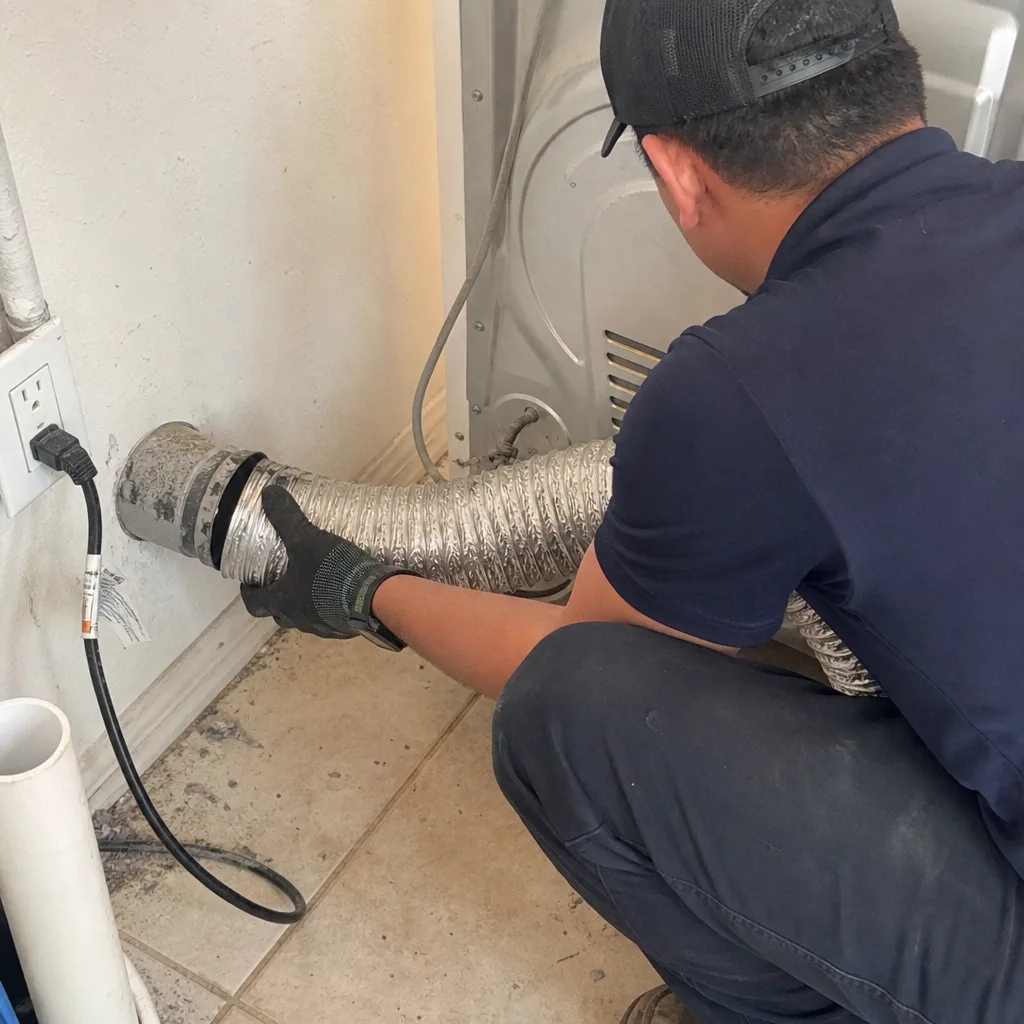
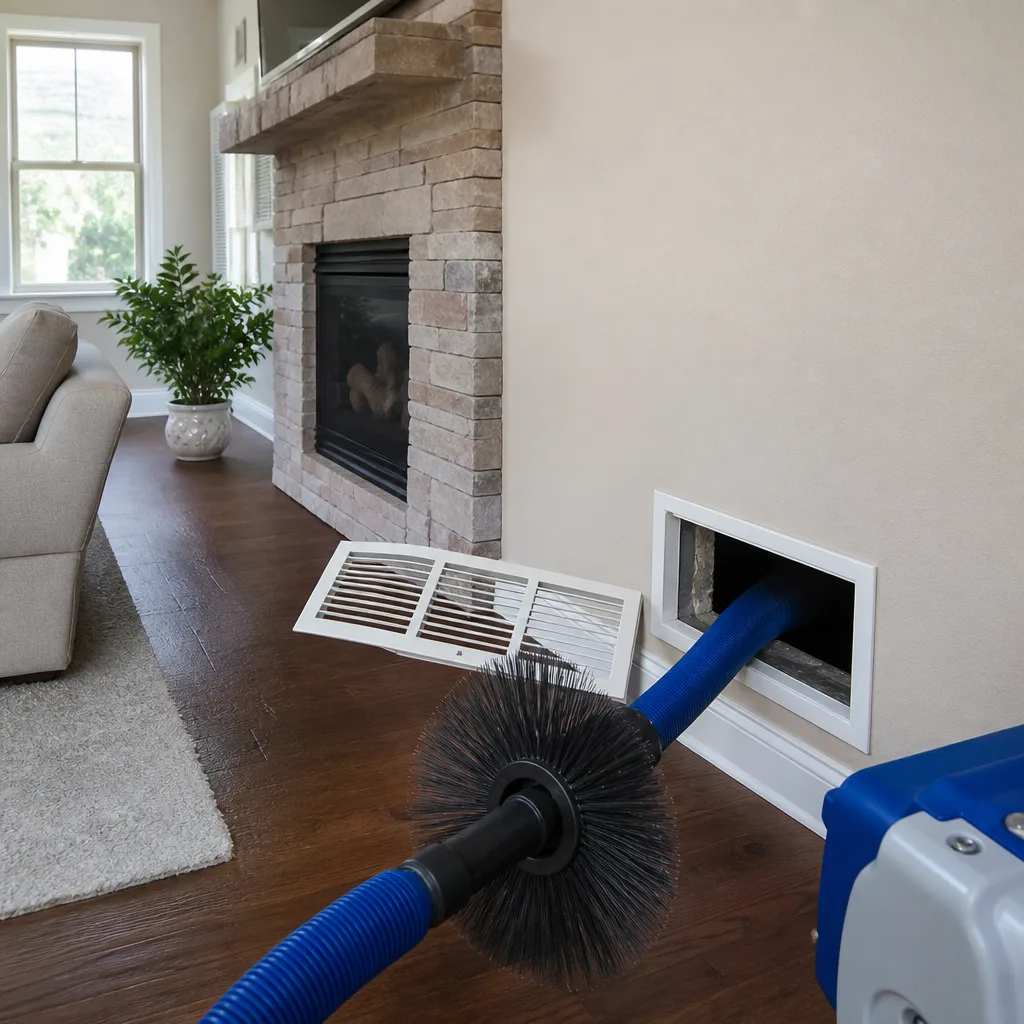
Professional cleaning with negative-pressure extraction and rotary brush agitation removes adhered debris that homeowner maintenance cannot reach. Between visits, these practices extend the benefit period:
- Filter discipline: Set a phone reminder for the first of each month. In Irving’s high-load environment, a 30-day replacement interval outperforms a higher-MERV filter changed less frequently. We recommend Aprilaire media filters for homeowners who want extended-change convenience without bypass issues.
- Register cleaning: Remove supply registers quarterly and vacuum the visible duct throat with a soft brush attachment. Do not insert tools beyond the first elbow - the duct run beyond that point requires professional equipment to navigate without damage.
- Condensate drain maintenance: Pour a cup of white vinegar through the drain line monthly from June through September. This suppresses algae without the corrosive effects of bleach tablets.
- Visual inspection: Photograph your evaporator coil housing and primary duct seams annually with a phone and flash. Date the photos. Changes over time are more informative than any single image.
- Outdoor unit clearance: Maintain 24 inches of clear space around the condenser. In Irving’s windy spring and construction-dust winter, debris accumulation on coil fins reduces system efficiency and extends runtime, increasing filter load.
What homeowners should not attempt: cleaning beyond the first elbow of any duct run, accessing the evaporator coil without proper refrigerant handling knowledge, or disturbing sealed duct joints in attic spaces. These tasks carry risk of duct damage, refrigerant release, or personal injury from attic hazards.
What Professional-Grade Cleaning Actually Looks Like
The Irving market includes operators who clean ducts with a shop vacuum and a rotary brush on a drill. The difference between that approach and professional-grade work is measurable in debris recovered, documentation provided, and system protection.
CleanRun’s equipment roster includes Rotobrush rotary brush systems for duct run agitation, Nikro and Abatement Technologies negative-pressure extractors for debris containment, and Guardsman inspection cameras for documentation. These are trade-recognized brands with published specifications, not proprietary or unverifiable equipment.
The process for a typical Irving home:
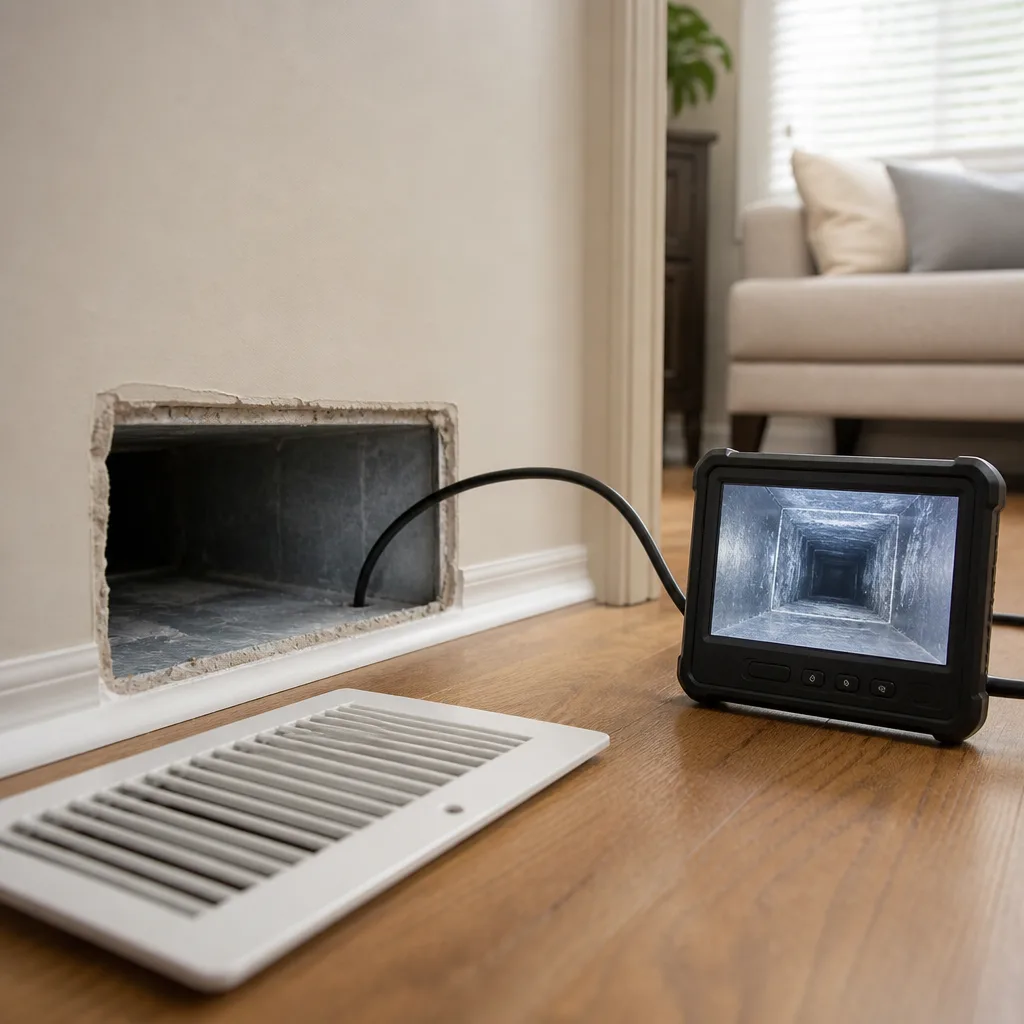
- System assessment and photo documentation of all accessible components - evaporator housing, blower assembly, filter cabinet, and representative duct runs
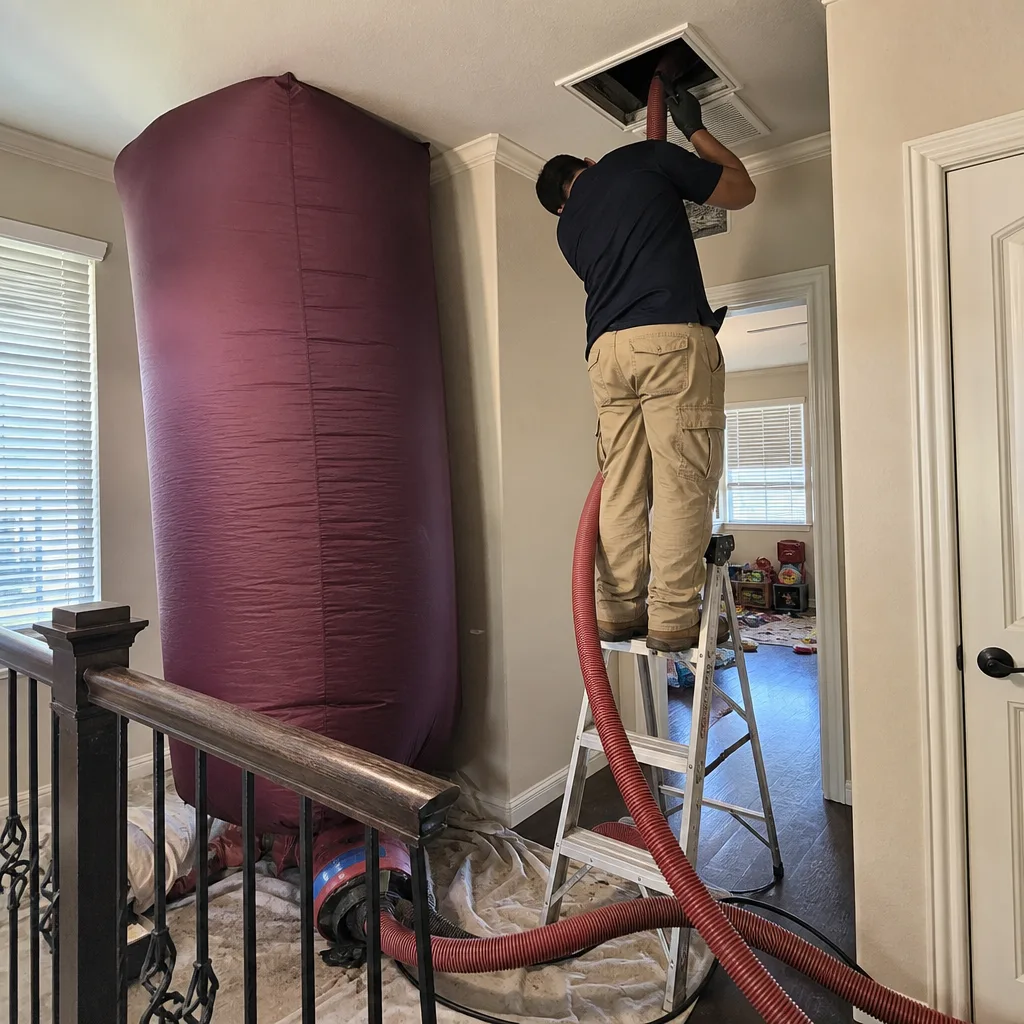
- Negative-pressure extraction unit connected to the trunk line, creating controlled suction throughout the system
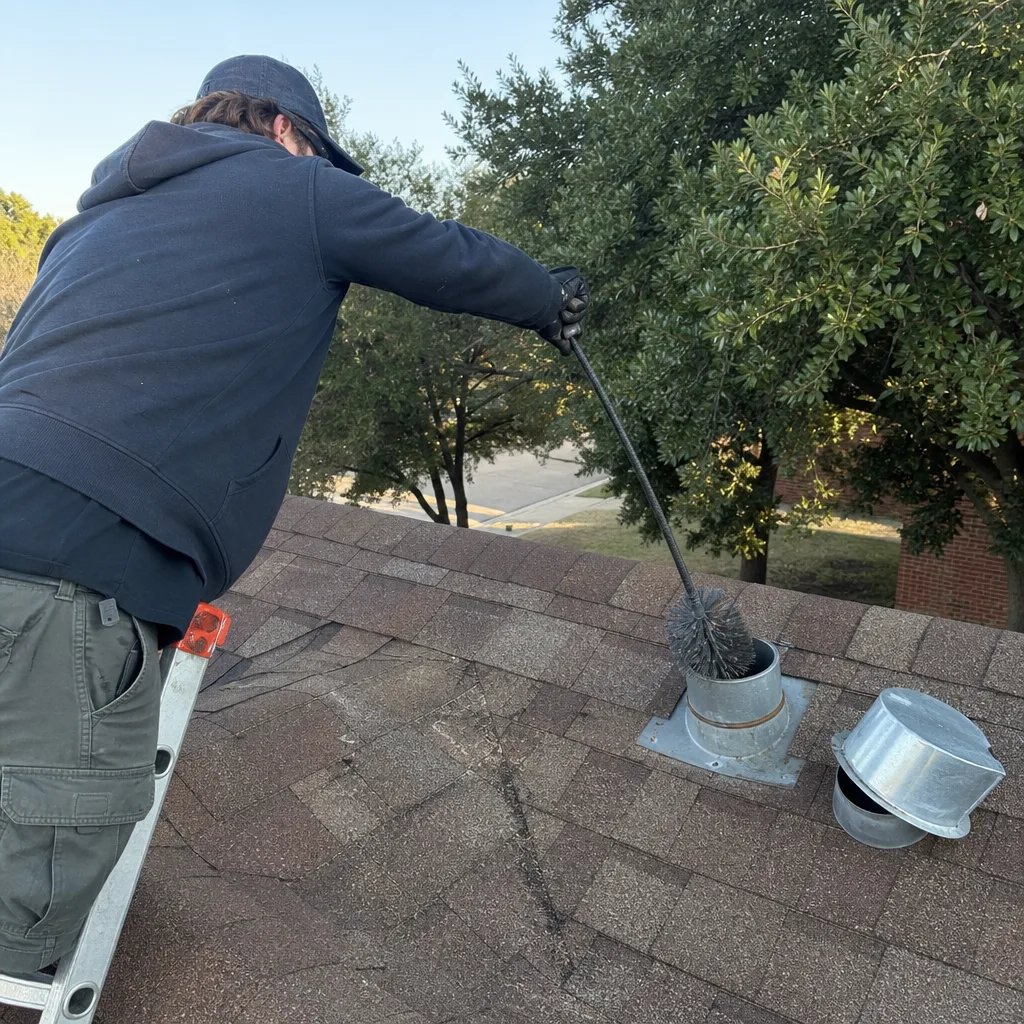
- Rotary brush agitation in each duct run, with brush diameter matched to duct size to prevent wall damage
- Register and grille cleaning with appropriate solvents for the material - painted metal, stamped steel, or floor diffusers
- Evaporator housing and blower cabinet cleaning with HEPA-contained tools
- Post-cleaning photo documentation of the same locations, delivered as part of the standard job record
- Written scope completion confirmation and 365-Day Done Right Promise documentation
The photo record is not a marketing extra. It is the documentation that Haven Standard Clause 2, Verified Results, requires on every job. Customers receive it as a standard deliverable, not upon request.
Common Mistakes to Avoid
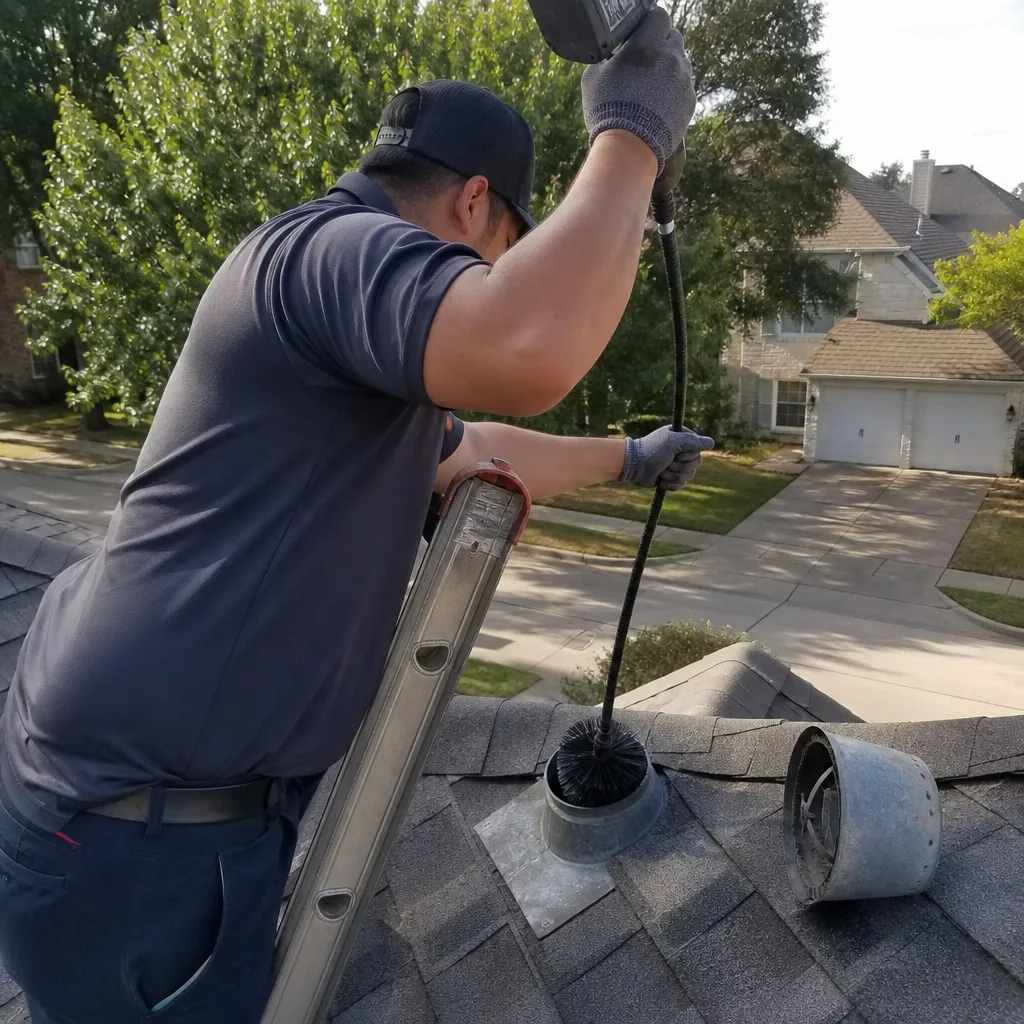
- Waiting for visible dust at registers. By the time debris is visible at supply registers, the duct system is heavily loaded. The first deposits occur at low-velocity points deep in the system, not at the endpoints.
- Accepting per-vent pricing. This model incentivizes cleaning only the ducts that are easiest to access. A complete system cleaning requires flat pricing per system, agreed before work starts.
- Ignoring the condensate drain. In Irving’s humidity, a slow drain is the single most common precursor to duct contamination. It is also the easiest to prevent with monthly vinegar treatment.
- Cleaning only ducts without inspecting the evaporator. The coil and housing are upstream of most duct debris. Cleaning ducts without addressing the source is temporary improvement at best.
- Scheduling during peak pollen without post-cleaning protection. A spring cleaning immediately before oak pollen peak can load the system again within weeks. If spring timing is necessary, plan for enhanced filter discipline afterward.
- Assuming new construction means clean ducts. Irving’s rapid development means many “new” homes have construction debris in ducts from drywall sanding, insulation installation, and trades traffic. We regularly find significant debris in homes less than two years old in Las Colinas and north Irving subdivisions.
- Using unverified contractors without documented credentials. Texas requires no specific license for duct cleaning. Verify that technicians are background-checked, uniformed, and identified by name before arrival - Haven Standard Clause 3 requirements that protect your home and property.
When to Call a Professional
Schedule professional inspection and cleaning when: allergy symptoms persist beyond outdoor pollen season; you detect musty odor at system startup; visible debris accumulates at supply registers within weeks of cleaning; your home is downwind of active construction; or you’ve never had documented photo inspection of your duct system.
CleanRun Air Duct Cleaning Irving offers free estimates in Irving - call (682) 297-4068. Every estimate includes a written price before any work begins, and every completed job includes the documented photo record and 365-Day Done Right Promise. We also provide free second opinions on any written estimate from another provider; bring their quote and we’ll put our number next to it in writing.
Frequently Asked Questions
Complete residential air duct cleaning in Irving typically ranges from $380 to $620 for a single HVAC system, depending on home size, duct accessibility, and contamination level. CleanRun uses flat pricing per system agreed in writing before work starts - no per-vent add-ons, no post-arrival upsells. Call (682) 297-4068 for a specific estimate; estimates are free.
Low quotes typically reflect incomplete scope: per-vent pricing that covers only accessible ducts, no evaporator inspection, no photo documentation, and equipment that lacks negative-pressure containment. The $79-$149 offers common in Irving market advertising routinely convert to $400+ invoices once the technician is on site. A written flat price before work begins, with defined deliverables, is the only comparison that matters.
Demand a documented photo record of every duct run, before and after, delivered as part of the standard job record - not offered as an upgrade. CleanRun has provided this on every job since 2013. Without it, you’re trusting a verbal report about work performed in spaces you cannot see.
Most Irving homes benefit from professional cleaning every 3 to 5 years, with annual inspection recommended for homes with allergy-sensitive occupants, downwind construction exposure, or known condensate drain issues. See our Air Duct Cleaning Maintenance Checklist for Irving Homeowners for a full seasonal schedule. The specific interval depends on which seasonal contamination windows affect your home most heavily.
Homeowners can and should maintain registers, replace filters, and treat condensate drains. Cleaning beyond the first elbow of a duct run requires equipment that won’t damage flexible ductwork or dislodge sealed joints, plus containment that prevents debris redistribution into the home. The risk of duct damage or incomplete cleaning exceeds the cost of professional service for most homeowners.
Irving’s water hardness, typically 8 to 12 grains per gallon, affects evaporator coil scale buildup and condensate pan mineral deposits more than duct surfaces directly. Scale on coils reduces heat transfer efficiency, extending runtime and increasing filter load. Annual coil inspection addresses this; it is included in CleanRun’s HVAC cleaning service.
The Bottom Line
Irving’s climate and development patterns create four distinct contamination windows that load duct systems differently throughout the year. Spring pollen bypasses filters and adheres to duct walls. Summer humidity enables biological growth in the evaporator housing. Fall heating cycles mobilize accumulated debris. Winter construction dust infiltrates through loosened seals in attic-mounted systems.
The homeowners who get the most value from duct cleaning time it proactively - typically in the September-October window - rather than reactively after symptoms appear. They also choose providers who document results rather than promise them. The combination of flat upfront pricing, photo-verified completion, and written long-term accountability separates accountable work from vacuum noise.
Written by Tomas Reyes, Owner at CleanRun Air Duct Cleaning Irving, serving Irving since 2013.